A physiotherapist says you can prevent a number of daily aches and pains by mobilizing this area of your back regularly with these five simple moves
Use these stretches and exercises to safeguard your spine from the effects of sedentary living


When the middle of your back is stiff, it can cause a domino effect of pain and weakness, affecting the shoulders, the neck and rest of the spine.
Unfortunately, this stiffening of the spine has become a common symptom of our modern, mostly sedentary way of life. Fortunately, there is a remedy.
According to musculoskeletal sports and rehabilitation physiotherapist Sarah Milner BSc MCSP, the solution lies in promoting thoracic mobility through regular rotation and strengthening.
“Thoracic mobility is fundamental,” Milner tells Fit&Well. “If limited, it impacts all the structures around it.”
Made up of the middle 12 vertebrae—which link the cervical spine with the lumbar spine—the thoracic spine makes up half of all the vertebrae in the spine.
It is less mobile than the other two regions of the spine due to the presence of the ribcage, yet its limited flexion, extension and rotation are essential for daily activities.
Milner explains that sitting hunched in front of a computer all day or long periods looking down at our smartphones can impinge on this mobility.
But stretching the thoracic spine and targeted strengthening exercises can help prevent a number of body aches and pains, while improving performance in daily life.
The best exercises and stretches for thoracic rotation
To promote thoracic mobility, Milner recommends exercising two to three times per week but, where possible, to move your body daily.
Here she has outlined five moves you can incorporate into your regular workouts or use as standalone stretches to keep the region moving, and keep aches and pains at bay.
The first two can be performed with just your bodyweight.
Moves three and four can be done at home with the aid of a foam roller and bands. The final move requires a cable machine that you can typically find at most commercial gyms, but it can also be done with a long resistance band.
1. Seated mid-back twist
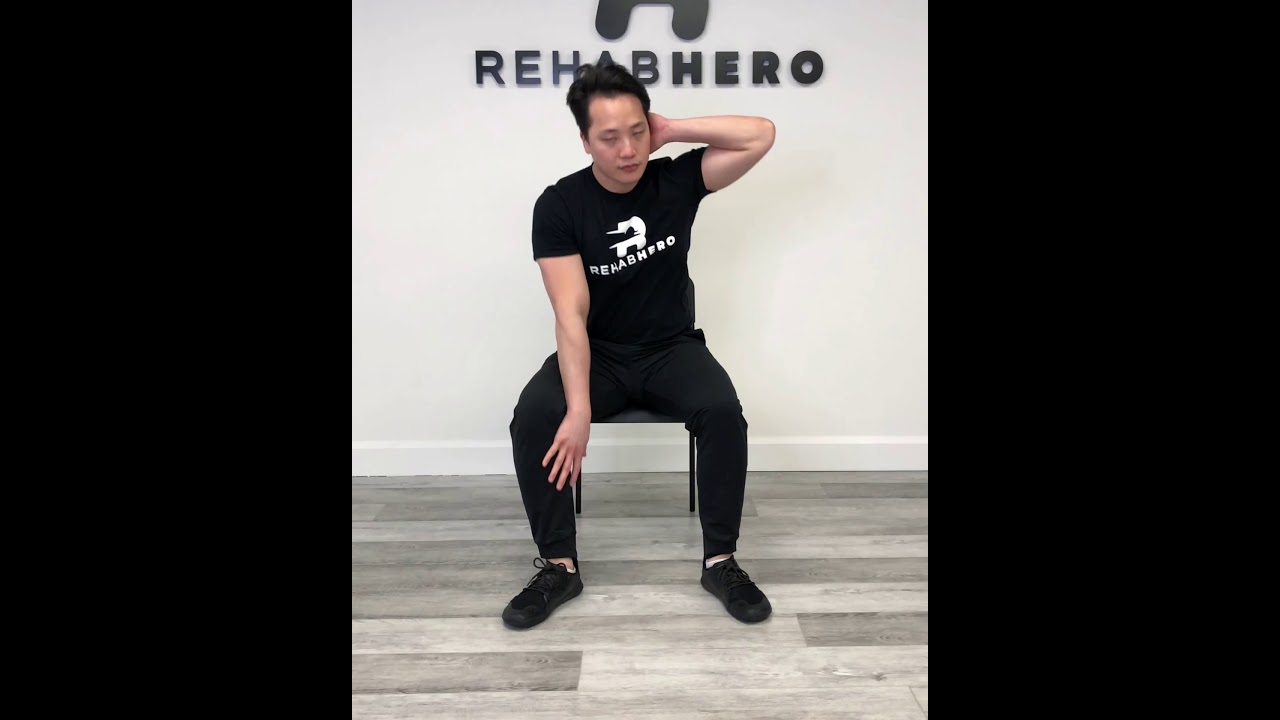
Time: 1min each side
- Sit upright in a chair with your feet flat on the floor, wider than shoulder-width apart.
- Place your right hand behind your head, with your elbow pointing right.
- Reach your left hand down to tap the floor between your feet and rotate your upper body to face right, raising your right elbow.
- Reverse the movement back to the start.
- Keep your neck relaxed and avoid holding your breath.
- Continue for time, then repeat on the other side.
Milner says: “These are easy to do at work if you have a desk-based job. They promote mid-back rotation as well as lower back and hip flexion, while providing a gentle stretch for the glutes and hamstrings, too.”
2. Kneeling twist
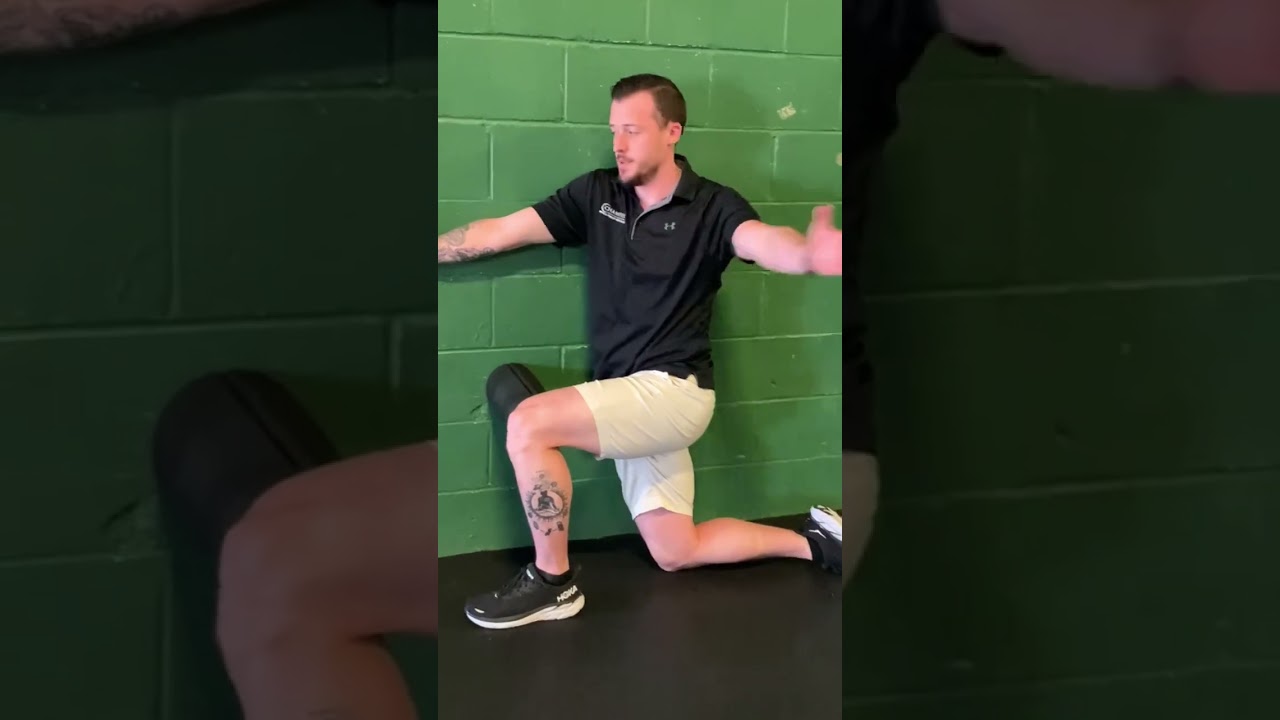
Time: 1min each side
- Kneel right-side-on to a wall with your right knee, hip and shoulder touching the wall.
- Step your left foot forward so your left knee is bent to 90°.
- Extend your arms forward at shoulder height. This is your starting position.
- Keeping your right shoulder and hip in contact with the wall, move your left arm out to the left and behind you, rotating your torso.
- Only rotate as far as you can while keeping your other arm in contact with the wall—you might find you are more mobile on one side than the other.
- Return to the starting position.
- Continue for time, then repeat on the other side.
Milner says: “Also known as open the book, this position helps target the hip flexors and quads, alongside trunk rotation. Pinning a foam roller against the wall with your knee can really help lock in and target the mid-back. Engage your glutes and tuck your tailbone under your body to stretch the psoas (hip flexor).”
3. Foam roller chest opener
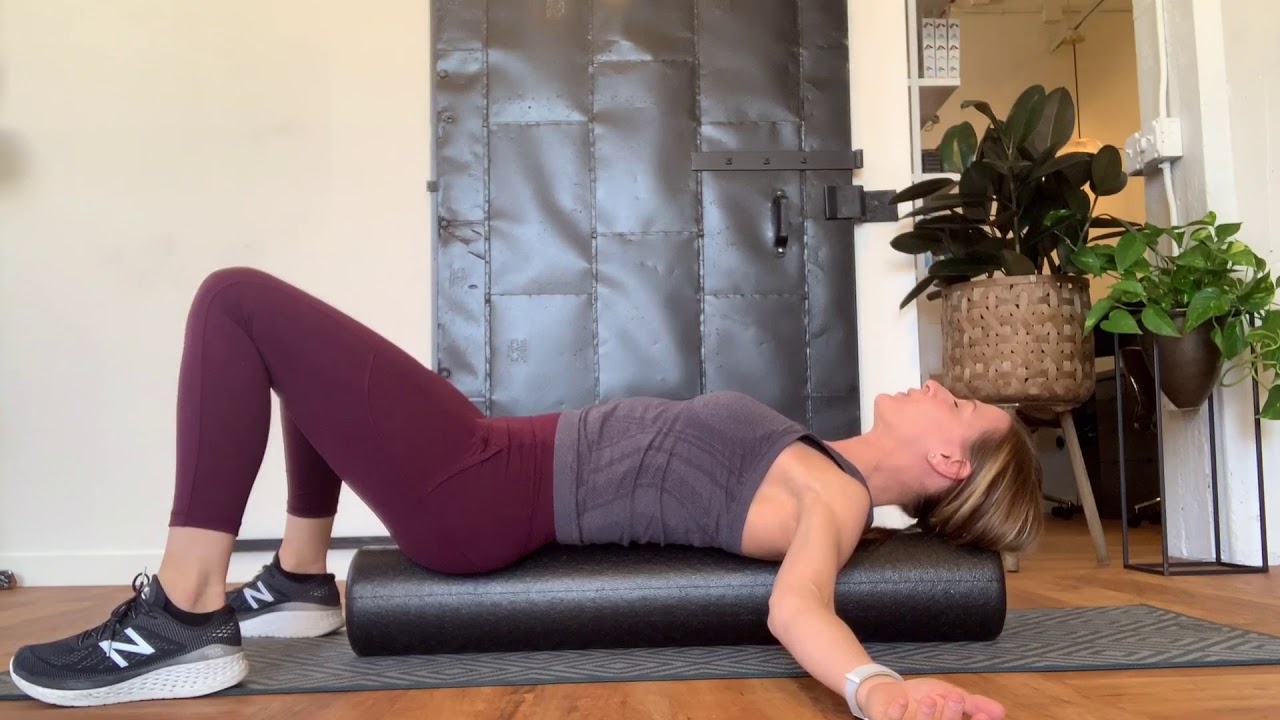
Time: 1-2min each side
- Lie on your back with your spine on a long foam roller, so your spine is supported from your tailbone to your head, with your knees bent and feet flat on the floor.
- Start by letting your arms hang by your sides, you should feel a stretch across your chest.
- Sweep your arms from your sides out to the sides, then from your sides up and to the floor behind your head.
Milner says: “Tight pectorals (chest muscles) and stiff thoracic extension can also limit rotation, but this is a great passive stretch you can do at the end of the day to open up the front of your body. Use deep breathing exercises in this position to really relax your chest.”
4. Banded row
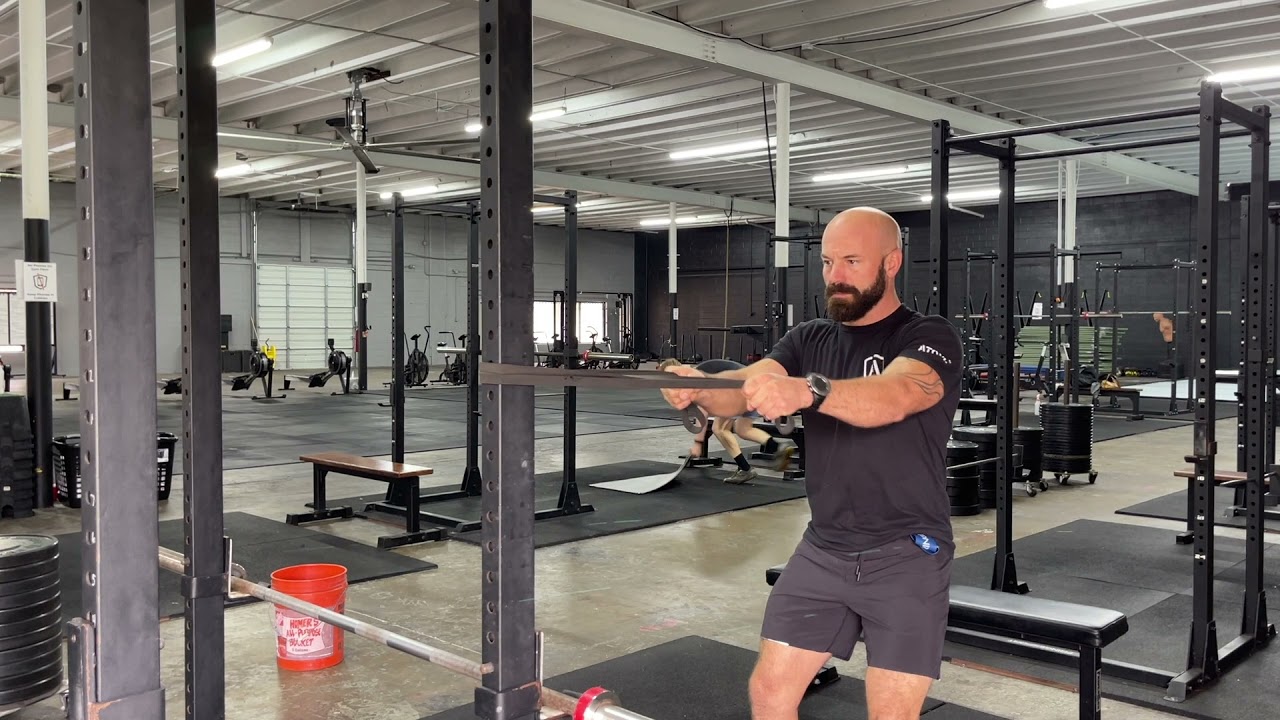
Sets: 2 Reps: 15
- Wrap a long-loop resistance band around a secure anchor point and stand facing the anchor point.
- Grasp each end of the band in your hands, with palms facing.
- Step back until your arms are at shoulder height and there’s tension in the band.
- Bend your knees slightly and retract your shoulder blades to engage your mid- and upper-back muscles.
- Pull the band into your ribs, bending your elbows and drawing them past your torso.
- Pause, then slowly extend your arms back to the starting position.
Milner says: “Stiffness is often driven by tight muscles and weakness in the posterior chain, especially the shoulder blade muscles. Activating your pull muscles, like the rhomboids, can help loosen up the back, relieve tension and aid mobility. Building strength is as important as stretching when it comes to gaining mobility.”
5. Cable rotation
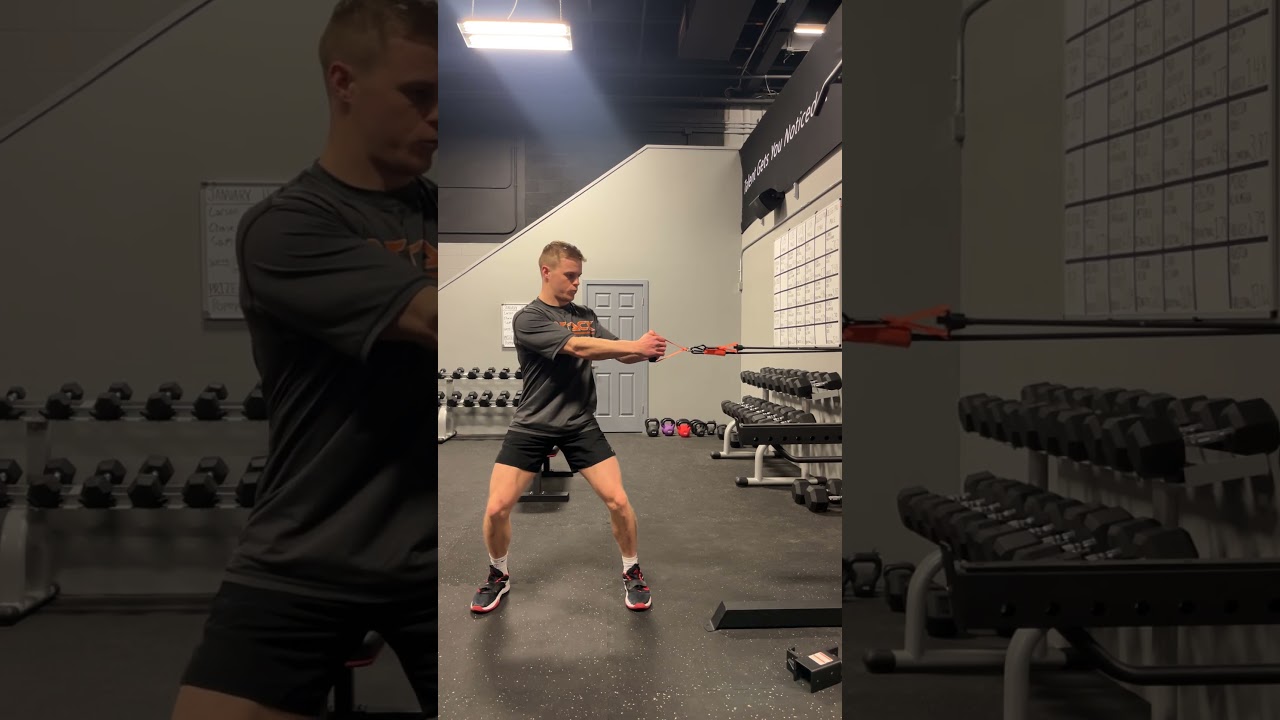
Sets: 2 Reps: 10 each side
- Stand side on to a cable machine with the handles set up at chest height.
- Grasp the handle in both hands and step away from the machine to create tension.
- Stand with your feet wider than shoulder-width apart and sit into a quarter squat to create a stable base.
- From here, bring the handle across your body with straight arms.
- Follow your hands with your gaze to ensure the movement is initiated by your torso rather than just your arms or shoulders.
- Slowly return to the start.
Milner says: “Another strengthening exercise. These help to target the trunk rotator muscles on the side of the body, which can help drive stronger and more powerful trunk rotation.
“Move slowly in both directions to really control the movement. Keep your arms straight and focus on the movement coming from the trunk rather than the shoulders.”

Sarah Milner BSc MCSP is a musculoskeletal sports and rehabilitation physiotherapist and acupuncturist, practising at Mission E1 in London, England.
She has more than 10 years of experience in private practice, NHS and professional as well as amateur sports, and has consulted with Adidas and New Balance to deliver educational sessions to its athletes. A former semi-pro soccer player and marathon runner, Milner has a keen interest in strength and conditioning.
She completed a Bachelor of Science (BSc) in physiotherapy at King's College London and a Masters of Science (MSc) module in Advanced Neuromusculoskeletal Physiotherapy at the University of Hertfordshire.
She is accredited by the Health and Care Professions Council (HCPC), the Chartered Society of Physiotherapy (CSP) and the Acupuncture Association of Chartered Physiotherapists (AACP) for acupuncture.
