


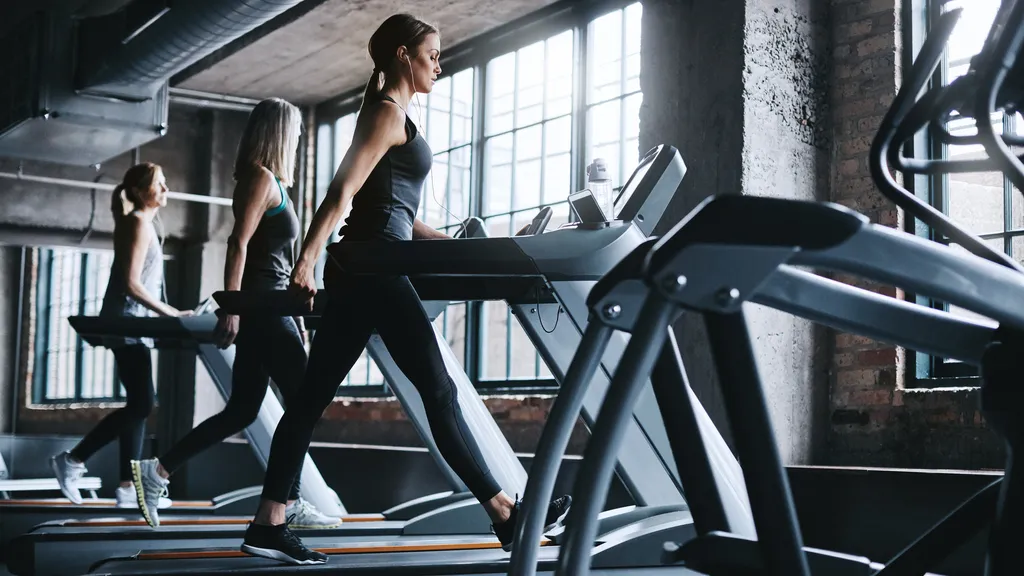


An expert trainer says walking faster can strengthen your bones, improve your circulation and help you to lose weight—here’s how to increase your walking pace
Good reasons to pick up the pace


Most of us know that walking regularly—around 7,000 steps a day ideally—is good for us, but have you ever considered walking faster?
If the idea of running doesn’t appeal, or you just want to get more fitness benefits out of your walks, you might like to try increasing your pace.
As well as arriving at your destination faster, experts agree that walking faster can be a great way to improve your health.
Marwa Ahmed, a NASM-certified personal trainer, running coach and founder of The BodyMind Coach, says that speeding up makes your heart work harder, strengthens your bones and muscles, and can even help you lose weight.
I asked her to explain more about each benefit of walking faster.
What are the benefits of walking faster?
1. Cardiovascular health
“Your heart pumps more blood per minute and your lungs pull in more oxygen to fuel your muscles when you walk faster,” says Ahmed.
“Over time, this sustained effort strengthens your heart, improves circulation and helps lower blood pressure and reduce heart disease risk.”
2. Skeletal strength
Ahmed says that when walking at a pace 20-30% higher than your average, you hit the ground with more force.
“That extra loading triggers bone remodeling, where your body breaks down old bone tissue and builds stronger bone to replace it,” she says.
“This helps maintain bone density, which is important for preventing osteoporosis and fractures as you age.”
3. Muscular endurance
“Walking faster makes your leg muscles (quads, glutes, hamstrings and calves) work harder for longer, which builds muscular endurance,” says Ahmed.
“Your legs can handle more effort or handle the same effort for longer periods of time without feeling tired or weak.”
4. Weight loss
“Your muscles are working harder and your heart rate is higher, so you burn more calories per minute at a brisk pace than you do walking slowly, which helps with weight management and metabolic health,” says Ahmed.
How to walk faster
Ahmed recommends adding short bursts of brisker walking during your usual route to start with.
Speed up by 20-30% for a minute or two at a time, then drop back down to your usual pace to recover for a few minutes.
Over a 30-minute walk, aim to repeat this sequence four or five times, then increase the duration of your faster intervals by a minute or two each week or as it starts to feel easier.
How to walk with better form
Ahmed emphasizes that as well as walking faster, keeping an eye on your technique is also important. Here are her tips on walking well with better form.
1. Cadence (steps per minute)
“Casual walkers average 90-100 steps per minute, which is considered slow,” says Ahmed.
She suggests aiming for 120-130 steps per minute. If you’re walking 30 steps in 15 seconds, that’s a good pace for improving your fitness.
“The trick is to take shorter, quicker steps,” she adds.
She warns that reaching too far with each step—overstriding—can put your body under stress and is a common cause of injury.
“It slows you down, stresses your joints and wastes energy,” she says. “Your feet should land close under your center of gravity, not way out in front where you're braking with every step.”
2. Posture and core engagement
“Imagine a string pulling the crown of your head toward the sky,” says Ahmed.
“Walk with your chest open, shoulders down and relaxed, and your core lightly braced, like you're about to get a gentle poke in the stomach,” she says.
She also suggests keeping your eyes focused on a point about 10-20 feet ahead of you to keep your head and neck in the correct position.
“Slumping or leaning forward from the waist wastes energy and creates unnecessary tension in your entire body,” she says.
3. Arm position
“Your upper body is the accelerator,” says Ahmed.
“Keep your elbows bent at about 90° and swing your arms vigorously forward and back from the shoulder, not across your body.”
“The faster your arms move, the faster your legs will follow.”
She recommends keeping your hands loose and relaxed, and avoid clenching your fists.
Shop walking shoes
To help cushion your feet from the extra force of walking faster, you may want to upgrade your walking shoes. Here are the top picks from my guide to the best walking shoes.


Marwa Ahmed is the founder and CEO of The BodyMind Coach, a Toronto-based coaching practice specializing in personalized fitness and performance training. She is also a NASM-certified personal trainer and running coach with more than seven years of experience. She works as a trainer both in-person and remotely across Canada, the US, and the Middle East and North Africa region.
