





Can’t do jumping jacks? Try these low-impact exercises instead to get your heart pumping
Get a great cardio workout with these joint-friendly moves


According to the CDC, adults should aim for at least 150 minutes of moderate-intensity activity each week. But if you’ve got certain injuries or mobility concerns, doing certain cardio exercises—such as jumping jacks—can be ill-advised.
Fortunately, there are plenty of other ways to get your heart rate up without doing high-impact exercises that put stress on your joints.
I have a go-to joint-friendly workout that I use with personal training clients that need to stay away from anything high-impact. It consists of moves that are safe to do for just about anyone—and they don’t require any equipment, besides a timer.
How to do my low-impact cardio workout
Clear any new activity with your doctor before proceeding. If you’re unsure of how to do any of these exercises, meet with a certified personal trainer for guidance.
This circuit workout alternates between short work periods and short rest periods.
The routine is adaptable for most fitness levels and can be progressed as your endurance improves.
For beginners:
- Beginners should aim to do each of the following four exercises for 20-30 seconds each.
- Take 15-20 seconds of rest between each exercise.
- Do each exercise once to complete one round.
- Perform three rounds in total for a seven to 10-minute workout.
- Work at a moderate pace—your heart rate should be elevated, but you should still be able to speak a few words before pausing to take a breath.
For more experienced exercisers:
- Do these exercises for 45-60 seconds with 10-15 seconds of rest in between.
- Perform four rounds for a 15-20 minute workout.
- Work at a faster speed if possible. Challenge yourself further by holding small weights while doing the exercises (1-2lbs, like these Tone Fitness dumbbells on Amazon).
You can modify work and rest times as needed. For example: if you’re unable to perform the exercises for 20 seconds without getting very winded, drop down to 15 seconds and take a 30 second rest. Once the exercises start to feel easy, you can do the exercises for longer and shorten your rest time.
Use this workout along with other forms of exercise, like brisk walking, swimming, or cycling, to reach the CDC’s weekly recommendations.
How to do the low-impact exercises
1. No-jump jumping jacks
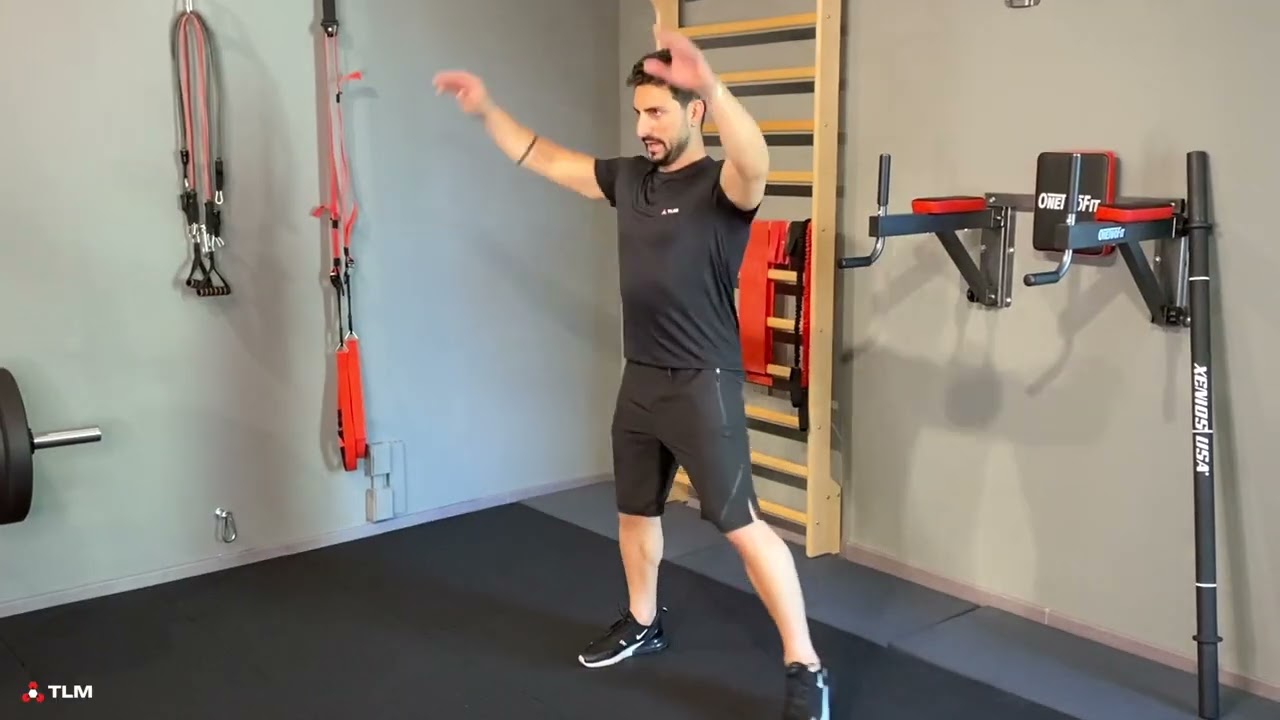
- Stand with your feet together and arms by your sides.
- Step your left foot out to your left, lifting your arms out to the sides and overhead.
- Step your left foot back to the starting position and lower your arms.
- Step your right foot out to your right, lifting your arms out to the sides and overhead.
- Step your right foot back to the starting position and lower your arms.
- Continue, alternating sides with each rep.
Trainer tips: Avoid rounding your spine as you perform this movement. Keep your breathing strong and steady, expanding your belly button and rib cage as you inhale, and drawing your abdomen towards your spine as you exhale.
2. Quick march
- Stand tall with your arms at your sides.
- Lift your left leg and right arm, bending your left knee and right elbow to 90°.
- Return to the starting position.
- Repeat with your right leg and left arm.
- Continue, alternating sides with each rep.
Trainer tips: If you have balance issues, do this exercise beside a wall or another solid surface so you can steady yourself if needed. This exercise mimics running—go slowly at first, until you feel comfortable with the movement, and then increase your speed. Maintain a tall posture and don’t allow your back to round.
3. Butt kicks
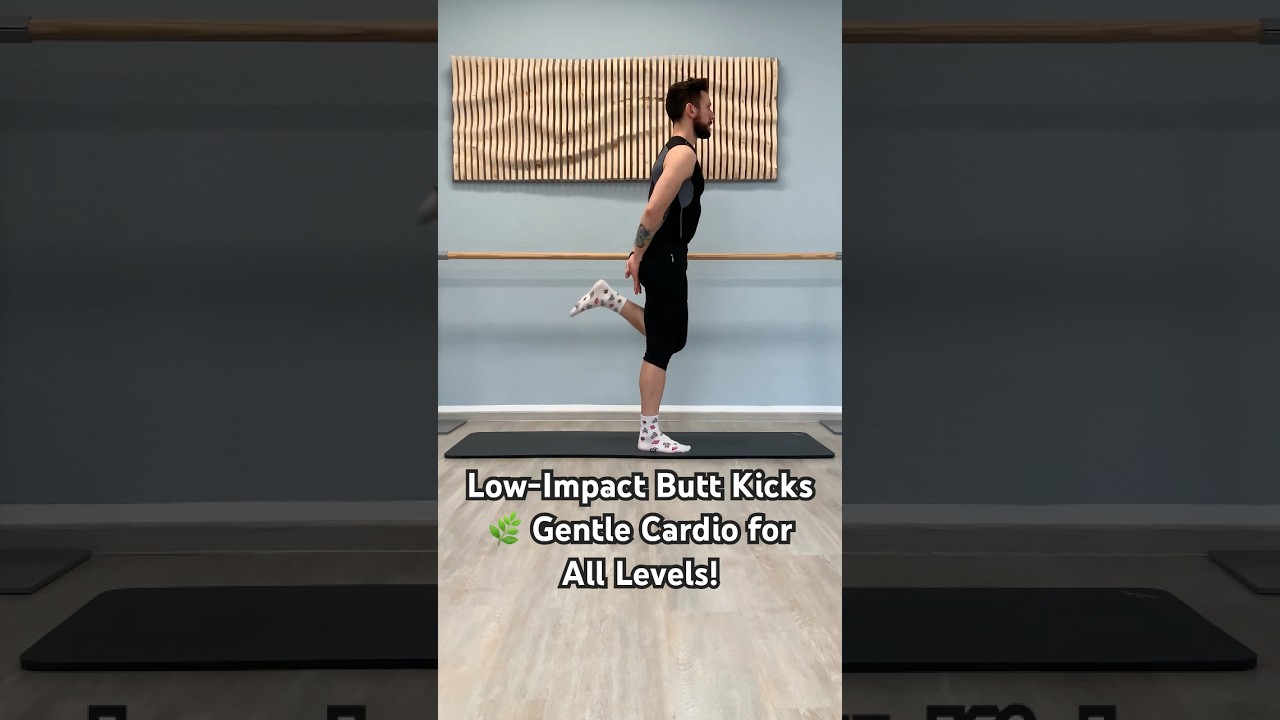
- Stand with your arms behind you, palms facing away from you.
- Bend your left knee and lift your left heel towards your hands.
- Lower your left foot back to the starting position.
- Repeat on the other side.
- Continue, alternating sides with each rep.
Trainer tips: If balance is a concern, hold on to a chair or a wall in front of you for support. Perform the exercise slowly at first until you build confidence with the movement. Speed up once you’re comfortable. Keep your breathing deep and steady, and avoid any rounding in your back.
4. Squat to cross
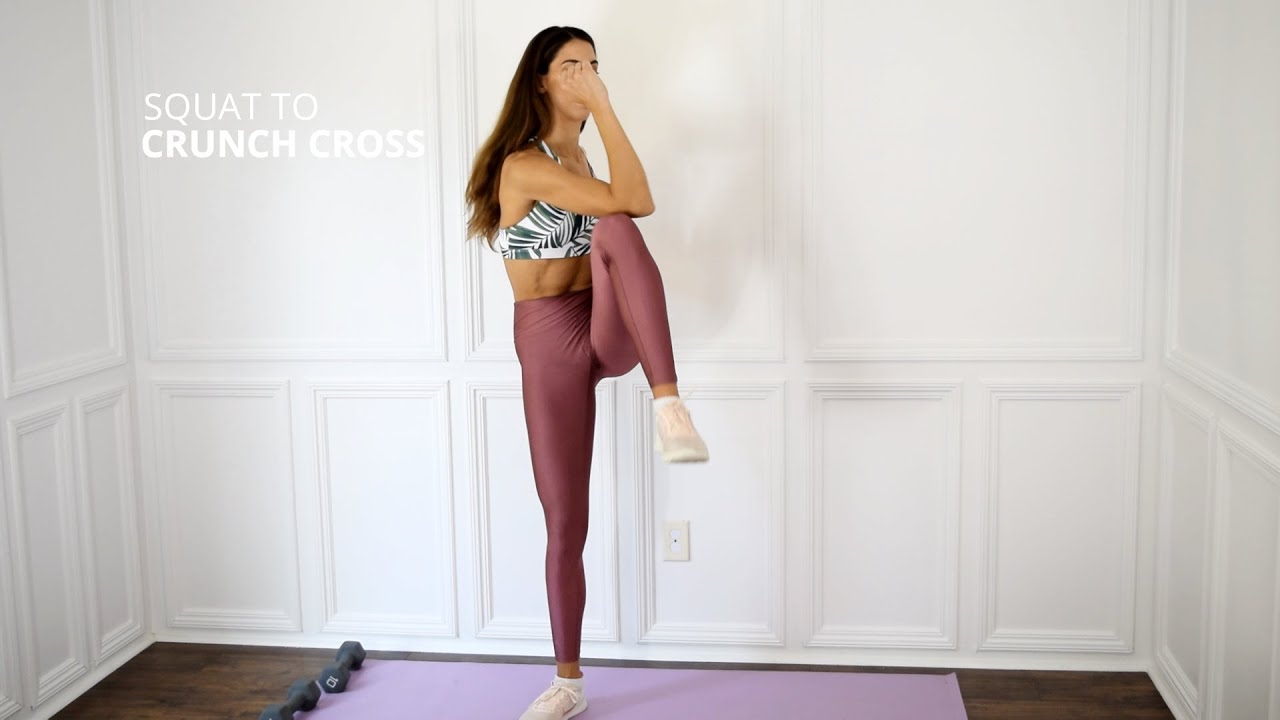
- Stand with your feet slightly wider than hip-width apart.
- Lift and bend your arms, bringing your elbows to shoulder height.
- Push your hips back and bend your knees to lower until your thighs are parallel to the floor.
- Push through your feet to stand back up and, in one fluid motion, lift your right knee, rotating your torso to bring your left elbow to meet your right knee.
- Go straight into the next rep, this time lifting your left knee to meet your right elbow as you rise out of the squat.
- Continue, alternating sides with each rep.
Trainer tips: If balance is an issue, do this exercise one side at a time, and place your free hand on the back of a chair or a wall for support. Reduce your range of motion if needed. Omit the squat portion of the exercise if knee or back problems make squatting uncomfortable. Perform the exercise slowly at first, then gradually increase your tempo as you become more accustomed to the movement.
