





This is the one exercise variation that a movement specialist says we should all do to build core strength and stability
A physical therapist recommends his favorite beginner-friendly move


Your body is at its most efficient when it can move comfortably. And if you want to keep moving with ease, you need to do exercises that work your body through different directions, including rotation.
“Rotational training is often overlooked in traditional fitness routines, which tend to focus on forward-backward movements, known as the sagittal plane. But life happens in all three planes of motion,” says Dr Matt Cifelli, a rehabilitation and movement specialist from Attain Physical Therapy.
These three planes—sagittal, frontal and transverse—categorize our movement into forward-and-back, side-to-side and rotational patterns.
“My advice for anybody is not to just train muscles, train movement. Add intentional, controlled rotation into your workouts, and your body will thank you for it, both during your workouts and in the game of life,” says Cifelli.
Your core muscles are the primary drivers of rotational movement, so doing rotational exercises will keep them strong and healthy.
You might already be doing crunches and sit-ups to train your core, but Cifelli says rotational exercises (like woodchops and Cossack windmills) are actually better for coordination, balance and mobility.
“Importantly, they also train the body to better transfer force from the lower to the upper body, which is key for anyone looking to move more efficiently,” says Cifelli. “Plus, they reduce the risk of injury by building stability in commonly undertrained areas like the obliques, hips and spine.”
Cifelli says the seated windmill—a variation of the more advanced Cossack windmill—is one of his favorite rotational exercises for beginners.
How to do the seated windmill
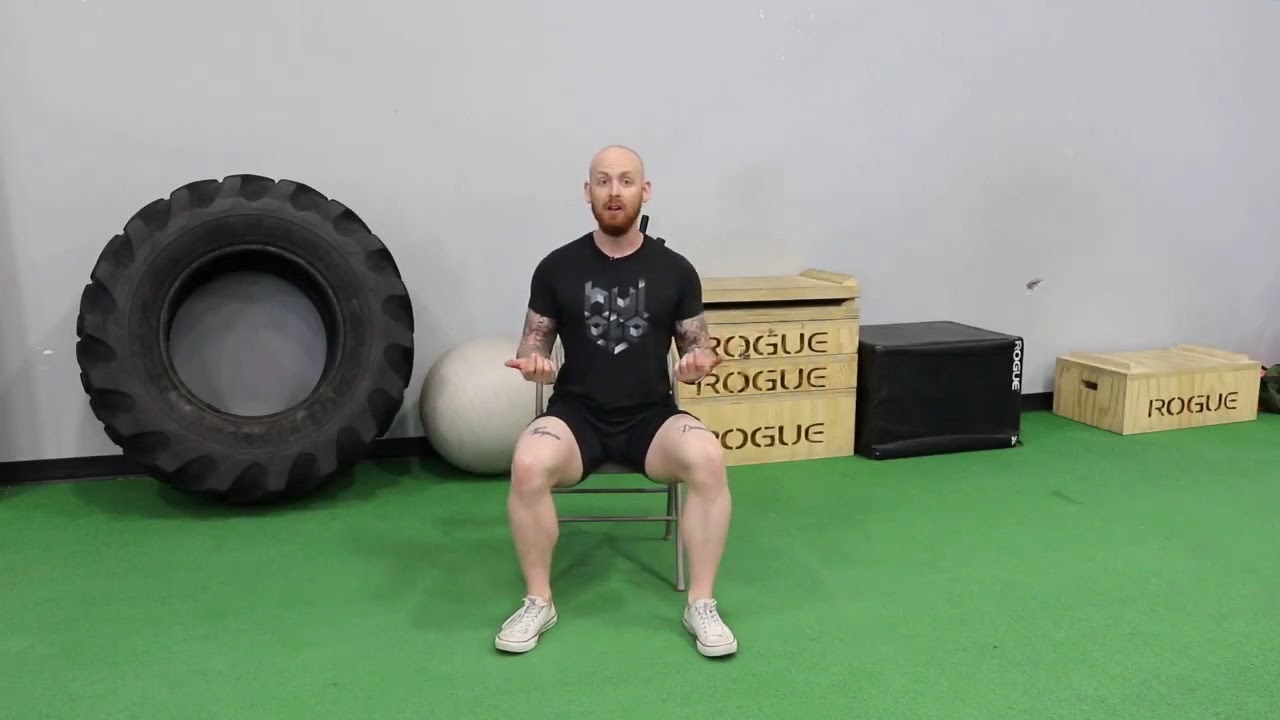
Sets: 2-3 Reps: 5 each side
- Sit on a chair, with feet slightly wider than hip-width apart, toes pointing out.
- Raise your left arm.
- Keep your left arm raised as you twist and lower your torso, moving your right shoulder toward your right knee and your right hand toward the floor. Try to avoid rounding the back.
- Touch the floor with your right hand, then reverse the motion and return to sitting with your left arm extended overhead.
- Lower your arm, swap sides and repeat.
Cifelli says this move encourages controlled thoracic rotation (twisting the mid-back), shoulder stability and core engagement.
“It’s useful for beginners, those with limited hip mobility or anyone looking to refine their windmill mechanics,” he adds.
When you’ve mastered this variation, you can make it harder by holding a weight in the raised arm.
