




Struggling to switch off at night? Try this five-minute bedtime yoga sequence to fall asleep faster
Five moves for better sleep


If, like me, you struggle to switch off at night, a short yoga flow could be the answer.
“Yoga for sleep helps by relaxing your body and mind, not by tiring you out,” explains yoga teacher Cheryl McColgan.
Unlike other types of yoga like vinyasa or power yoga that raise your energy, bedtime yoga is all about moving gently with your breath to come into a more relaxed, resting state.
“Slow movement paired with intentional breathing shifts your body out of the fight or flight sympathetic state and into the rest and digest parasympathetic state that you need to be in to fall asleep,” explains McColgan, founder of Heal, Nourish, Grow.
I wanted to swap late-night scrolling for something that might actually help me sleep, so I asked McColgan to share her favorite five-minute yoga flow to do before bed.
Try the five-minute bedtime yoga routine
McColgan’s bedtime yoga flow is designed to be done every night. You can do it on your bed or on the floor, and in your pajamas so you’re ready to sleep.
“It’s short enough that consistency is realistic and consistency is what matters for your nervous system learning the pattern,” she explains.
“Over time, the wind-down habit becomes another cue that signals to the body that it’s time for sleep,” Mc Colgan adds.
McColgan uses a free app called Insight Timer with its gong timer to track her poses over the five minutes.
“Every pose should feel relaxing, there should never be an intense stretch where you have to brace or where it feels too strong,” she adds.
The yoga poses are:
- Child’s pose
- Supported seated forward fold
- Reclined spinal twist
- Legs up the wall
- Shavasana
1. Child’s pose
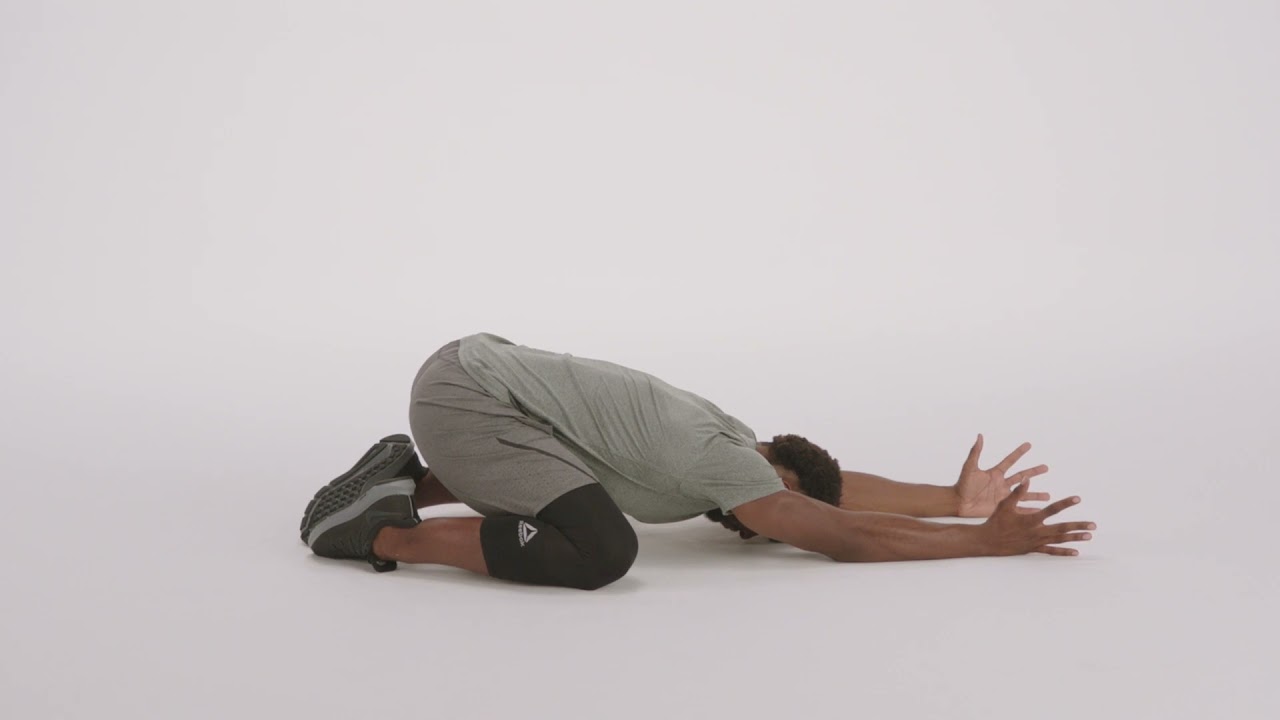
Time: 1min
Benefit: The forward fold calms the nervous system and gently releases the lower back and hips, which is where most people hold tension after a day of sitting.
- From a kneeling position, bring your big toes together and widen your knees apart as far as it’s comfortable.
- Sit your hips back toward your heels. If they do not reach, put a pillow or folded blanket between your calves and thighs to rest on.
- Walk your hands forward and let your forehead rest on the floor, pillow or your stacked fists.
- Let your shoulders and abdomen hang toward the floor.
- Pay attention to your breath and body's sensations.
2. Supported seated forward fold
Time: 1min
Benefit: Lengthens the hamstrings and back of the body to release tension and encourage relaxation.
- Sit on the floor with your legs extended in front of you.
- Place a pillow or two on top of your thighs.
- Hinge forward from your hips and rest your chest and forehead on the pillows.
- Keep a soft bend in your knees—there’s no need to touch your toes.
- Let your whole upper body relax into the pillows.
Tip: Add a folded blanket or pillow under your buttocks if your lower back rounds during the pose and another under your knees if it’s difficult to fully extend your legs.
3. Reclined spinal twist

Time: 30sec each side
Benefit: Releases tension through the mid back and between the shoulder blades, while stretching the side of your hips.
- Lie on your back and hug both knees toward your chest.
- Drop both knees slowly to your right—place a pillow underneath your knees if they do not reach the other side.
- Extend your left arm out to the side at shoulder height and turn your head to the left if it’s comfortable.
- Keep both shoulders in contact with the floor.
- Hold for three or four slow breaths then repeat on the other side.
4. Legs up the wall
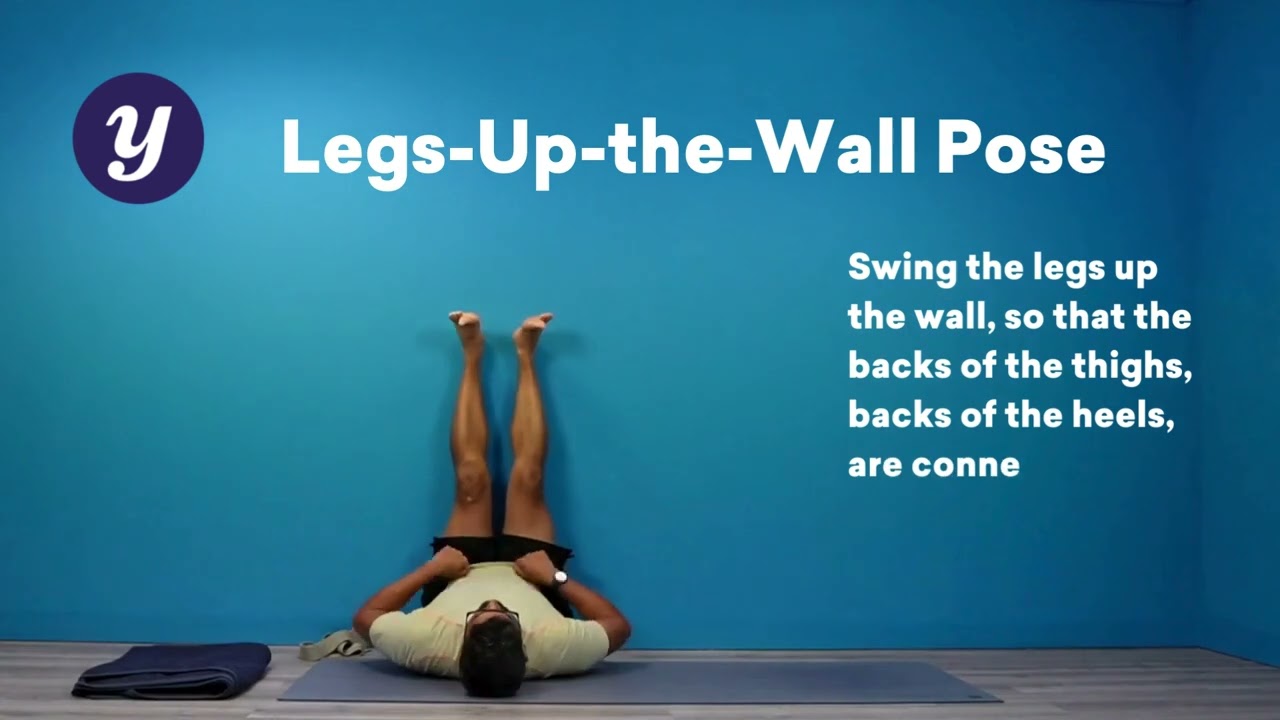
Time: 1min
Benefit: Relieves tired legs and encourages fluid to move out of the ankles and feet to reduce swelling.
- Sit sideways next to a wall or your headboard with your hip touching it.
- Lie back and swing your legs up the wall, bringing your hips close to the base of the wall.
- Have a thin pillow under your hips if your lower back needs support.
- Let your arms rest wide by your sides, palms up or place your hands on your abdomen or chest.
- Practice slow breathing with an extended exhalation.
- If your feet tingle or go numb, bend your knees or come out of the pose.
5. Savasana with extended exhale
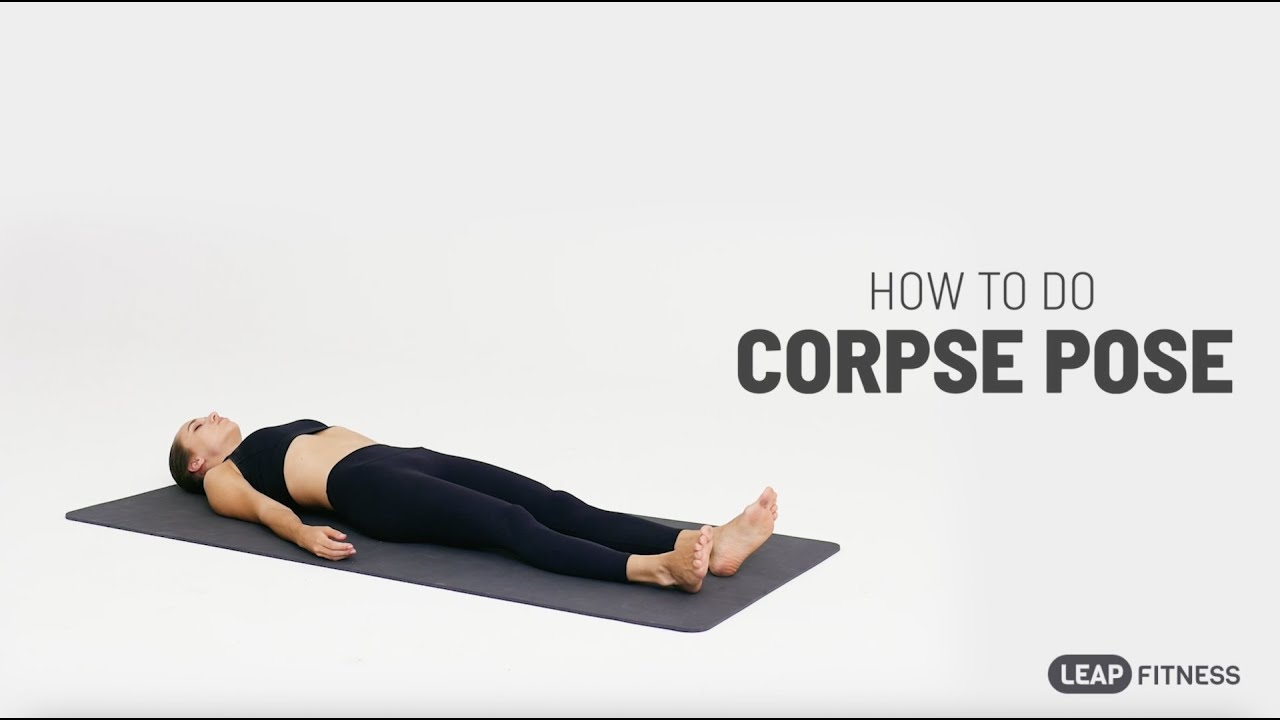
Time: 1min
Benefit: The final resting pose where the nervous system fully settles, lowering your heart and breathing rate to support full relaxation.
- Lie on your back in bed.
- Part your legs slightly and lie your arms by your sides with your palms up. Alternatively, place one hand on your chest and the other on your abdomen.
- Inhale through your nose for four counts, feeling your ribs and abdomen expand.
- Exhale slowly through your nose or mouth for six to eight counts, letting your ribs and abdomen fall.
