




If you’re over 60 and haven’t exercised before, a certified trainer recommends starting with this
Learn how to do a wall plank to strengthen your deep core and protect your back


Wall planks are one of my favorite exercises for beginner-level clients in their senior years.
Why? Because they teach you to fire up your core muscles and strengthen them at the same time.
These trunk muscles protect and stabilize your spine, so you need to know how to engage them before attempting complicated, load-bearing exercises like squats and deadlifts. Keeping them strong could also keep back pain at bay as you age.
Wall planks also don’t require any equipment and are accessible for those with injuries or mobility issues.
You’ll just need a section of bare wall and a timer for this exercise.
Start by holding the position for two sets of 30 seconds each, with a brief rest in between each attempt.
Once that starts to feel easy, you can add another set of 30 seconds. Aim to do wall planks two to three times a week at first, then gradually increase to four or five times per week.
Wall planks should cause muscle fatigue but never sharp pain. If you feel sharp pain at any point, speak with your doctor before continuing.
How to do a wall plank
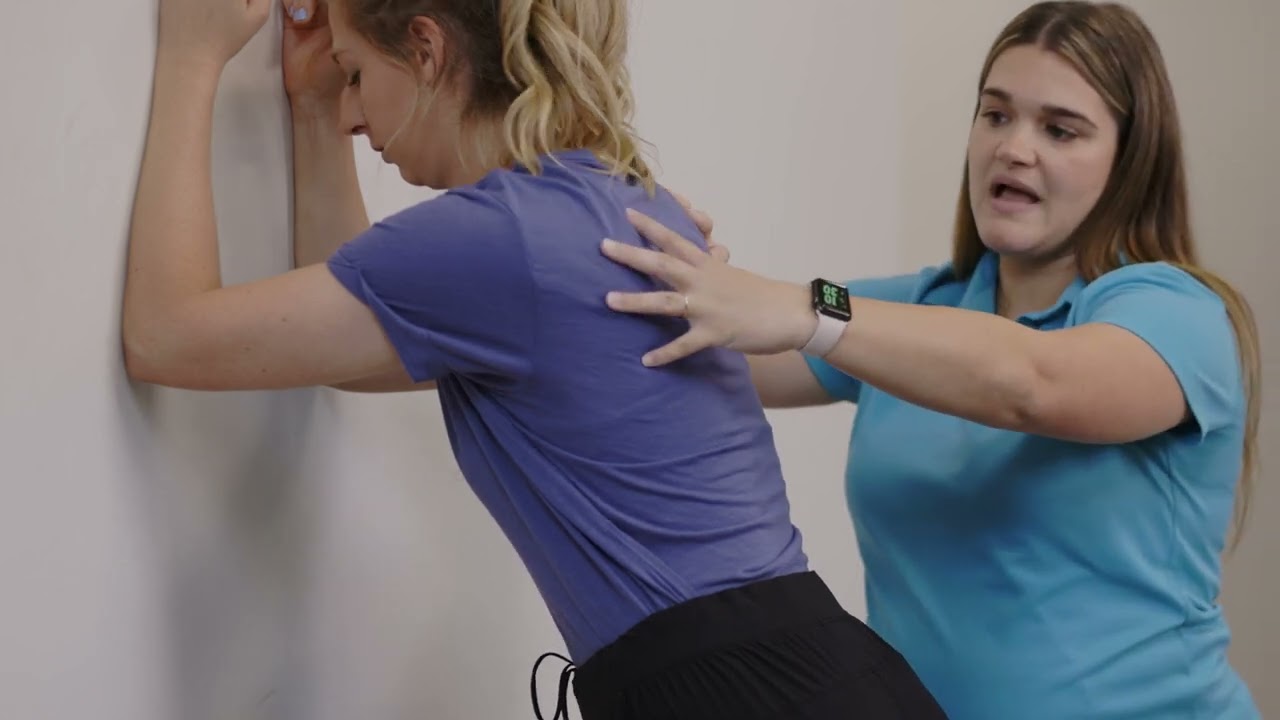
Sets: 2-3 Time: 30sec
- Stand facing a wall.
- Draw your belly button towards your spine.
- Place your forearms against the wall, keeping your elbows aligned with your shoulders.
- Step your feet a few inches away from the wall.
- Maintain a straight line from the top of your head to your feet.
Trainer tips: Don’t allow your lower back to arch. To avoid this, try slightly tucking your tailbone forward. Keep your shoulders relaxed throughout.
Stepping closer to the wall will make holding the plank easier, and stepping further away will make it harder. You may need to adjust your distance from the wall until you find the right position.
You can also try elevated planks. Instead of placing your forearms on the wall, place them on an elevated surface, like a table or chair, where your deep core muscles will have to work against an increased load. Eventually, you may choose to attempt standard planks.
Keep in mind that proper form is crucial. Don’t opt for these more challenging versions of the exercise unless your form is solid, and step back to regular wall planks if you notice your form slipping.
