




I’ve always seen a gym membership as a worthwhile investment. I’ve been lifting weights for nearly six years, starting with personal training sessions, then joining a CrossFit gym before working out alone at my local gym.
Since I started strength training, I’ve had fewer aches and pains, felt more capable in everyday life and grown in confidence. It’s totally shifted my relationship with my body. Before, exercise felt like a punishment. Now, it feels like an incredible way to challenge myself.
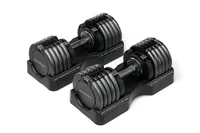
However, I’ve recently moved to a new area and I haven’t found a gym I like within my budget, but I knew I wanted to continue strength training, so I decided to try working out at home using adjustable dumbbells. The pair I chose were the NordicTrack Select-A-Weight adjustable dumbbells.
They offer between 10lb and 55lb per dumbbell, so I knew I’d be able to lift heavy even without access to barbells and I’ve been impressed with how versatile lifting with dumbbells has been.
I put together an eight-week training plan using adjustable dumbbells, which included two one-hour workouts per week. I wanted to mimic movements I was doing in the gym with barbells and machines, including squats, deadlifts, curls and presses, and I was keen to not only maintain my strength but build on it too.
After two months of home training, I felt my training had gone well, but I was missing the social element of working out, so I’m now combining home workouts with group training sessions at a new gym in my area.
Here’s what I noticed once I went back to the gym.
Three things I noticed when I swapped gym-based strength training to home workouts with dumbbells
My strength still improved using lighter weights
I’ve always prioritised heavier loads and lower reps when lifting weights, but using dumbbells generally meant focusing on unilateral movements—where you can rarely move the same weight as you can with a bilateral version of the exercise—or opting for a weight I was able to lift up to my chest or shoulders.
Because I was lifting slightly lower loads than normal, I aimed for higher reps to ensure I was still challenging myself. At the gym, I tend to load 90 to 100lb on the barbell for about four to six reps. At home, I was using two 30lb dumbbells and aiming for eight to 12 reps.
On returning to the gym, I was expecting to struggle with barbell lifts, but I felt just as strong, if not stronger, lifting heavier when doing medium rep ranges in moves like squats and shoulder presses.
There’s a good chance that it was because I was actually lifting more total weight per set. For instance, using the higher ends of ranges I gave above, six 100lb reps make a total of 600lb, while 12 60lb reps equal a total of 720lb.
It goes to show that strength can still be developed outside of lower rep ranges, as long as you push yourself.
I evened out imbalances
To ensure I was still lifting heavy, most of the dumbbell exercises I did as part of my training were unilateral (think: biceps curls, shoulder presses, split squats and lunges).
I’ve always been slightly stronger on the right side of my body, which has led to various injuries and aches and pains over the years. Training unilaterally made me more aware of these weaknesses and gave me a chance to actively work on them.
When I returned to the gym, I no longer felt like I was relying on one side of my body more during moves like barbell squats and pull-ups.
I felt more stable and less achy
As well as doing unilateral movements, I was also prioritising bodyweight movements and exercises that focused on training smaller muscles with lighter weights. For example, I was doing single-leg glute bridges and calf raises with a 15lb dumbbell.
Generally at the gym, I focus on compound lifts that engage a wide range of muscles. Taking some time to train the smaller muscles helped me develop more stability, which boosted my confidence when doing moves like squats and deadlifts, and also helped to tackle achy joints, particularly my knees and hips.
Strength training at the gym vs. at home—my verdict
Working out at home with dumbbells was just as good a way to build strength as going to the gym and it offered extra benefits that I was missing when I was exclusively using barbells and machines at the gym.
However, although the home workouts were convenient, I did miss the social element of gym-based training. I also really enjoy the challenge of lifting heavy and learning the technique behind compound movements and Olympic lifts.
In the six weeks since I finished my at-home programme, I’ve been combining gym-based workouts with home routines. Using my adjustable dumbbells at home is great on days when I’m short on time or don’t feel like leaving the house, but I really look forward to my group training sessions too.