

This type of walking is better for healthy aging, according to a new study
The authors found that high-intensity walking can reverse frailty more effectively than casual walking—here’s how you can add high-intensity walking to your week


A recent study set out to investigate if there was an “optimal walking intensity for prefrail and frail adults” to promote healthy aging. The results suggested that high-intensity walking beats casual-speed walking, although both were capable of improving one measure of frailty on the Survey of Health Among Retired Europeans - Frailty Index (SHARE-FI).
It’s a great reminder that physical activity can protect against, and even reverse, frailty.
Participants performed three supervised walking workouts a week for 16 weeks. The high-intensity group aimed to walk at an effort level that raised their pulse to 70% of their maximum heart rate (HRmax). That might sound excessively technical, but it’s a standard measure of exercise intensity and a common feature of modern fitness trackers and smartwatches.
Meanwhile, the casual-speed walking group “walked at self-selected speeds below 60% HRmax.”
The SHARE-FI measures used to assess frailty are:
- Self-reported fatigue.
- Loss of appetite.
- Weakness, measured by grip strength.
- Functional ability, measured by the ability to walk 100 meters or climb a flight of stairs without resting.
- Frequency of completing low- or moderate-energy daily tasks like gardening.
The results showed that 69.6% of high-intensity walking participants improved in one SHARE-FI category, compared with 46.4% in the casual-speed group.
The authors noted that “high-intensity walking can reverse frailty more effectively than casual-speed walking due to increased physiologic stimuli during more intensive activity.”
How to start with high-intensity walking
Forty-five minutes of brisk walking may feel out of reach at first—especially if you’re not being supervised as the study participants were—but you don’t need to jump in at the deep end. You just need an accessible starting point.
Start with this beginner walking workout which, after an obligatory warm-up, alternates between brisk and easy walking to allow your body time to recover. The whole thing takes just 15 minutes and our expert trainer gives advice on how to adjust the workout to your current fitness level.
Once you become comfortable with that, try interval walking training, popularly known as Japanese walking. It follows a similar work-rest format and coincidentally asks you to hit 70% peak aerobic capacity during the work intervals—another way of saying 70% of your maximum heart rate.
How to track your heart rate while walking
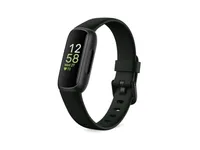
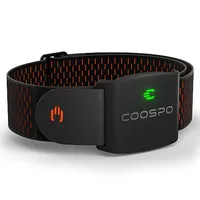
The study showed that raising your heart rate to 70% of its maximum was more beneficial than walking with a lower heart rate. If walking at that intensity is suitable for you, there are now plenty of ways to keep tabs on your heart rate as you walk. Here are two great value and reliable options to consider.