





Is your balance putting you at risk of a fall? Try this simple home test to find out if you should talk to your doctor
Find out how steady you are on your feet and what to do to improve your balance with this quick at-home test


You don’t know what you’ve got ’til it’s gone. Joni Mitchell wasn’t singing about balance, but she could have been. We take it for granted when we’re young but its absence can be distressing as we grow older.
“Maintaining your strength and balance is not simply about reducing the likelihood of a fall,” says licensed osteopathy practitioner Ales Ulishchenko. “It's also about preserving your confidence, independence and ability to keep doing the things you enjoy.”
Ulishchenko told me about a simple three-stage test readers can try at home to see how steady they are on their feet when standing still.
The three-stage test—adapted from the Centers for Disease Control and Prevention's (CDC) four-stage balance assessment—only takes a few minutes, and it can flag if it’s worth taking measures to preserve your balance.
How to do the balance test
“For a home balance check, I'd skip the fourth stage of this test—the single-leg stand—in line with the CDC's guidance for remote assessment,” says Ulishchenko, who has a background in orthopedic surgery and musculoskeletal rehabilitation.
“If you've fallen recently, feel noticeably unsteady or can't safely stand up and walk across a room, have a professional assess you first.”
“Wear supportive non-slip shoes, clear some space, keep a stopwatch to hand (a phone timer is fine) and ask someone to stay with you to keep you safe.
“Clear away loose rugs and clutter, stop if you feel pain, dizziness or faintness, become very out of breath or lose your balance,” he adds.
Ideally, perform the test in a corner of the room, with a sturdy surface or kitchen counter nearby for support if needed.
Stage 1: Stand with your feet together
- Stand upright with your feet side by side, touching each other.
- Try to maintain this position for 10 seconds without moving your feet or holding on, keeping your eyes open throughout.
Stage 2: Try the semi-tandem stance
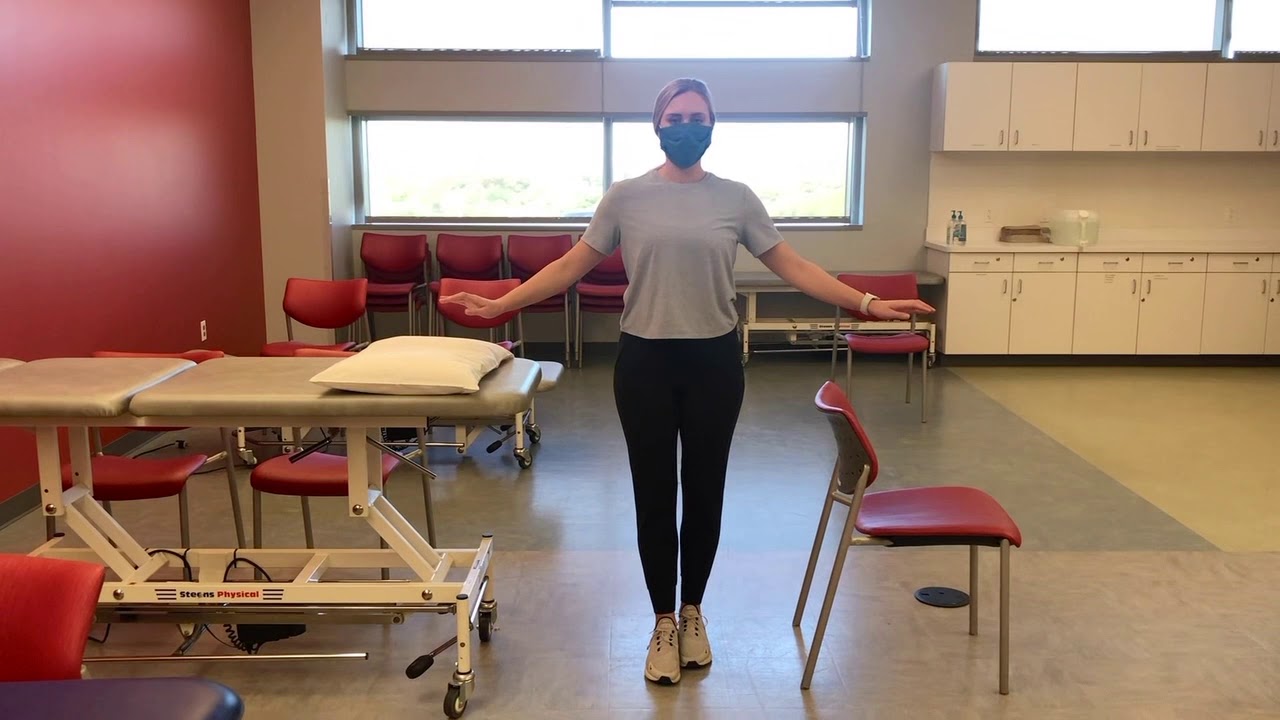
If you can safely manage the first position, move on to the second.
- Stand with your feet side by side, touching each other.
- Move the instep of one foot forward so it is next to the big toe of your other foot.
- Hold this position for up to 10 seconds, then repeat on the other side.
“Your helper can get you into position and should stay close enough to steady you,” says Ulishchenko. “If you move your feet or reach for support, stop and don’t try the next position.”
Stage 3: Try the heel-to-toe position
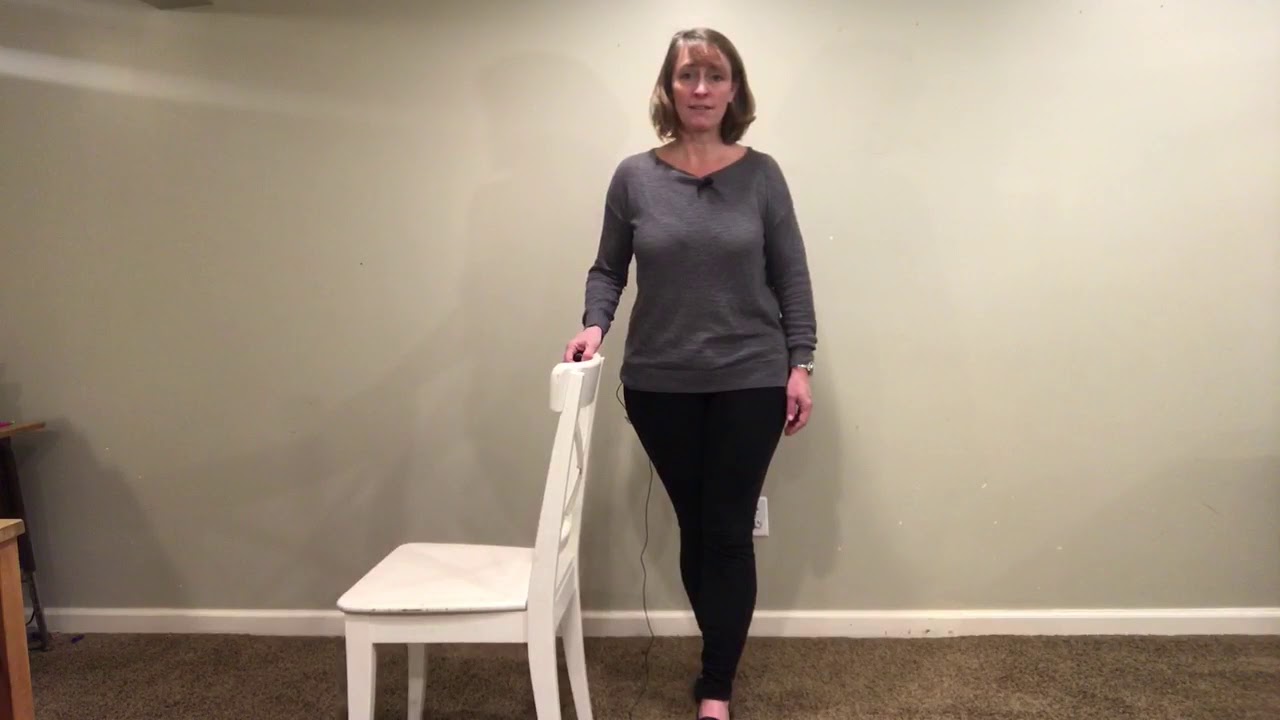
Once you have mastered the second position, try the final stage.
- Stand with your feet side by side, touching each other.
- Place one foot directly in front of the other, so that the heel of your front foot touches the toes of your back foot.
- Try to hold this position for 10 seconds, then repeat on the other side.
“This is the most challenging position in the test and can reveal difficulties maintaining balance when your feet are placed in a narrower position,” says Ulishchenko.
What do your results mean?
The most important thing to look at is whether you can maintain the heel-to-toe position for 10 seconds, says Ulishchenko.
Failing any of the three stages is a reason to stop the test, rather than trying to push through to the next position.
The CDC identifies an inability to hold this position for at least 10 seconds as an indicator of a higher risk of falling. This is not to say that you will definitely fall, or that you have a particular medical condition. Instead, it just means your standing balance might need further assessment.
Ulishchenko says if you struggle with any of the three positions, it's worth discussing your result with your doctor or a physical therapist, particularly if you've also noticed changes in your walking, confidence or ability to manage everyday activities.
Equally, being able to complete all three stages doesn’t guarantee that you won't fall. “Balance is only one part of the picture, and factors such as muscle strength, eyesight, medication, blood pressure and the home environment can also influence your risk,” advises Ulishchenko.
“For tracking progress at home, I’d retest after four to six weeks of regular practice—that’s a practical interval rather than a fixed rule. For walking time and balance, I’d look for a steady trend across several tests, along with everyday movement feeling easier.”
How to improve your balance
Balance is a skill you can work on. Building lower-body strength and practising controlled movements that challenge your stability can help you maintain your ability to balance and even improve it.
We have plenty of advice from physical therapists on exercises that can develop your balance, and I’ve collected three options to browse below, but make sure to choose a set of exercises that are within your ability and expect to progress slowly.
“Start at a level that feels manageable. If you are particularly unsteady or have a history of falls, ask a physical therapist or falls prevention professional to recommend suitable exercises rather than attempting to progress independently,” says Ulishchenko.


When to seek professional help
Speak to your doctor if:
- Your balance is getting worse.
- You feel increasingly unsteady when walking or turning.
- You’ve had a fall, even if you weren’t injured.
- You’re regularly relying on furniture or other people for support.
- You’re finding everyday activities more difficult because of your balance.
If you've fallen more than once, been injured in a fall or have difficulty getting up after falling, speak to your doctor about a comprehensive falls assessment.
