I’m a personal trainer and I’ve transformed my deep-core strength with this one rarely-used exercise
Adding movement to a high plank develops an underappreciated part of your torso


Fact: Injuries are no fun.
But, as the saying goes, every cloud has a silver lining and I’ve come to appreciate that injuries almost always teach you something.
After being diagnosed with a bulging disc in L4/L5, I had to take a whole year off exercising. Some gentle walking and light stretching were all I could manage with the extreme pain.
When I was finally able to exercise (gently) again, I realized how much I’d neglected my lower core during all my years of training—despite being a personal trainer and competing in Olympic lifting and CrossFit.
Working with a musculoskeletal coach, I discovered that building deep-core strength is critical for stabilizing and supporting the lower spine. It became the bedrock of my recovery.
Over the past two years, I’ve progressed slowly and mindfully through a range of exercises and modifications. But one move has remained unchanged: the grasshopper.
What is the grasshopper core exercise and why is it useful?
The grasshopper is a dynamic take on a traditional high plank (not to be confused with the Pilates move sharing the same name). From the high plank position, you add a knee drive, twist and cross-body leg extension.
This combination targets the lower-core stabilizing muscles—like the transverse abdominis and internal obliques—that attach to a layer of dense tissue and collagen connected to the lower back.
This often overlooked area of the body is called the thoracolumbar fascia (TFL). It’s an essential bridge between your lower and upper body, and a sometimes underappreciated way to remedy lower-back issues.
By working your lower-core muscles you load the TFL, leading to more resilient fibers being laid down. For a well-functioning lower back, the TFL needs to be supple, smooth and flexible.
When your lower core muscles are neglected, the TFL can become stiffer and less elastic, potentially leading to chronic lower-back issues.
How to do the grasshopper core exercise
The version I’ve focused on is slow and controlled, as in the demonstration below.
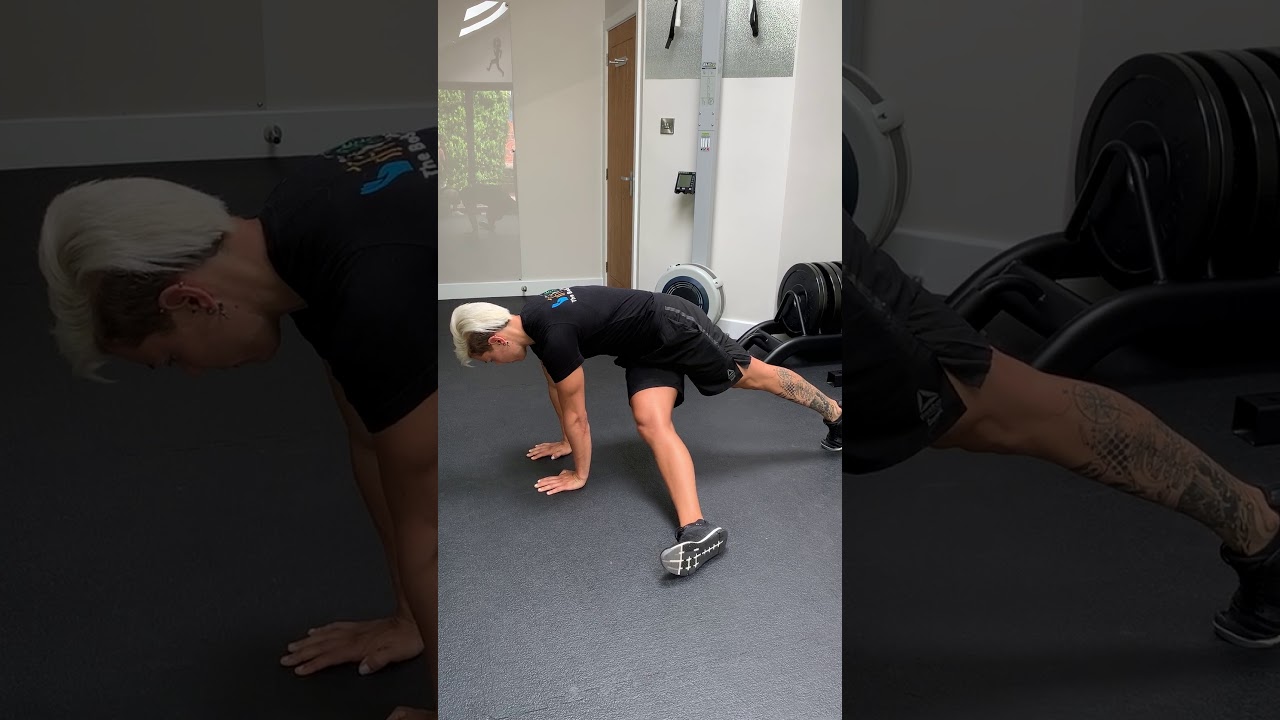
Reps: 4-8 on each side
- Get in a high-plank position with your shoulders over your hands, your arms extended and your body in a straight line from your head to your heels.
- Bring your right knee in between your arms, moving with control.
- Extend your right leg out to your left side, so your right lower leg is perpendicular to your torso, and tap your foot on the floor.
- Reverse the movement with control and repeat on the other side.
At the start of my rehab journey, I could barely complete eight reps in total (four on each side) and my leg extension was far from a 90° angle.
It took many months of consistent work—three times a week—to see results. A year on, I can now do up to 20 reps in total with good form and no discomfort.
No matter how my recovery progresses, I know grasshoppers will stay with me.
