




Can’t keep your heels down when you squat? Here's what it means and three exercises that’ll help fix this common issue
Address lower body tightness and weakness to improve your squat depth


The ankles and calves often get the blame when someone can’t sink into a deep squat without their heels lifting.
It affected me when I first started strength training in earnest and I’ve seen it countless times with clients of all ages and abilities.
Typically, it’s considered a sign of limited ankle dorsiflexion due to tightness in the calves or ankle joints restricting the shin from travelling toward the toes as you descend into a squat.
For some, however, especially those with particularly weak or tight hips, the heels lifting could actually be a protective mechanism to safeguard the body from injury.
For these individuals, ankle and calf stretches alone won’t resolve the issue.
Instead, improving hip mobility and strength through the full range and depth of a squat is what you need—starting with these three exercises.
Three squat variations to improve hip mobility and strength
Scaling back the unweighted version of a squat with these three regressions should help safely unlock the range of motion needed to perform this fundamental movement.
Through regular repetition over a few weeks, it will also improve your strength through every phase of the movement so you can execute it with good form—including keeping your heels planted.
When starting out, don’t worry about how many reps you can do. Just practice each version, exploring your range and improving gradually.
Once you’re confident with the technique, aim for three sets of each move, working for one minute, resting for one minute.
1. Suspension-trainer squat
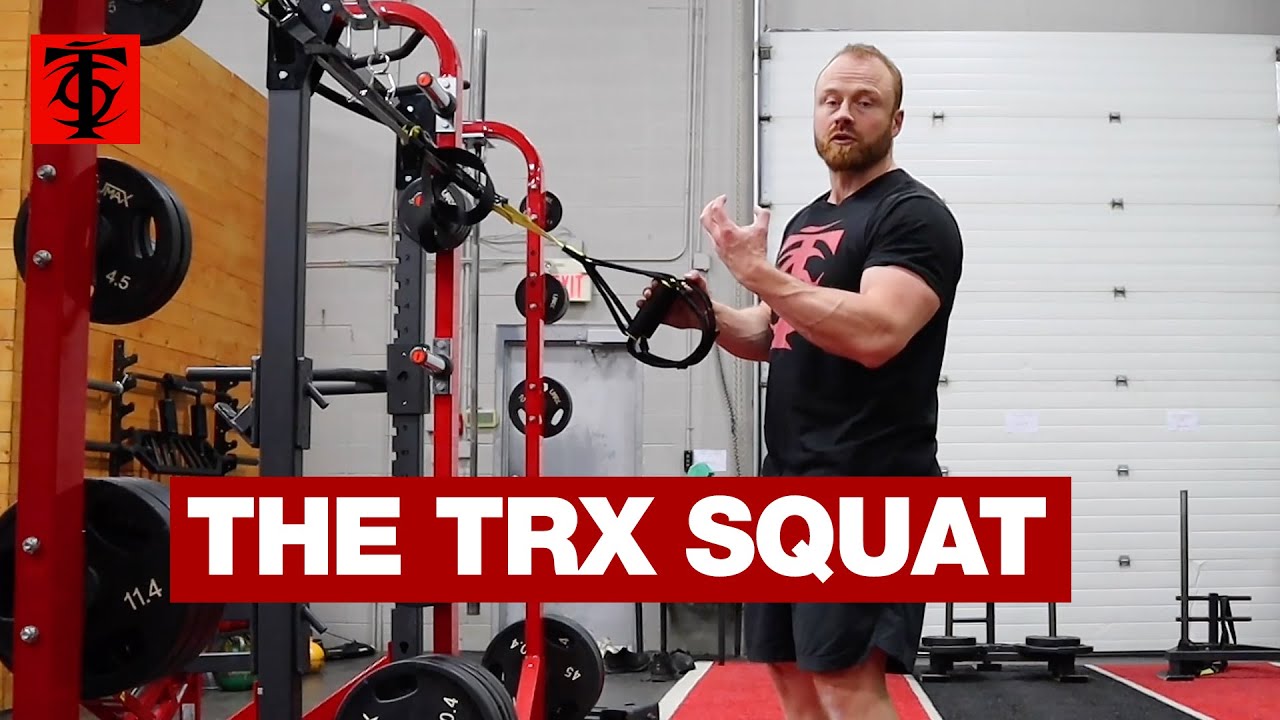
Use a suspension trainer like a TRX to remove balance from the equation so you can focus on sinking into a deep squat and retrain your ankles, knees and hips to accept the challenge.
How to do it:
- Set the straps of a suspension trainer to the mid-length position and hold the handles.
- Stand with your feet hip-width or slightly wider than hip-width apart, toes slightly pointing out.
- Lean back and bend your knees to initiate the squat.
- Focus on keeping your bodyweight in your heels, allowing your knees to open wide to create room around your hip capsules to sit deep into the squat.
- Pause for a few seconds at your lowest point, giving your hip flexors time to get comfortable in this deep position.
- Push through your heels, extend your knees and bring your hips forward to return to standing.
Progression: As your strength and mobility improves, aim to rely less on the suspension trainer for support.

2. Slow tempo sit-to-stand
Next, use a chair and slow the movement right down to build control. Focus on keeping your weight in your heels as you descend and ascend.
How to do it:
- Sit on the edge of a sturdy chair, with your feet around hip-width apart.
- Without using your hands, push through your heels, extend your knees and move your hips forward to stand.
- Slowly reverse the movements to sit back down, focusing on controlling your descent.
Progression: As your strength improves, slow your descent to the point where you can tap your butt lightly on the seat, then return to standing again with fully sitting back down.
3. Heel-elevated deep squat hold
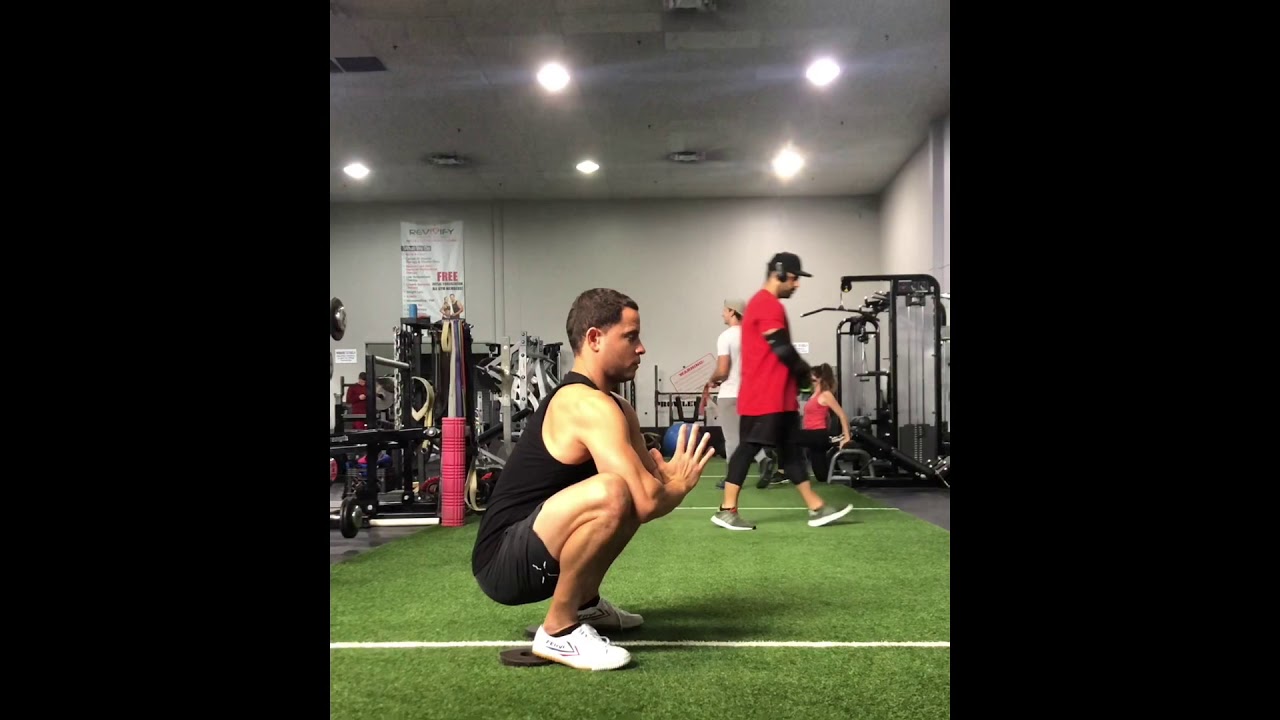
Work with your limitations by performing a deep squat where your hips go below knee-level, with your heels elevated but supported. Using thin weight plates or wedges allows your hips to get comfortable sitting in a deep squat.
How to do it:
- Stand with your feet hip-width or slightly wider than hip-width apart, toes slightly pointing out and weight plates underneath your heels—you can also use a suspension trainer to guide you into position.
- Push your hips back and bend your knees to lower your hips as far as possible, keeping your knees wide apart, your back flat, chest facing forward and the muscles in your lower body engaged.
- Crucially, make sure your weight is held in your heels rather than on your toes. Use thicker weight plates if necessary.
- Sit in this deep squat, breathing normally, allowing your joints, ligaments and muscles to become familiar with this position.
Progression: Over time, reduce the height of the weight plates until you can perform this move with heels flat on the floor.
