




This 60-second stretch practically fixed my mid-back pain in two weeks
A nagging ache bothered me for months but practicing this child pose variation helped


As a certified personal trainer, I recognize that stretching is an important component of a well-rounded fitness routine—but understanding the benefits of stretching and actually doing it are two different things.
Having neglected my flexibility recently, I’ve been paying the price with some nagging mid-back pain that flares up everytime I pick up my toddler-aged son.
I decided to try doing child’s pose every day for two weeks to see if it would impact my pain levels. Why this move? It’s easy and it’s gentle.
“This stretch lengthens the muscles along the mid and low back while the hips and knees go through a comfortable range of motion,” says Dr Michael Nula, a physical therapist and founder of Elite Physical Therapy. “It can be helpful in relieving muscle tension and unloading joint compression.”

Michael Nula is the founder and executive director of Nula Training Systems, a physical therapy business coaching and professional development firm, and founder of Elite Physical Therapy. Dr Nula also provides individualized recovery and performance-based care for elite and professional athletes.
How to do offset child’s pose
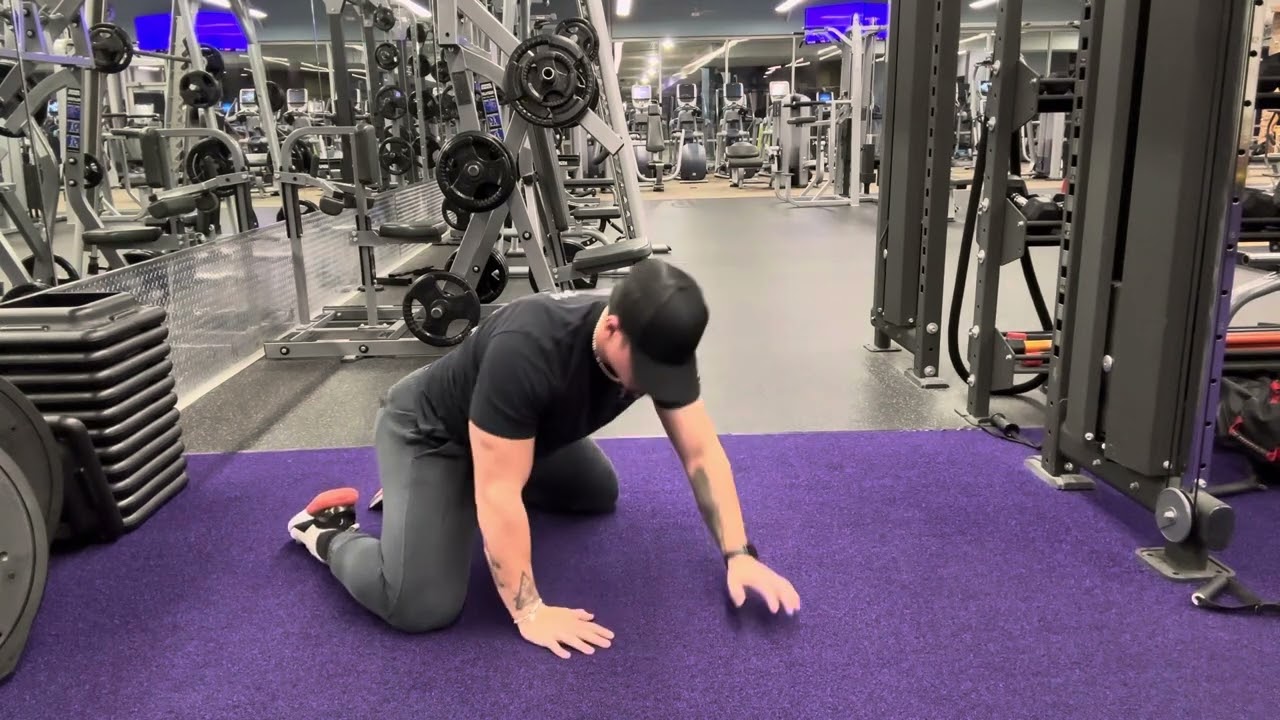
Sets: 1-2 Time: 30-60 sec each side
Offset child’s pose is appropriate for most people, but those with certain medical conditions or injuries may need to avoid it. Consult your physician if you have any reservations about doing this pose.
- Come down to your hands and knees.
- Widen your knees, bring your toes together and sit your hips back onto your heels.
- Reach both arms to the left.
- Hold for 30 to 60 seconds.
- Reach both arms to the right.
- Hold for 30 to 60 seconds
“Where people go wrong is forcing it,” cautions Nula.
“If your hips don't reach your heels, that tells you something about your hips, knees, or ankles. Put a pillow there and let the position meet you where you are.”
I started my two-week experiment by holding the stretch on each side for 30 seconds. Once I started to notice my range of motion improve, I added an additional 15 seconds of stretch time. By the last three days of the two-week stretch, I was holding the positions for 60 seconds each side.
In the beginning I did the stretch twice a day. My back started to feel better by the midway point, so I dropped to once a day.
Here’s everything else I noticed.
1. I was incredibly stiff at the beginning
I was shocked at how tight my shoulders and back were at first.
I could get into the pose without issue, but holding the position was challenging and bordered on uncomfortable. Fortunately, the more I did the stretch, the easier it got.
2. My range of motion quickly improved
After a few days, the pose started to feel more comfortable, so I increased my hold time to 45 seconds.
I was able to reach my arms further to each side than I had at the beginning, and my chest and hips dropped a little closer to the floor.
Dr Nula advised me to try focsusing on doing long, deep breaths in the pose and I found doing so helped improve my range of motion.
By the end of the two weeks, I could hold the stretch for 60 seconds on each side.
3. My mid-back finally loosened up
I suspected from the first day that my lack of mobility was playing a part in my mid-back pain.
I was right. After nine days of doing the pose and seeing mobility improvements, my mid-back pain was pretty much gone.
I was sitting more comfortably, carrying my son easier, and even doing chest presses with heavier weights.
Since it had been so effective, I decided that doing offset child’s pose needed to be a more regular part of my overall health regimen. I may slack on daily practice, but my goal is to keep doing it at least several times a week.
