




The four best kettlebell moves for beginners who want to build full-body strength
Ready for a new challenge? Swap your dumbbells for kettlebells


After working with a personal training client for a while, I like to introduce a new challenge in the form of kettlebells.
These weights are great for building full-body strength and the uneven weight distribution provides new stimulus for muscles in your forearms and around your wrists.
I typically start by introducing kettlebell goblet squats, goblet cleans, overhead presses and halos.
You need to know how to squat, overhead press and deadlift with proper form before attempting this routine.
Here’s how to do it.
How to do this full-body kettlebell workout
I make clients work through these exercises as a circuit, so you perform one set of reps of exercise one, followed by one set of reps for exercise two, and so on. Do all the exercises in sequence to perform one round. Complete between two and four rounds as time and/or your fitness allows. If your form begins to break down, that’s a sign that it’s time to stop.
1. Kettlebell goblet squat
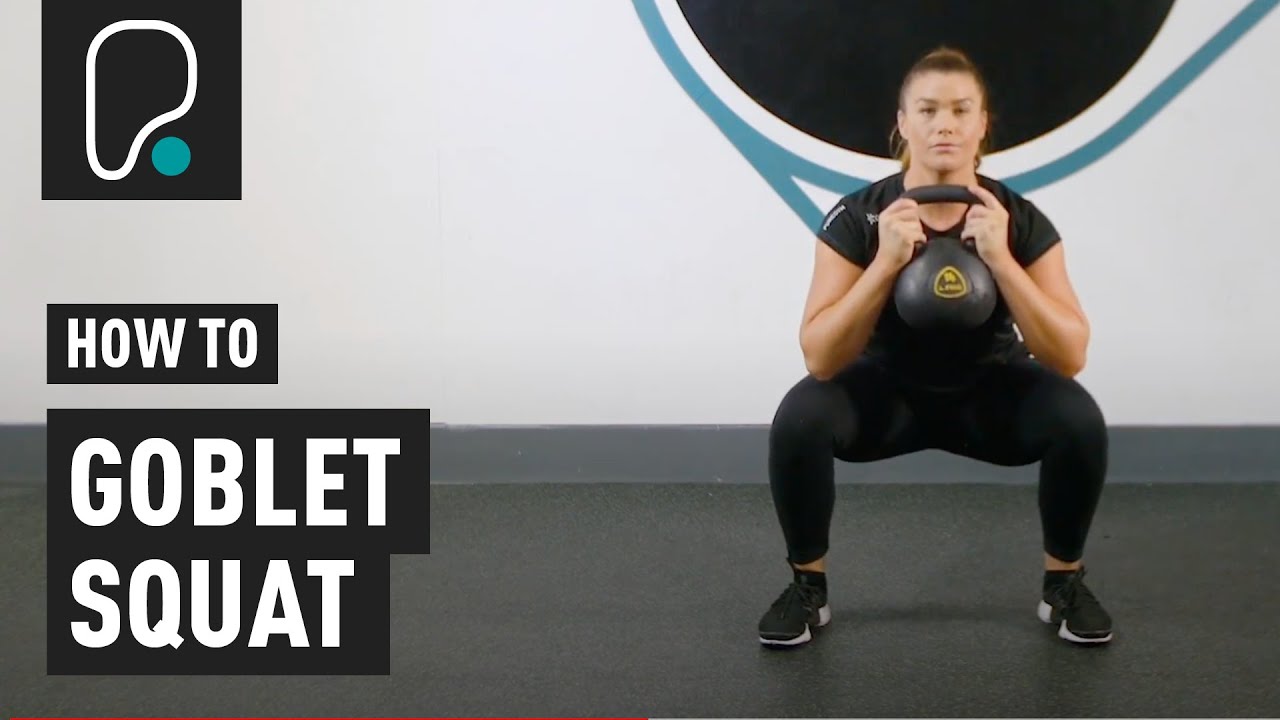
Reps: 8-12
- Stand with your feet hip-width apart, holding a kettlebell in front of your chest.
- Engage your core muscles.
- Push your hips back and bend your knees to lower, keeping your back straight, until your thighs are parallel with the floor.
- Pause briefly.
- Push through your feet to stand back up.
Trainer tips: Don’t let your torso lean forward excessively. If that happens, use a lighter kettlebell.
2. Kettlebell goblet clean
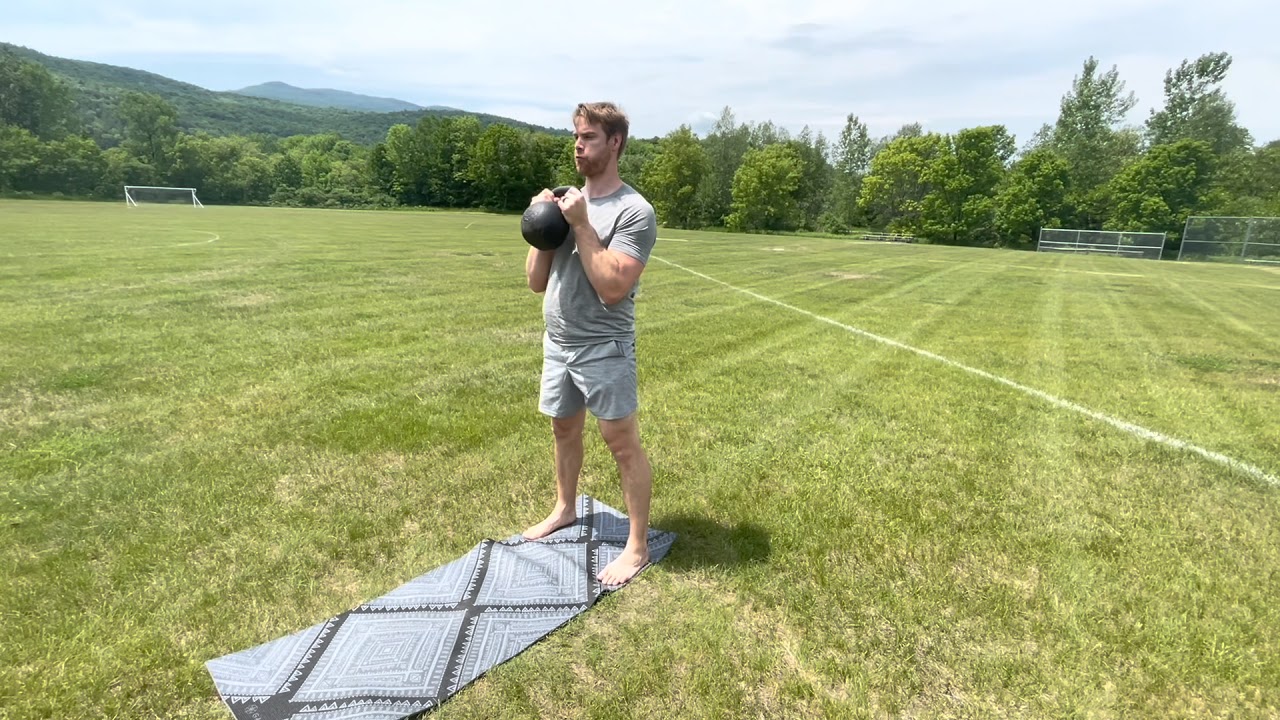
Reps: 8-12
- Stand with your feet slightly wider than hip-width apart, with a kettlebell on the floor between your feet.
- Engage your core muscles.
- Hinge at your hips, bend your knees, and lean forward.
- Grasp the top of the kettlebell handle with both hands.
- Drive your hips forward to stand upright, generating the momentum to lift the kettlebell vertically.
- As the kettlebell rises, move your elbows up and out to the sides and shift your grip from the top of the handle to the sides, catching the kettlebell in front of your chest.
- Reverse the movements to lower the kettlebell back to the floor.
Trainer tips: Don’t allow your back to arch or round. Stay in control of the movement at all times.
3. Kettlebell overhead press
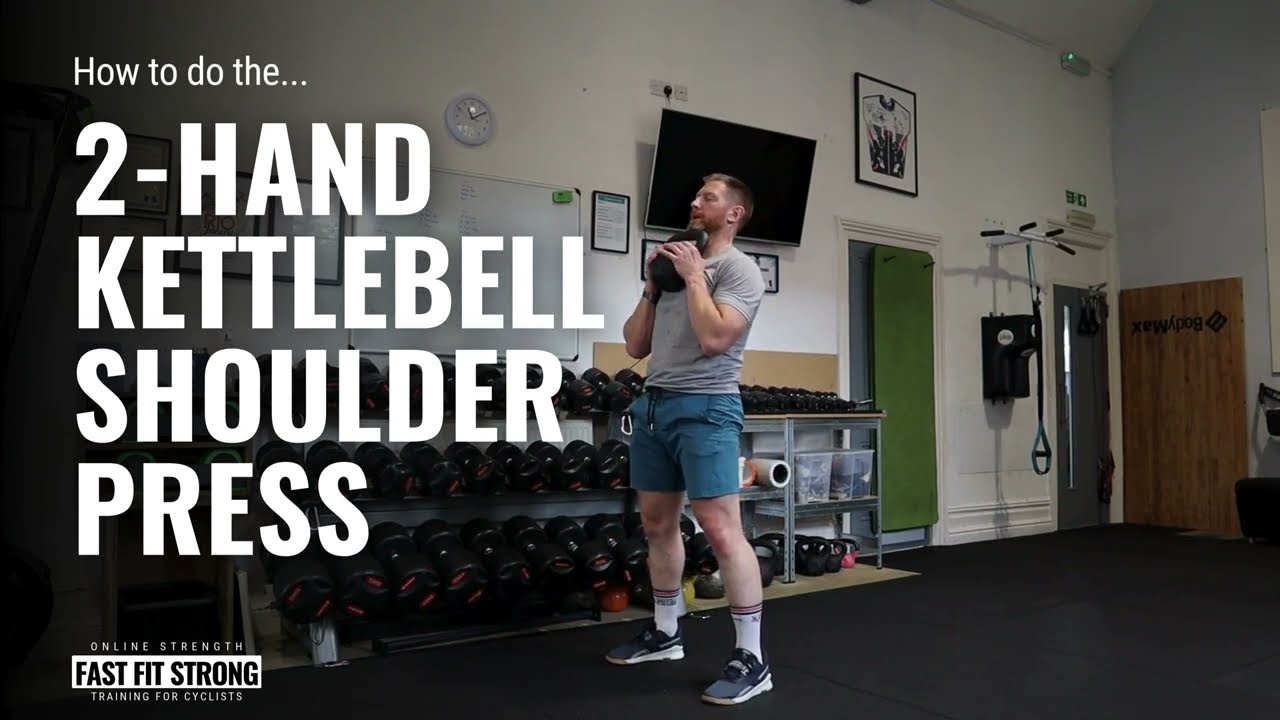
Reps: 8-12
- Stand with your feet hip-width apart, holding a kettlebell in both hands at chest level.
- Engage your core muscles.
- Press the kettlebell over your head.
- Pause briefly.
- Lower the kettlebell to your chest.
Trainer tips: Don’t allow your lower back to arch as you press the kettlebell overhead. Keep your ribs drawn in. The kettlebell should stay aligned with your body; don’t allow it to travel forward or backward as you press it overhead.
4. Kettlebell halo
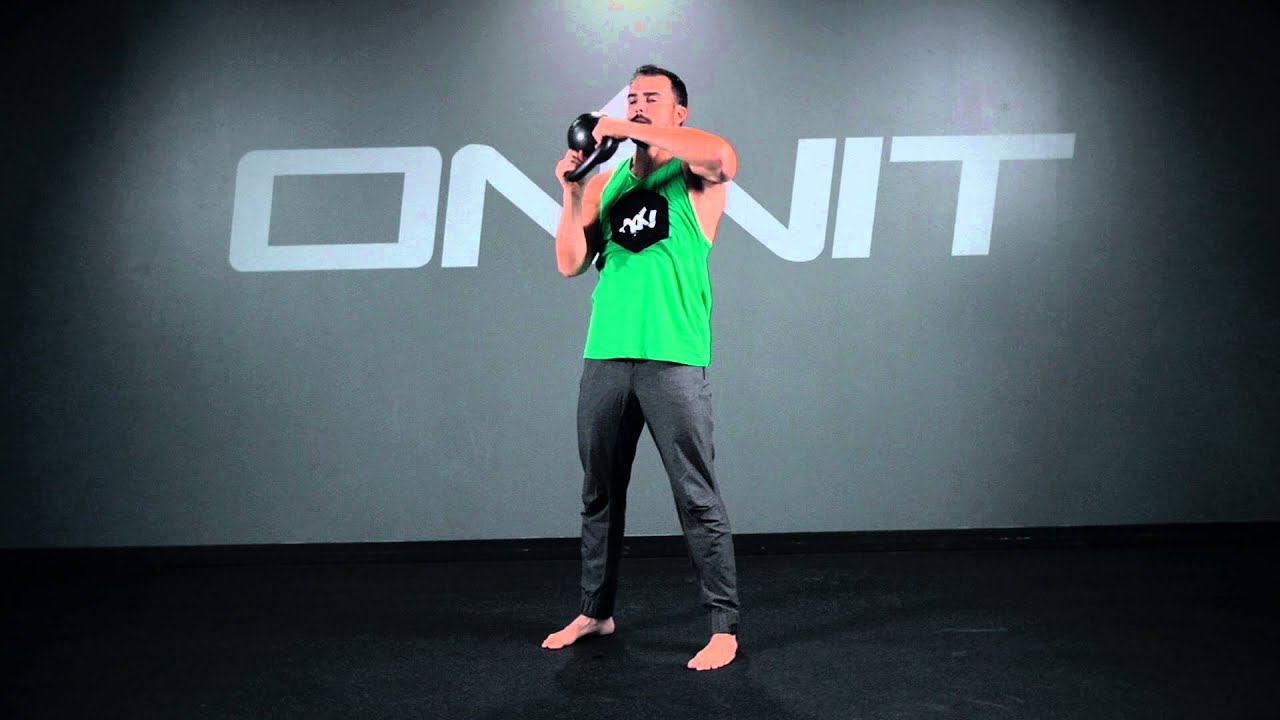
Reps: 8-12 each direction
- Stand with your feet hip-width apart, holding a kettlebell upside down by its handles at chest level.
- Engage your core muscles.
- Bring the kettlebell to your right shoulder.
- Circle the kettlebell behind your head, then bring it toward your left shoulder.
- Bring the kettlebell back to your chest.
- Reverse directions, bringing the kettlebell to your left shoulder.
- Circle the kettlebell behind your head, bringing it to your right shoulder.
- Bring the kettlebell back to your chest.
Trainer tips: Keep your elbows drawn in as you circle the kettlebell behind your head. Don’t let your back arch excessively. Stay in control of the movement and don’t let momentum take over.
