A personal trainer shares his four favorite core exercises to do with a medicine ball
Give your core a dynamic workout with a medicine ball


Sit-ups and crunches have their place in core workouts, but doing them on repeat gets boring fast—and limits your results.
Building functional core strength means training your body to do more than just crunch up and down; you need to challenge your muscles to twist, reach, and stabilize you from every angle.
Certified personal trainer Matt Bandelier at Eden Health Clubs has created a medicine ball workout to do just that.
The four moves below will keep your core workouts interesting, while also challenging your muscles to adapt to new demands.
1. Medicine ball squeeze and press
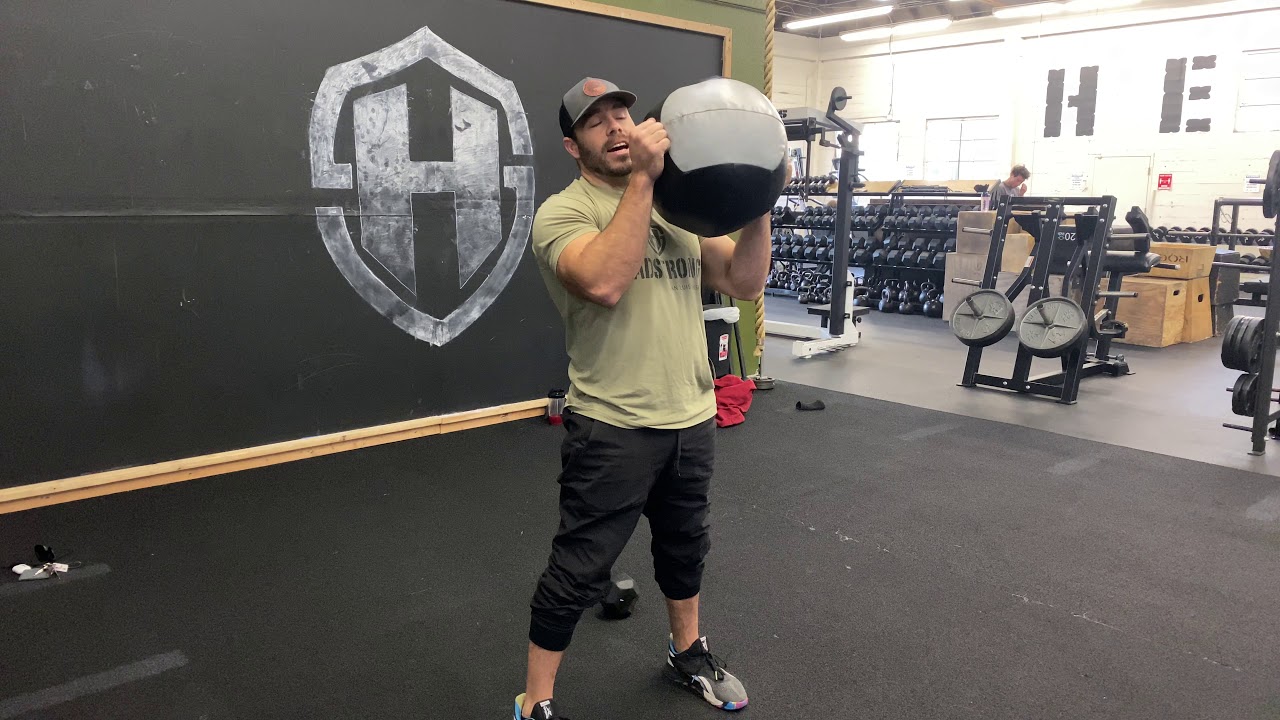
Sets: 3 Reps: 12-15 Rest: 45-60sec
Bandelier says this move forces your core to brace, resist extension, and compress at the same time.
“By squeezing the ball in front of your chest and pressing it [out] while maintaining your stability, you [target] the deep transverse abdominis, rectus abdominis, and internal obliques more than with a standard press or curl. That midline bracing is exactly what builds a functional, powerful core.”
Choose a light to moderate-weight medicine ball.
How to do it:
- Stand with your feet hip-width apart, holding the medicine ball in front of your chest with both hands or with closed fists.
- Press your elbows together slightly to squeeze the ball and activate your deep core.
- Slowly extend your arms to press the ball in front of you. You don’t need to extend fully, but you must maintain tension throughout the movement.
- Hold for a few seconds, resisting any swaying, twisting or arching.
- Return the ball to your chest.
2. Standing woodchop
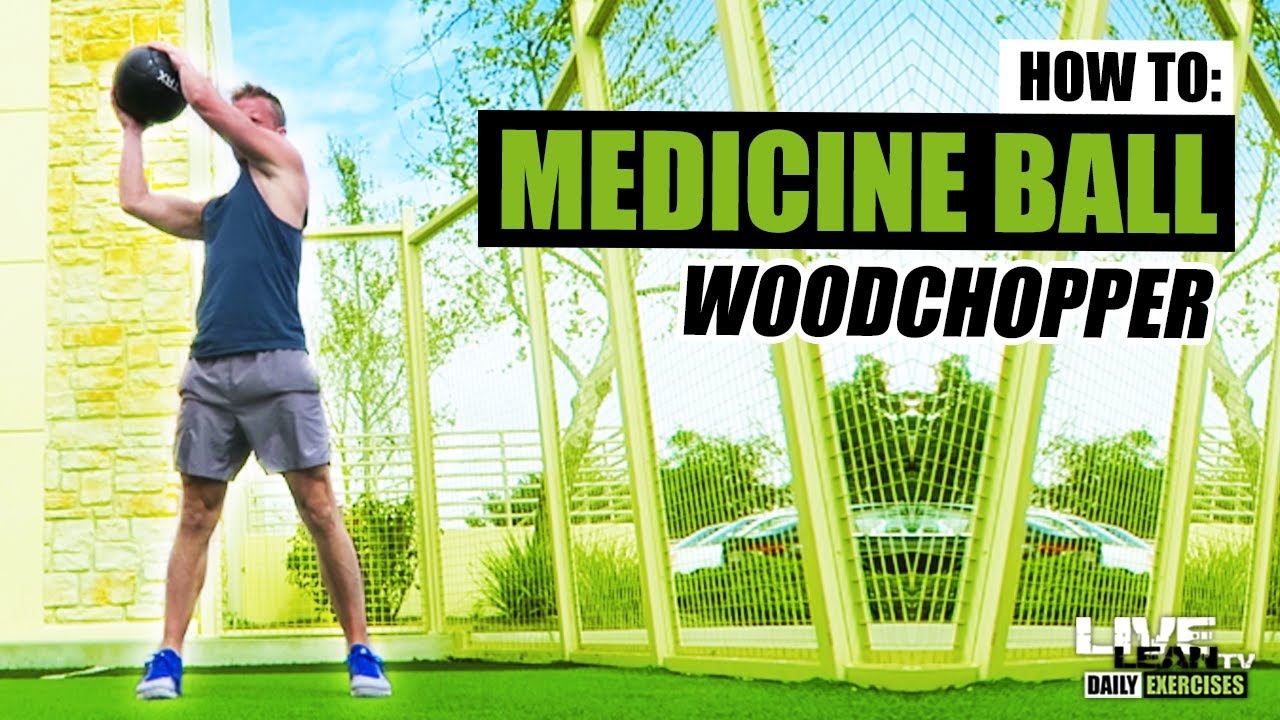
Sets: 3 Reps: 12 each side Rest: 45sec
“Your core isn’t just for flexion [bending]—it stabilizes and produces rotation, too,” says Bandelier.
“Woodchops engage the internal and external obliques while integrating the hips and torso in a functional force transfer pattern.”
How to do it:
- Stand with your feet shoulder-width apart, holding the medicine ball in both hands with your knees slightly bent.
- Pivot your feet and rotate your torso to start with the ball on the outside of one hip.
- Drive through your feet and rotate your torso to raise the ball diagonally across to your opposite shoulder.
- Reverse the movements back to the starting position with control.
- Complete all the repetitions on one side, then repeat on the other side.
Form tips: Keep your arms straight and eyes on the ball. Pivot your back foot to protect your knee.
3. Medicine ball overhead slam
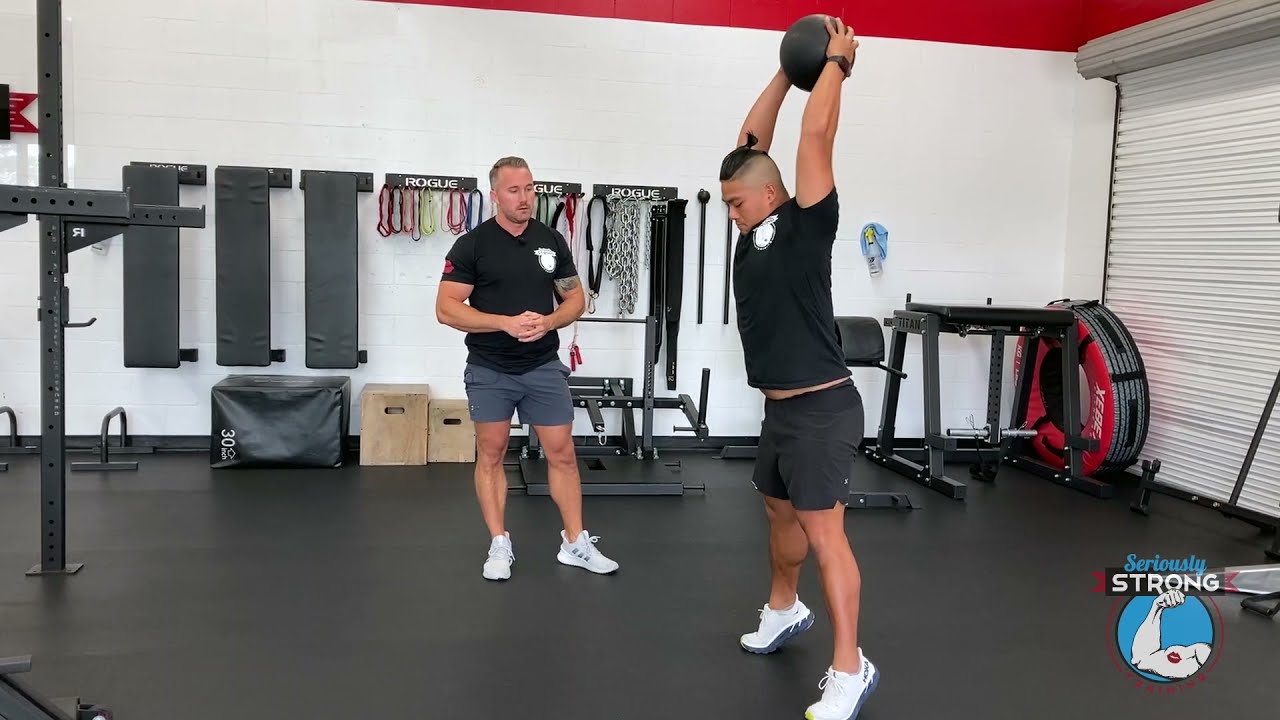
Sets: 4 Reps: 15 Rest: 60sec
“This dynamic move recruits your core through high-velocity extension and compression,” says Bandelier.
“Slams train both deep stabilizers and superficial ab muscles under power, improving strength and rate of force development more than slow, traditional crunches.”
How to do it:
- Stand with your feet hip-width apart, holding the medicine ball in front of your chest in both hands.
- Inhale as you press the ball overhead, fully extending your hips and rising onto your toes.
- Exhale as you forcefully throw the ball straight down.
- Catch the ball if it bounces or squat to pick it up to repeat, maintaining a flat back.
4. Unstable medicine ball plank
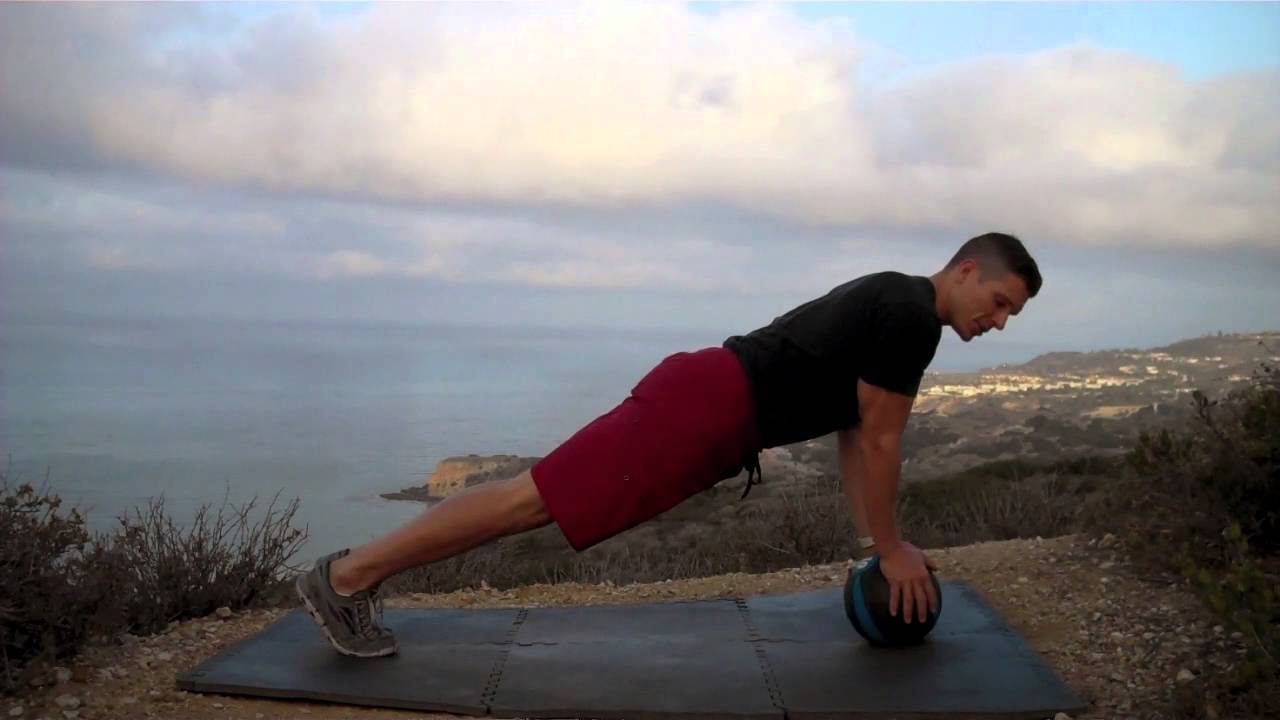
Sets: 3 Hold: 30-60sec Rest: 60sec
“Adding instability forces your nervous system to recruit deep core stabilizers [including transverse abdominis and serratus anterior] to resist collapse or rotation. This improves core endurance and shoulder stability.”
How to do it:
- Place the medicine ball on the floor and press both hands onto the ball, directly under your chest.
- Step your feet back and hold your body in a straight line from head to heels. The further apart your feet are, the easier it will be to keep your balance.
- Push your hands into the ball, squeezing your shoulder blades together. Engage glutes and quads for stability.
Form tips: Do not let your hips sag or lift.
