


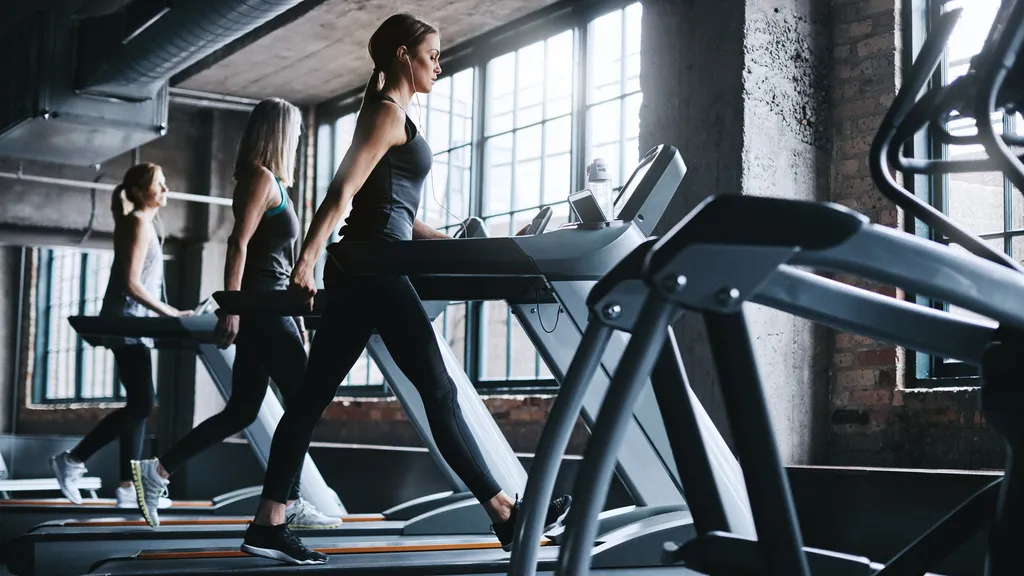


The four things a personal trainer tells her parents to do to stay strong and independent as they get older
Certified personal trainer Anwen Davies has also created a helpful seven-day schedule that anyone can follow


Staying strong, mobile and steady on your feet becomes increasingly important as we age. But what should older adults prioritize to help them remain independent for longer?
“My advice to my parents to help them stay independent as they get older is to maintain strength in their legs, keep their joints mobile and work on improving their balance,” says certified personal trainer Anwen Davies, who is also a gym and fitness product developer at Net World Sports and co-founder of fitness coaching program The Lady Lab.
“Muscle and strength are lost with age and that process sadly will only speed up without staying active. The simplest of tasks, like getting out of a chair each day, become that little bit more difficult with reduced strength and the risk of suffering a fall increases,” Davies tells Fit&Well.
“Helpfully, though, our muscles will respond to exercise at any stage of our lives.”
She recommends focusing on four areas: building leg strength, keeping joints mobile, practising balance and walking regularly, particularly brisk walking.
While that may feel like a lot, Davies has suggested a seven-day routine that will help make exercise a consistent habit.
First, Davies explains how to train each of the four elements, and then details the weekly exercise plan.
1. Build stronger legs
“Stronger legs make simple everyday tasks we don't think about that much easier,” says Davies.
She tells her parents to do step-ups, chair squats, calf raises and bird dogs to build lower-body strength and stability, helping to make movements like climbing stairs and getting out of a chair easier.
She recommends starting with eight to 10 repetitions (on both sides where applicable) for two sets, two or three times a week on non-consecutive days.
“Rest for 60 to 90 seconds between sets and [for step-ups] choose a step height that makes the last two reps feel slightly tougher but still controlled,” she says.
“Strength training works best when challenging the muscles a little more than they are comfortable with, so the last few reps of each set should feel like effort is being applied,” she adds.
1. Step-up
Sets: 2-3 Reps: 8-10 each side
- Stand in front of the bottom stair or a low, stable step.
- Step your right foot onto the step.
- Press through your right foot to extend your right knee and lift your left foot onto the step.
- Step your left foot back to the floor with control, followed by your right.
- Repeat, leading with your left foot, continue to alternate your leading foot with each rep.
Davies says: “Step-ups build single-leg strength and coordination, which matters because walking and climbing stairs are both done one leg at a time.”
2. Chair squat
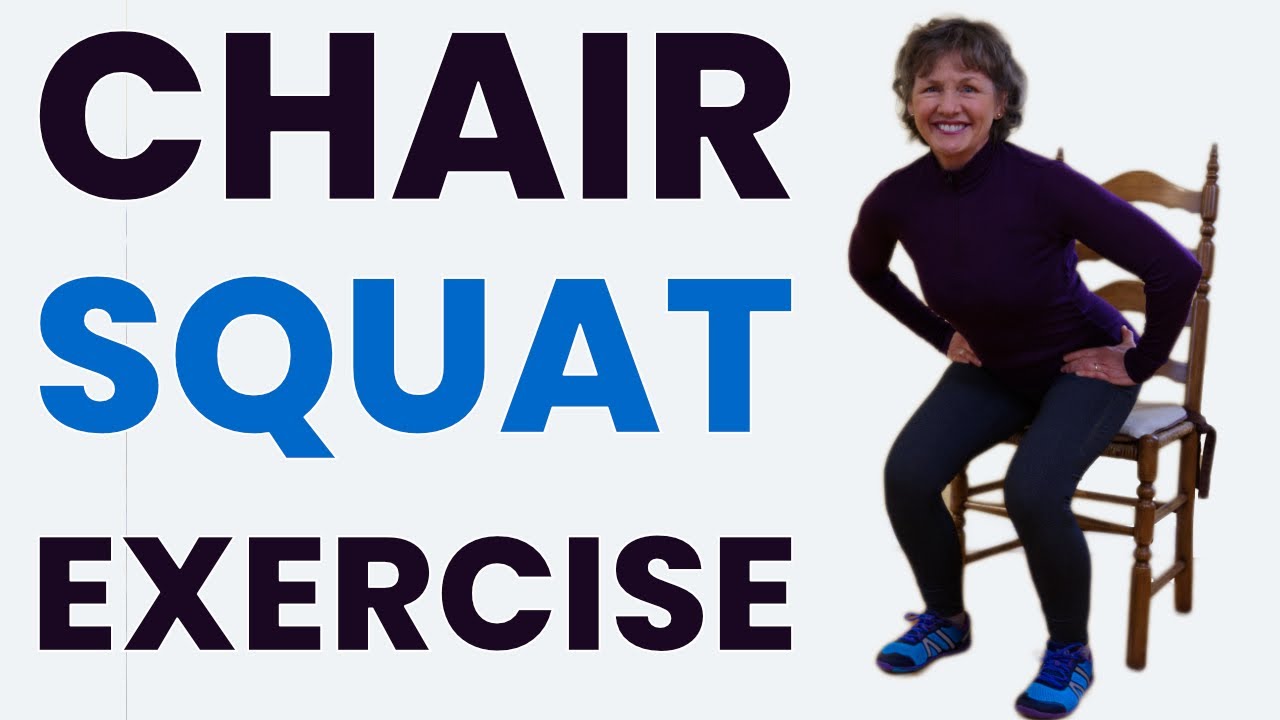
Sets: 2-3 Reps: 8-10
- Stand with your feet hip-width apart and a sturdy chair behind you.
- Carefully sit back with control, pushing your hips back and bending your knees until your butt lightly taps the seat.
- Push through your feet and lean forward to stand back up.
Davies says: “This is an example of a compound movement, meaning it works lots of big muscle groups all at the same time, including your thighs and glutes. It will help improve overall lower-body strength and is the exact motion used to allow us to get up from a chair, a toilet or out of a car.”
3. Calf raise
Sets: 2-3 Reps: 10-15
- Stand with your hands lightly resting on a stable surface such as a table or kitchen counter.
- Rise onto the balls of your feet, pause briefly, then lower slowly.
Davies says: “Focus on ensuring your knees do not roll inwards, because you won't feel the benefits if it's not done correctly. If you nail the technique, it targets the calf muscles, which are some of the most important for walking and overall mobility.”
4. Bird dog
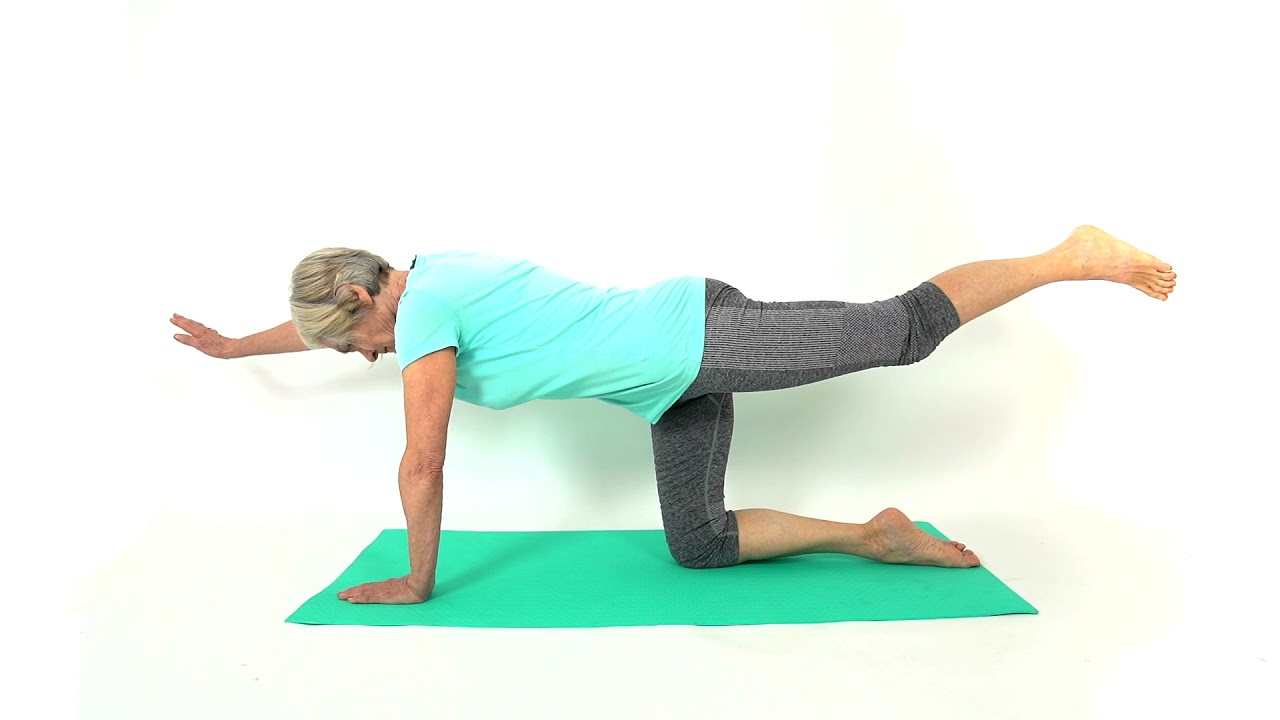
Sets: 2-3 Reps: 6-8 each side
- Start on all fours with your shoulders over your wrists and your knees beneath your hips.
- Lift your right arm in front of you and extend and lift your left leg behind you, aiming to create a straight line from your right hand to your left heel.
- Hold this position for a couple of seconds, then return to the start and repeat on the other side.
Davies says: “This exercise trains the core and improves stability, giving your back better support and providing better balance.”
2. Keep your joints moving
Maintaining mobility is just as important as building strength, because it allows you to move more comfortably and continue doing everyday activities with ease.
But while it’s as essential as strength training, it won’t take anywhere near as long. “A few minutes most days will do the trick,” Davies says, “either as a warm-up before the strength work or you could even do this while watching TV in the evening!”
She says she encourages her parents to do the world's greatest stretch and seated hip rotations (90-90) regularly.
1. World’s greatest stretch
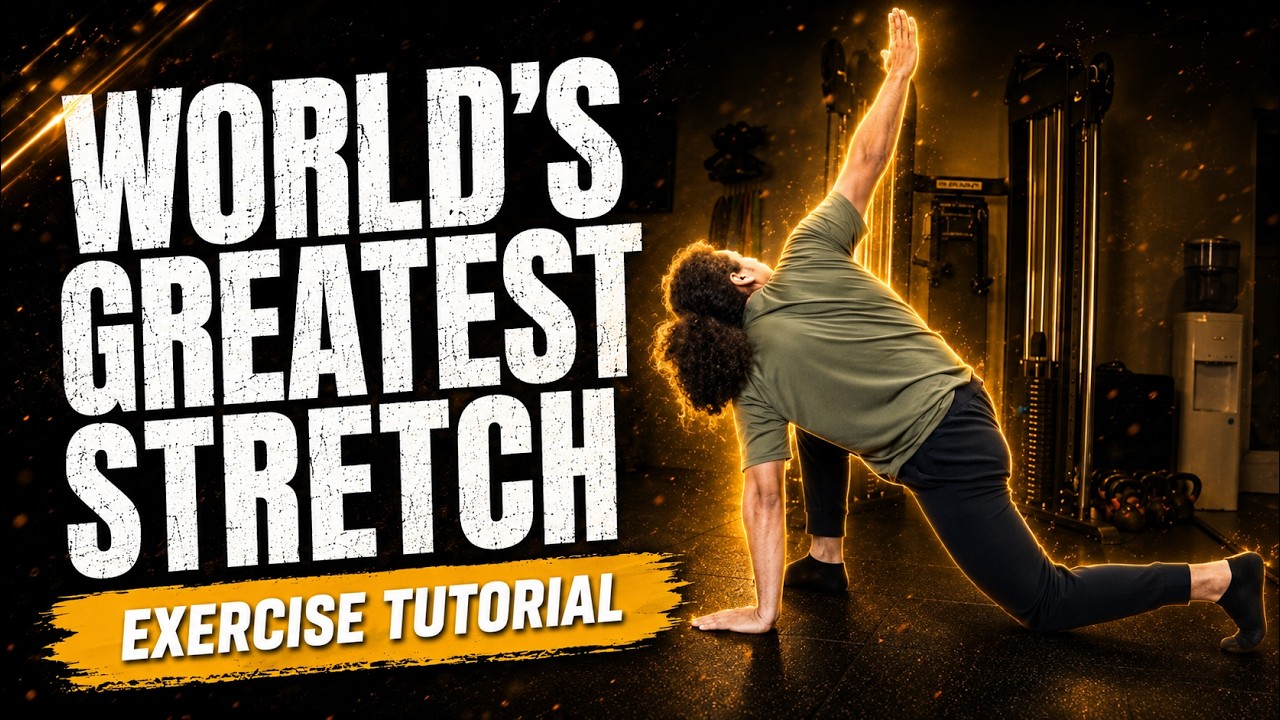
Sets: 1 Reps: 4-5 each side
- Take a big step forward with your right foot and bend both knees to lower, placing both hands on the floor or on a sturdy raised surface for support.
- Rotate your chest to face your right knee and lift your right arm so its vertical (or as close to as your mobility allows).
- Hold this position for a couple of breaths before returning to the starting position and repeating on the other side.
Davies says: “The world’s greatest stretch works multiple muscles at once, including the hips, hamstrings, back and chest, in one flowing movement. Aim for four to five reps on each side, holding the open position for a couple of breaths.”
2. Seated hip rotations (90-90)

Sets: 1 Reps: 8-10
- Sit on the floor with your knees bent and feet slightly wider than hip-width apart, and your hands on the floor behind your hips.
- Lean back onto your hands for support, keeping your feet on the floor.
- Lower both knees to the left with control.
- Return to the center and repeat on the other side.
Davies says: “Having effective rotation of your hips makes it much easier to do the types of things we perhaps are guilty of taking for granted, like walking with a natural stride, getting in and out of the car and putting socks and shoes on.
“If one side feels tighter or weaker than the other, that is worth bearing in mind, as it is something you can work on over a longer period.”
3. Practice balancing
Being able to stay steady on your feet is essential for maintaining independence and reducing the risk of falls. Davies recommends two simple exercises to help her parents practise their balance.
“Balance is a skill that will gradually fade if it is not used regularly enough, but—as with many things—practice makes perfect,” she says.
1. Single-leg stand
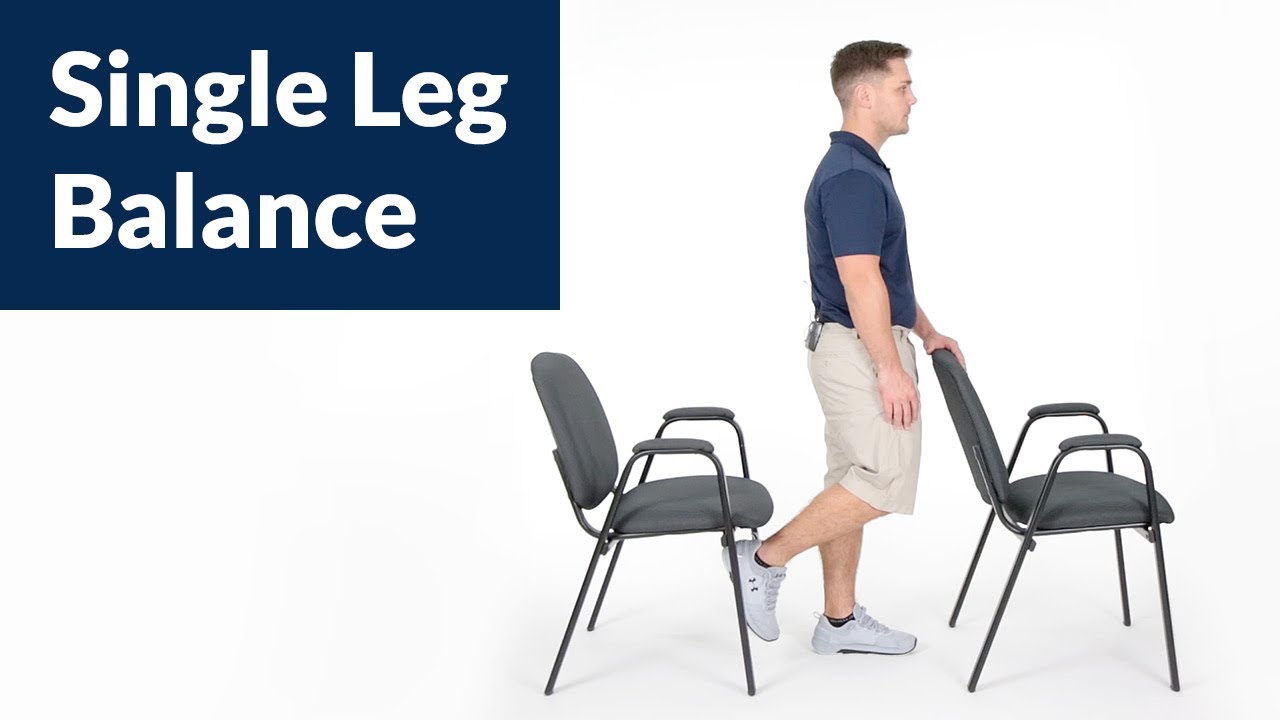
Sets: 2-3 Time: Up to 30sec each side
- Stand in front of a counter or sturdy chair, keeping it close enough to grab if needed.
- Transfer your weight onto your left leg, keeping your shoulders back and engage your core.
- Slowly lift your right foot off the floor and maintain your balance for up to 30 seconds.
- Repeat on the other side.
2. Heel-to-toe walk
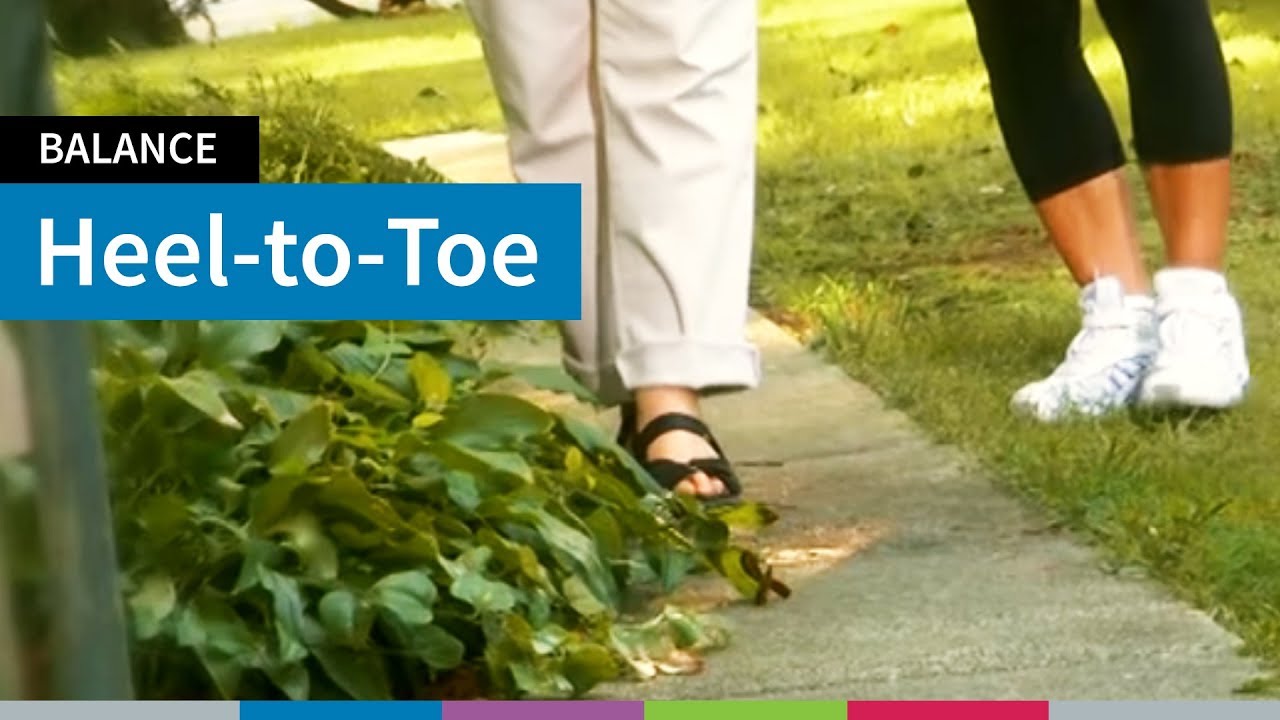
Sets: 2-3 Reps: 10 steps each way
- Start with your feet together and stand beside a counter or sturdy support if needed.
- Walk in a straight line by placing your right heel directly in front of your left toes, so they touch or nearly touch.
- Continue placing one foot directly in front of the other for 10 steps.
- Turn around and walk 10 steps back.
Davies says: “This narrows the base of support and trains your body to correct itself with each step as you do it.”
4. Walk regularly
Davies also says seniors should aim for 150 minutes of moderate activity a week, such as brisk walking, to support their long-term health.
“Start small, keep the routine consistent and build up gradually. Consistency is the key here and I would stress that to any parent looking to build up muscle and strength. Keep at it and you'll see the results,” she says.
Seven-day exercise plan for older adults
Here, Davies has devised a seven-day plan to help older adults incorporate her recommended exercises into their weekly routine.
“The whole routine will take around 20 to 30 minutes on strength days and under 10 minutes on the others, with some walking factored in on top of this,” she says.
“Combining strength and balance exercises helps maintain the physical abilities that are important for staying steady on your feet and reducing the risk of falls.”
Monday |
Strength, mobility, balance and a 10-minute brisk walk |
Tuesday |
30-minute brisk walk, mobility and balance |
Wednesday |
Strength, mobility, balance and a 10-minute brisk walk |
Thursday |
30-minute brisk walk, mobility and balance |
Friday |
Strength, mobility, balance and a 10-minute brisk walk |
Saturday |
60-minute walk or an activity you enjoy, such as swimming or gardening |
Sunday |
Rest, with an optional gentle mobility session (5-10 minutes) |
“Don't neglect rest days, as muscle is built during recovery periods,” Davies says. “Anyone starting from a very low base of activity can start off with strength twice a week and build things up from there.”
She also says seniors shouldn’t feel intimidated by starting a new fitness routine.
“I would urge anyone in later life to see this as an opportunity to secure their own independence, rather than it being seen as exercise for exercise’s sake,” Davies says.
“Stronger legs make everyday tasks easier, mobile hips and ankles make walking more comfortable, and better balance helps reduce the risk of falls. Together, these give people a better chance of staying independent and doing the things they enjoy for longer.”
