





Do these four stretches after walking to maintain your mobility and keep stiffness at bay
Tag these easy moves onto the end of your walk to keep your legs feeling fresh


Walking is a great, beginner-friendly exercise—but doing it in big doses can make you stiff and sore.
While a short stroll won’t leave you feeling this way, a longer session could put strain on your quads, hamstrings, calves and hips.
Dr Margaret Tsai, a physical therapist with Sutter Health, recommends doing the four stretches below after a hike to decrease joint stiffness and reduce muscle tension.
“These stretches target the major muscle groups that are utilized [during walking], specifically the core, back, hip/glutes, hamstrings, and calves,” she says.
She suggests holding each static stretch for 10-30 seconds.
“For older individuals, there may be more benefit from a longer duration of 30 to 60 seconds,” she adds.
“The cat-cow doesn’t fit the static hold category perfectly, and tends to correspond with breathwork. Aim to do this for about one minute.”
If you have any injuries or reservations, check with your doctor before doing these moves.
“You should gradually ease into these stretches until you feel a comfortable degree of tension, but never any pain,” cautions Tsai.
“For all the stretches except cat-cow, try to keep your back in a neutral position and not rounded.”
Try stretching two to three times per week initially, building your way up to stretching every day.
Four stretches for walking
1. Standing calf stretch
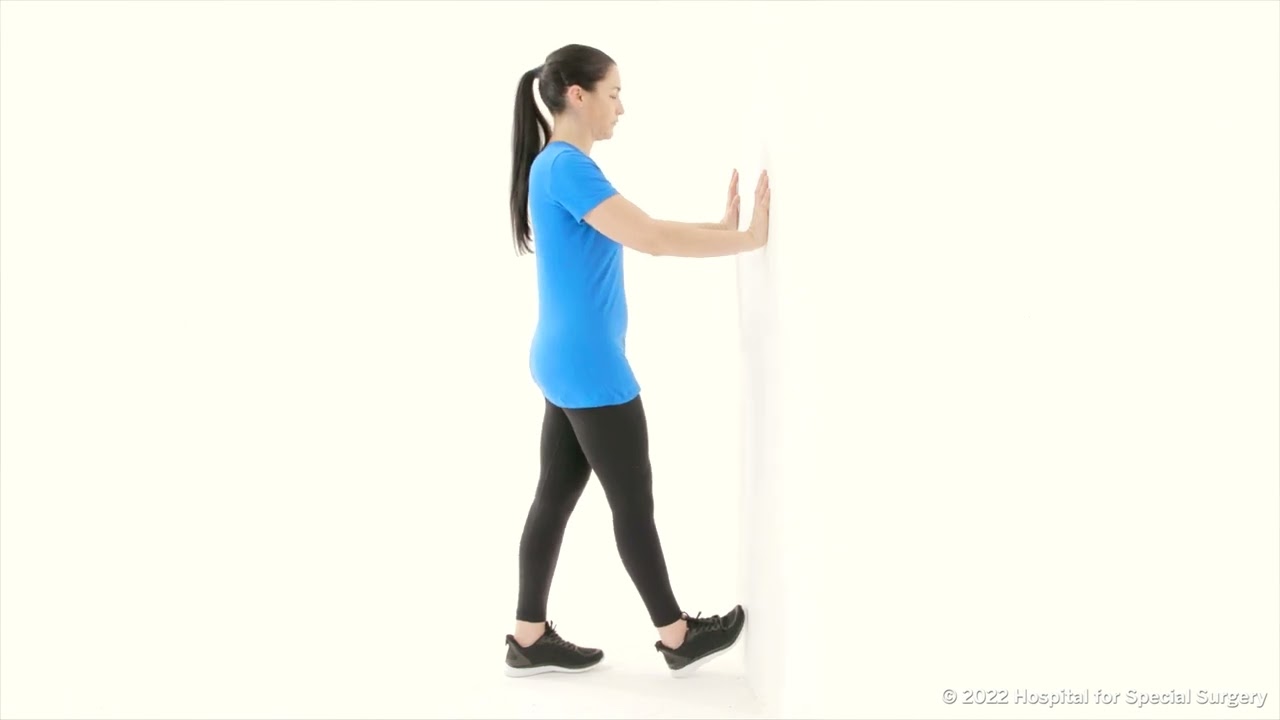
Time: 10-60sec
- Stand in front of a wall with your feet hip-width apart.
- Place your hands against the wall.
- Position your right toes against the wall, keeping your right heel on the ground.
- Lean forward until you feel a stretch in your right calf.
- Hold for 10 to 60 seconds.
- Repeat on the other side.
Tips: If you feel a stretch by just placing your toes on the wall, pause there and don’t lean forward. Keep the knee of your stretching leg straight. The closer your heel is to the wall, the more intense the stretch will be, so adjust your heel position as needed.
2. Cat-cow
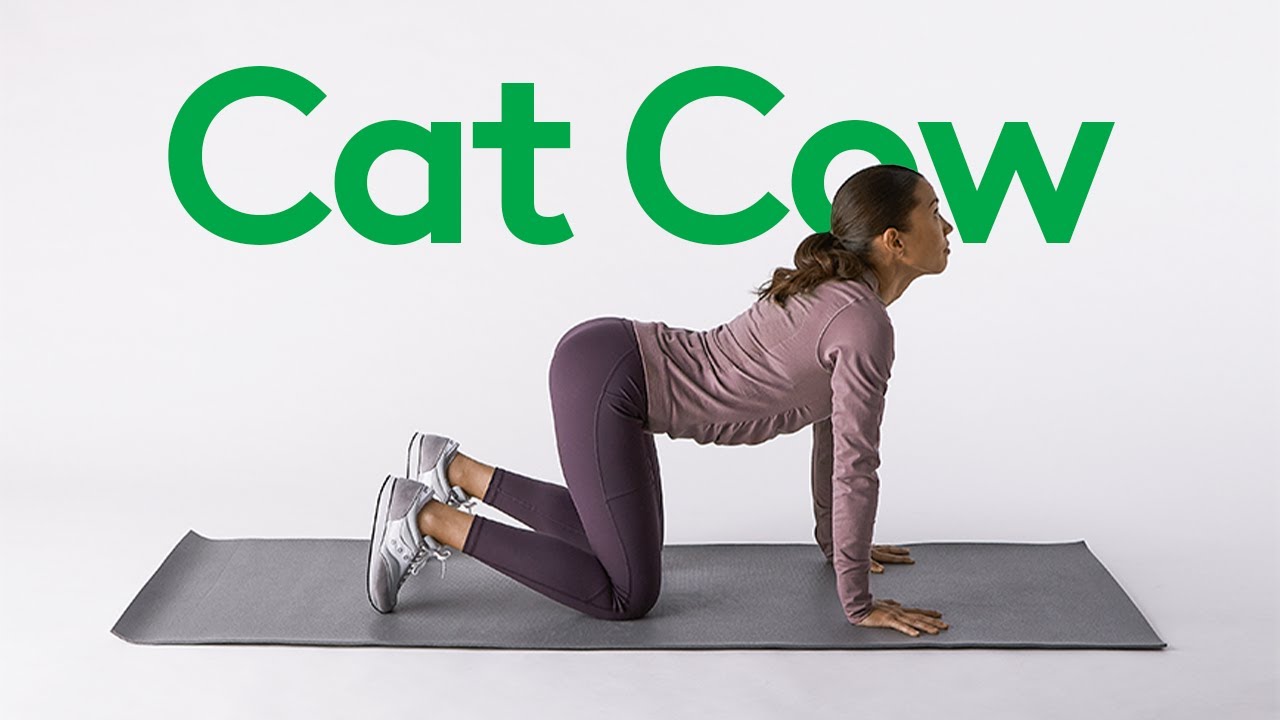
Time: 1min
- Come to your hands and knees.
- Gently round your back, tucking your chin and your tailbone to perform cat pose.
- Pause briefly.
- Gently arch your back, aiming your head and tailbone towards the ceiling, to perform cow pose.
- Pause briefly.
- Alternate between the two positions for one minute.
Tips: “Move slowly into each cycle of the cat-cow stretch, exhaling with the cat position for spinal flexion [rounding your back] and inhaling as you move into the cow position for spinal extension [arching your back],” says Tsai.
3. Figure-four stretch
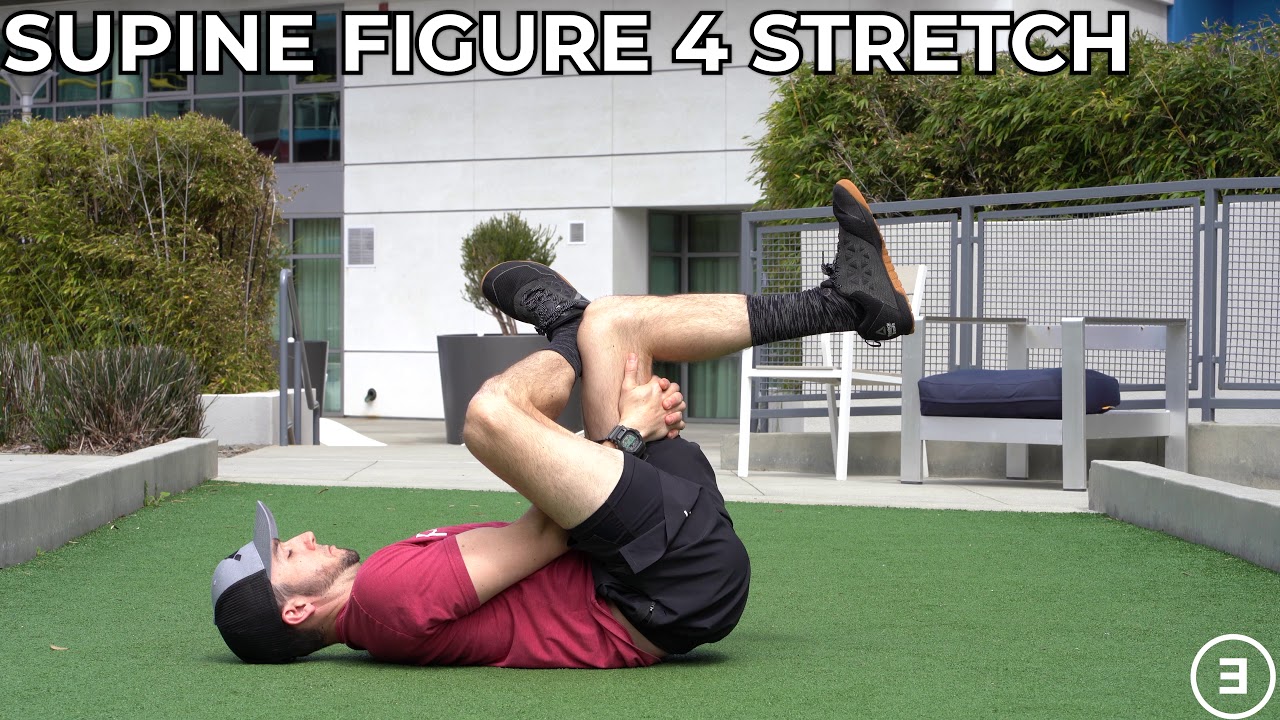
Time: 10-60sec each side
- Lie on your back with your knees bent and feet flat on the floor.
- Cross your right leg over your left, placing your right ankle just below your left knee.
- Lift your left leg and bring your left knee toward your chest.
- Grasp your left thigh.
- Hold for 10 to 60 seconds.
- Lower your left leg and repeat on the other side.
Tips: If you feel a strong stretch without lifting your leg, stay in the starting position.
4. Standing hamstring stretch
Time: 10-60sec each side
- Stand with your feet hip-width apart.
- Place your right foot in front of you.
- Bend your left knee.
- Hinge your hips behind you, as if you were about to sit down.
- Lift your right toes, keeping your right heel on the floor and your right leg extended.
- Place your hands on your left thigh for support.
- Hold in this position for 10 to 60 seconds.
- Repeat on the other side.
Tips: If you have balance issues, perform this stretch near a solid surface, like a wall or chair, and hold onto it for support. The further you hinge your hips behind you, the more intense the stretch will be. You can also place the foot of your stretching leg onto a raised surface, like a step or stool, to deepen the stretch.
