





Can’t sit up straight without a seat back? Here’s why it’s bad news and what you can do to fix it
The best remedy for slouching is to move more often


Remember when your teachers used to nag you about sitting up straight? It turns out that they were onto something.
“Prolonged slouching increases load on the disks and structures at the base of the neck,” says Dr Sean T. Lordan, owner and physical therapist at Concierge Physical Therapy.
“It’s commonly associated with neck pain, tension headaches, low back stiffness, and even shallower breathing because the rib cage can’t properly expand.”
While that information may inspire you to hit the gym and strengthen your back, he explains that staying in one position for too long (especially a slumped-over one) is the real issue.
“Slouching is usually less about raw strength and more about endurance and habit,” he says.
Lordan explains we have a set of muscles in our torso, neck and back that can hold us upright for long periods with minimal effort.
When these muscles fatigue or stop being used, gravity pulls your head and upper back forward, forcing your body to hang on ligaments and passive structures.
Sitting in this slouched position not only puts strain on these tissues, but it can hurt your muscles, too.
“Over time, the chest and hip flexors tighten and the upper back muscles lengthen and weaken, which then makes the slouched position feel normal.”
The best way to avoid this is by moving frequently, but Lordan says that doing chin tucks, banded pull-aparts, and dead bugs can also address the negative effects of slouching: a forward head posture, rounded shoulders, and lack of deep core control.
You’ll just need a resistance band and a yoga mat to do these exercises.
How to do the three exercises
Check in with your doctor before starting any new activity.
Working with a personal trainer or physical therapist can be helpful, as they can ensure you’re doing each exercise correctly. They can also provide modification options if needed.
These exercises may cause muscle fatigue but never sharp pain. If you feel sharp pain at any point, discontinue the exercise and speak with your doctor before resuming.
1. Chin tuck
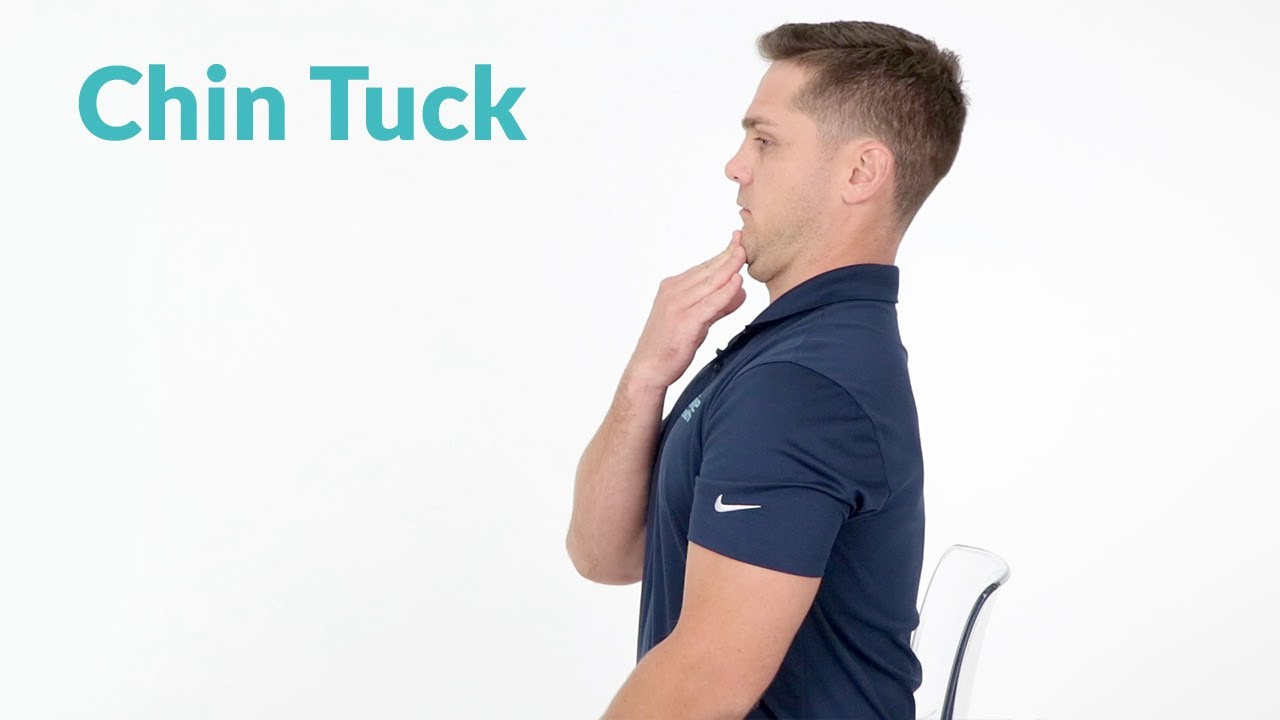
Reps: 10 Hold: 10sec
- Sit upright.
- Glide your chin straight back.
- Glide it forward, then repeat.
“Don’t tilt your head down. Keep your eyes level. You should feel a stretch at the base of your skull, not strain in the front of your neck,” says Lordan.
2. Banded pull-apart
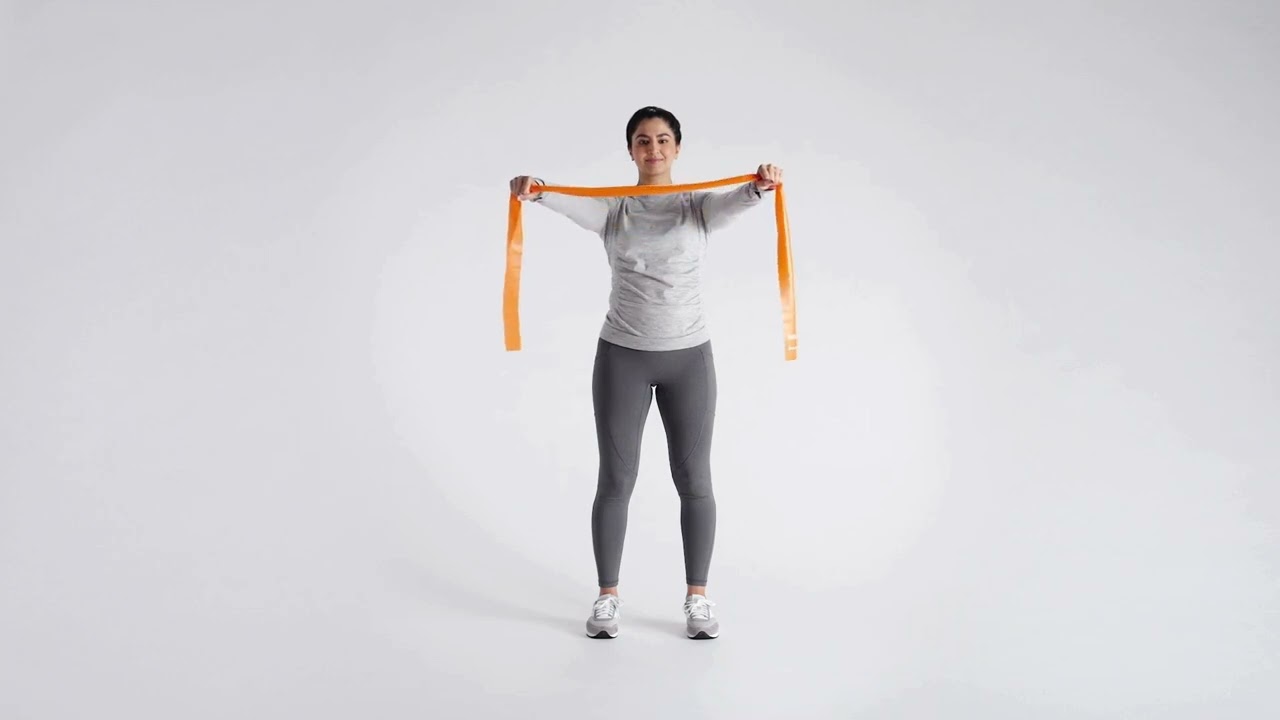
Sets: 2-3 Reps: 12-15
- Sit or stand upright with a resistance band in your hands.
- Squeeze your shoulder blades together and slightly down.
- Extend your arms out at chest height, palms facing down.
- Pull the band apart as far as comfortable.
- Release the tension and repeat.
“Don’t shrug or arch your low back. The movement comes from between the shoulder blades, not the arms,” says Lordan.
3. Dead bug
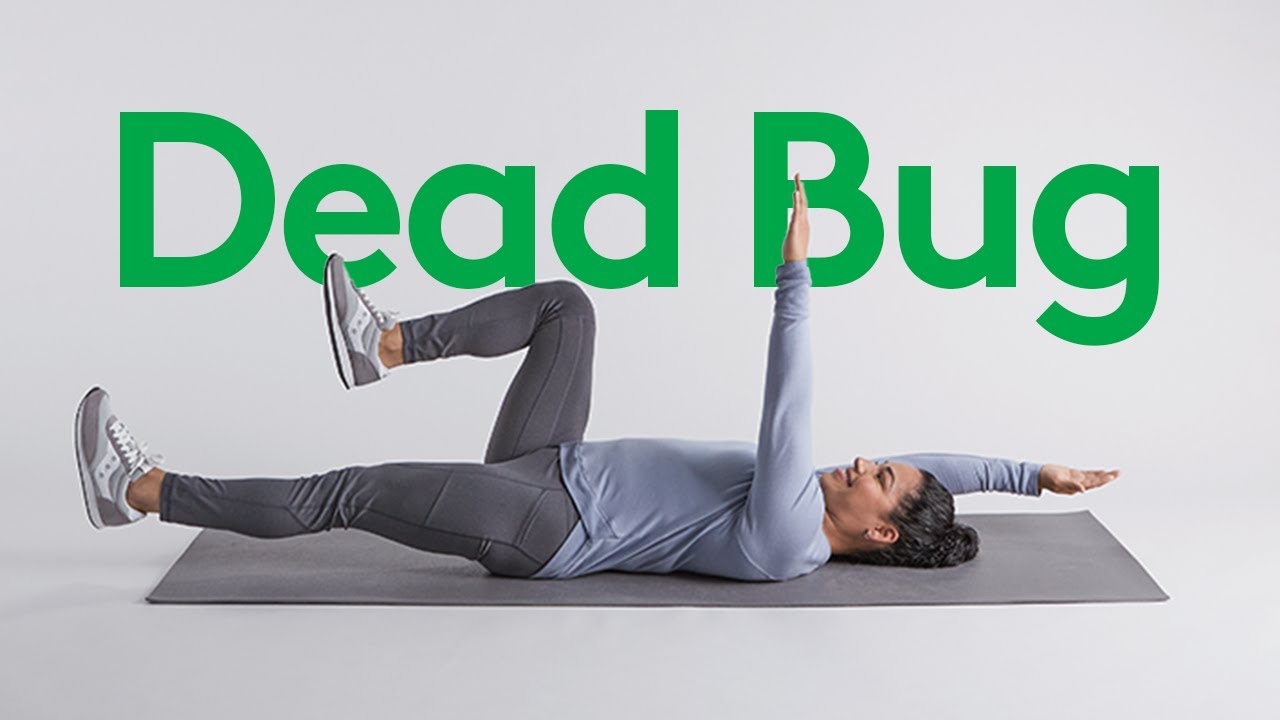
Sets: 2-3 Reps: 12-15
- Lie on your back with your knees bent.
- Extend your arms toward the ceiling.
- Engage your core and keep your lower back pressed into your exercise mat.
- Lift your legs, keeping your knees bent, so your calves are parallel to the floor.
- Lower your left leg and right arm, pausing when your limbs are a few inches off the floor.
- Raise your limbs and repeat on the opposite sides.
“If your low back arches, shorten the range [of movement]. Slow and controlled beats fast,” says Lordan.
If you still find this move too hard, you can try these dead bug variations.
