




These are a physical therapist’s favorite moves for relieving a tight back after sitting down all day
Regular movement breaks and strength training can also help


I’m spending a few days at my boyfriend’s parents’ house, which means swapping my usual workspace for their dining room table.
Unfortunately, my back has been feeling stiff and tight after working in the dining chair.
It’s only a temporary set-up, but it got me thinking about what I could do to ease the discomfort and keep moving while working away from home.
So I asked physical therapist Raj Suppiah to share three of the best stretches to improve mobility and give my back a welcome break from sitting.
“Our bodies are designed to move, not to hold one position perfectly for eight hours,” says Suppiah, co-founder of Foundation Physiotherapy & Wellness.
“Rather than obsessing about sitting perfectly, focus on moving regularly, maintaining mobility and building strength.”
Below, he shares his favorite stretches to restore back and hip mobility after sitting for too long.
How to relieve a tight back
The recommended moves are:
- Cat-cow
- Open book thoracic rotation
- Half-kneeling hip flexor stretch
Complete 10–12 repetitions of cat-cow, then 10–12 open book rotations per side. Finish with a half-kneeling hip flexor stretch, holding for 20–30 seconds per side. Rest for 15–30 seconds, then repeat the sequence once more.
Move gently within a comfortable range and stop if the exercises make your pain worse. If your back pain persists for a few weeks or interferes with everyday activities, seek advice from a healthcare professional.
1. Cat-cow
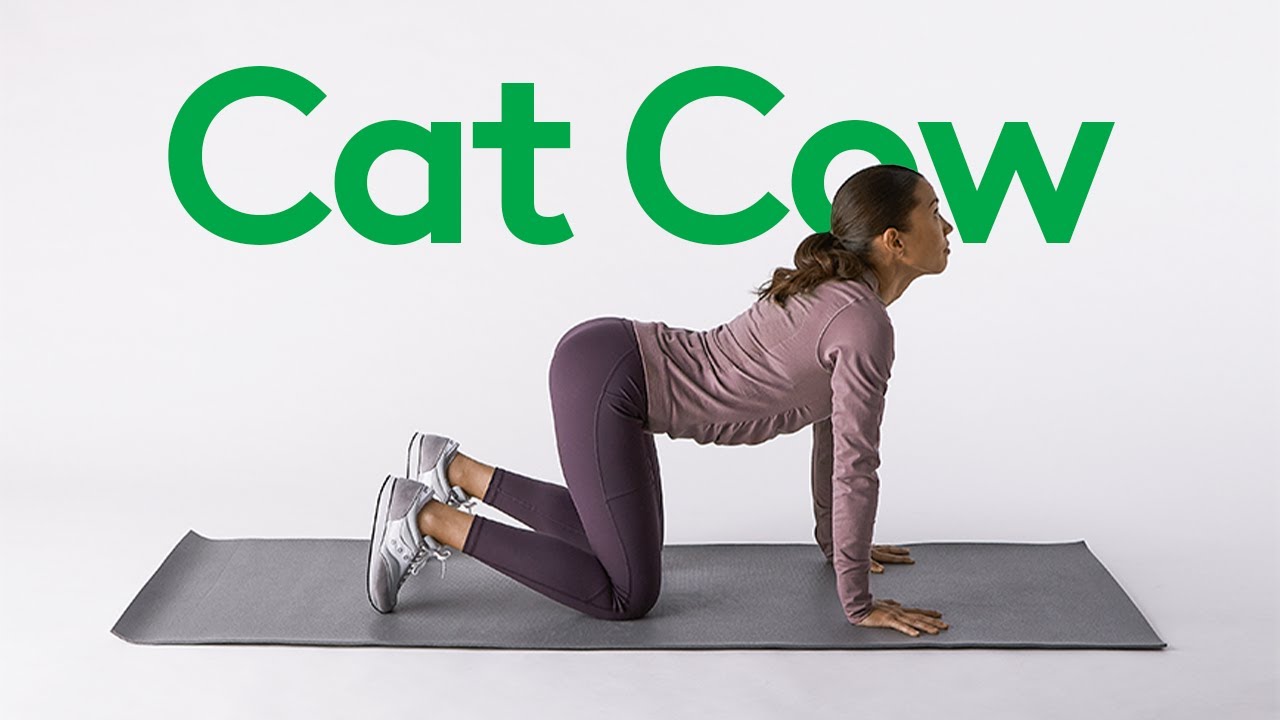
Sets: 2 Reps: 10-12
- Start on your hands and knees, with your hands directly under your shoulders and knees under your hips.
- Slowly round your back toward the ceiling, tucking your chin toward your chest (cat).
- Reverse the movement by gently dropping your belly toward the floor, lifting your chest and looking slightly forward (cow).
- Alternate slowly between these positions, transitioning through a comfortable range. Moving through both positions counts as one repetition.
“When we sit for extended periods, our spine stays in a relatively fixed position,” says Suppiah. “Cat-cow encourages movement through the spine in both directions, helping reduce the sensation of stiffness.”
2. Open book thoracic rotation

Sets: 2 Reps: 10-12 per side
- Lie on your left side with your hips and knees bent at approximately 90°.
- Extend both arms straight out in front of you, palms together.
- Slowly sweep your right arm over your body toward the floor on your right, allowing your chest and upper back to rotate while keeping your knees together. Your hand doesn’t need to reach the floor.
- Pause briefly, then return to the starting position. Repeat for 10-12 reps on both sides.
“Prolonged desk work often involves limited movement through the thoracic spine [the middle and upper back],” says Suppiah.
“The open book encourages rotation through this region, which is important for everyday activities such as reaching, turning, lifting and even walking.
“It’s one of my favorites because it targets a movement we rarely perform while sitting at a desk—spinal rotation.”
3. Half-kneeling hip flexor stretch
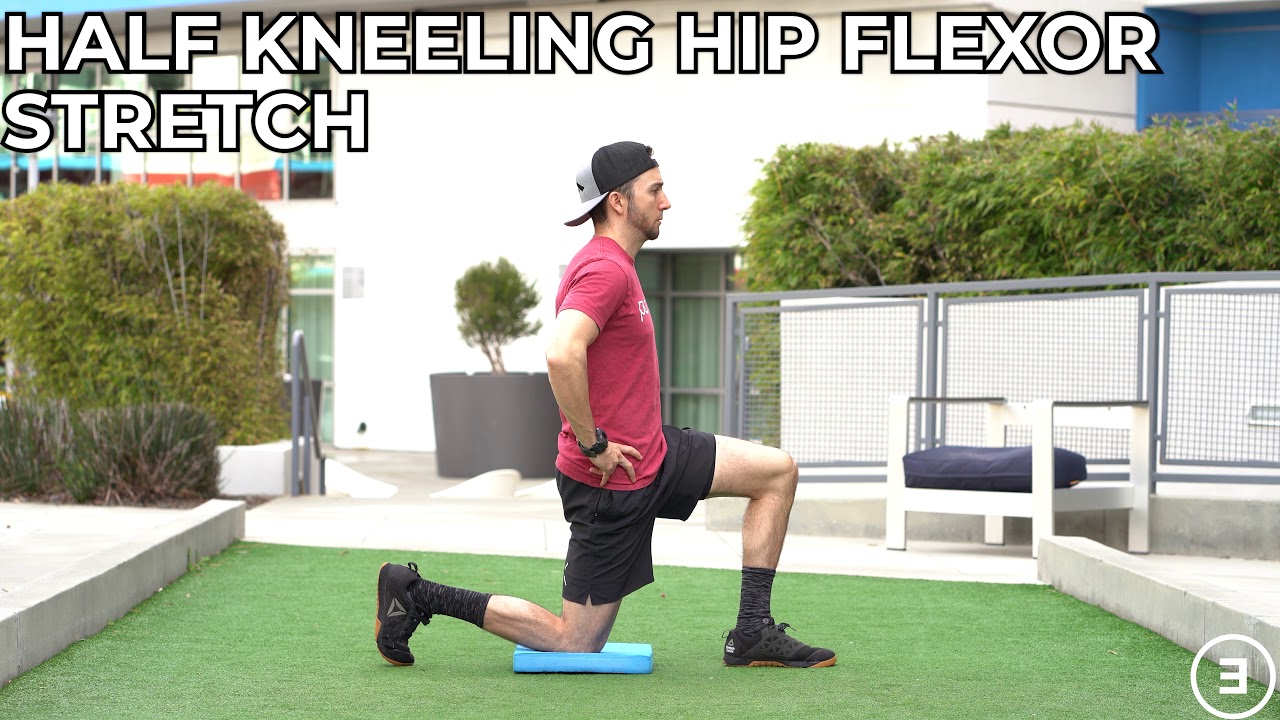
Sets: 2 Hold: 20-30 seconds per side
- Kneel on your right knee, placing your opposite foot flat on the floor in front of you. You can place a cushion under your kneeling knee if needed.
- Keep your torso upright and gently tighten your abdominal muscles.
- Tuck your pelvis underneath you, as though tilting a belt buckle upward. Keep the gentle pelvic tuck as you move, avoiding arching your lower back.
- Gently shift your hips forward until you feel a stretch along the front of the right hip.
- Hold for 20-30 seconds, then switch sides.
“Sitting keeps our hips in a flexed position for prolonged periods,” says Suppiah.
“This doesn’t necessarily mean our hip flexors become permanently shortened, but some people experience stiffness or reduced comfort when moving into hip extension afterward.
“The hip flexor stretch helps restore comfortable movement at the hips, which can make standing, walking and transitioning out of sitting feel easier.
“I particularly like this exercise because back mobility isn’t just about the back—the hips and spine work together and addressing both can improve overall movement.”
Why can prolonged sitting make your back feel stiff or sore?
“One of the biggest misconceptions about sitting is that there’s one perfect posture we should maintain throughout the day,” says Suppiah.
“The reality is that even good posture can become uncomfortable if we stay in it for too long.”
Suppiah says when we sit for extended periods our muscles and joints remain in relatively static positions, leading to discomfort and stiffness.
Some of our muscles have to work continuously to support our sitting position, too, which can lead to fatigue.
“An improperly fitted chair can amplify these issues. For example, if your feet don't comfortably reach the ground, or your desk forces you to lean forward continuously, you may experience more discomfort.
“However, it's important to understand that sitting itself isn't inherently damaging to your spine,” says Suppiah.
“Research doesn't support the idea that one specific sitting posture causes back pain in everyone.
“My advice is simple—your best posture is often your next posture. Change positions regularly rather than trying to maintain one supposedly perfect posture all day.”
What else can help keep your back strong and comfortable?
“Mobility is only one part of maintaining a healthy back. Strength and endurance are equally important,” says Suppiah.
“I recommend incorporating exercises that develop the muscles supporting the spine, hips, and trunk like the bird dog, glute bridge and side plank.
“The goal isn't necessarily to have the strongest back possible. It's to build a back that's capable of handling the demands of your everyday life.”
