





The exercises a trainer wishes runners would do to build the upper-body strength you need for race day
Develop a strong posture and arm swing that will last until the finish line


A strong upper body is as important for running as strong legs, yet it’s often the last thing that runners focus on when training for a race.
Targeted upper-body work helps maintain good posture while running, and reduces fatigue and risk of injury as the miles add up.
“The upper body has to work in synergy with the lower body in order to run efficiently,” explains personal trainer Victor Kanashiro. “If you’ve ever tried running with your hands behind your back, you understand how challenging it is.”
Your upper body works hard as you run. “The core and erector spinae work together to keep you upright and prevent you from rotating your trunk excessively,” Kanashiro tells Fit&Well.
“The lats and deltoids extend your arm back to produce an efficient arm swing, and your trapezius is constantly firing to keep you from rounding forward at the shoulders.”
Here, he shares his six-exercise upper-body routine that targets all the muscles involved in running—he recommends performing an upper-body session like this one twice a week to support your training.
Upper-body workout for runners
Kanashiro’s workout requires a Roman chair, and either a resistance band and anchor points of various heights, or a cable machine, so unless you have a very well-appointed home gym, you’ll need a gym membership.
The workout uses straight sets, so complete all the sets of one exercise, resting as needed between sets, before moving on to the next exercise.
1. Roman chair back extension
Benefit: Strengthens the erector spinae, which hold your trunk upright.
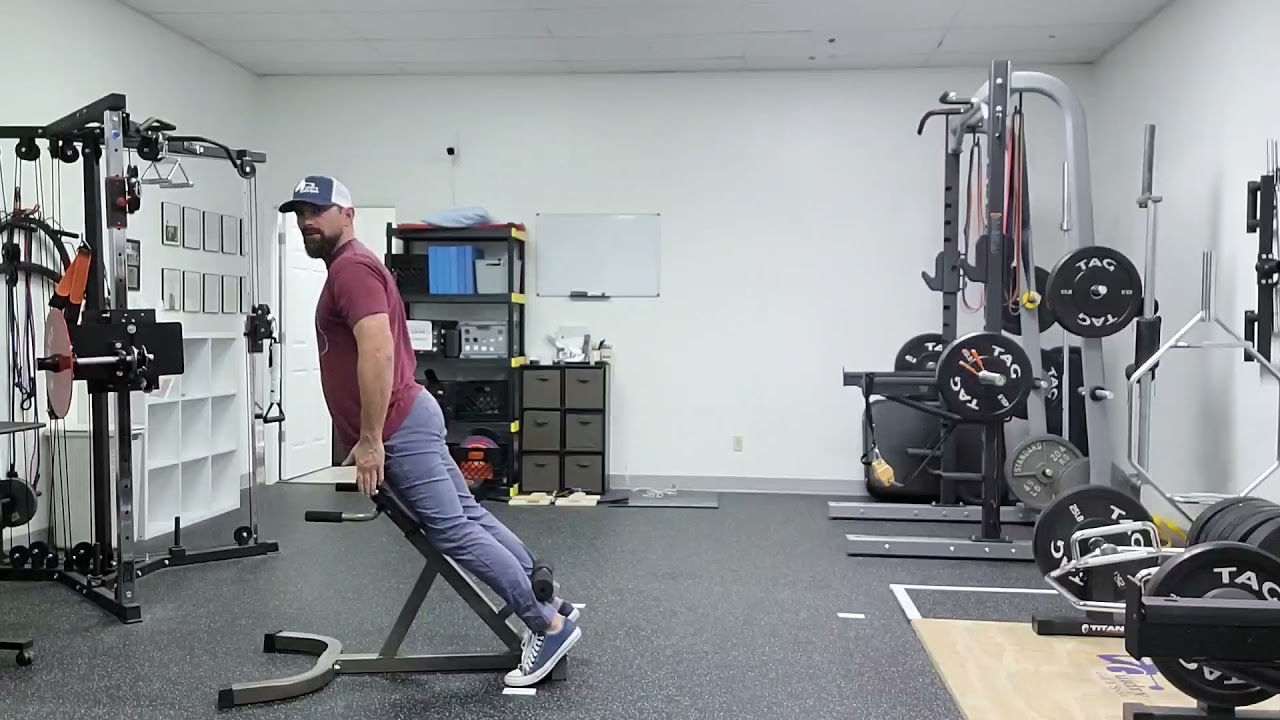
Sets: 3 Reps: 10-15
How to do it:
- Position yourself on the Roman chair with your hips supported, feet secured and torso upright.
- Slowly hinge forward at the hips until your torso is slightly below parallel with the floor.
- Engage your glutes and lower back, and raise your torso back to the starting position.
- Keep the movement controlled and avoid overextending your back at the top of the movement.
Progression: Hold a weighted plate to the chest as you get comfortable with the movement.
2. Banded Pallof press
Benefit: Strengthens the obliques and deep core, which stabilize the trunk from excessive rotation when running.
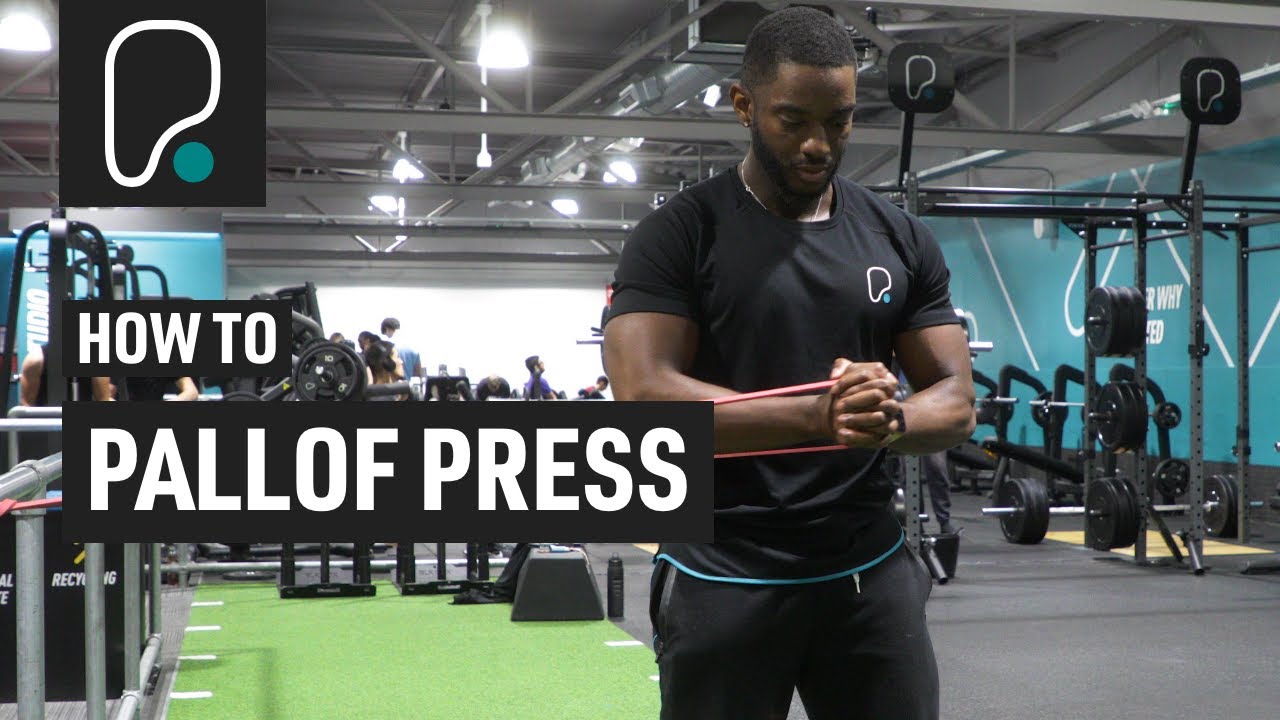
Sets: 3 Reps: 10-12 each side
How to do it:
- Anchor the resistance band at about chest height and stand perpendicular to the anchor point.
- Hold the band in both hands by the center of your chest, step away from the anchor point until there is significant tension in the band.
- Extend your arms to press your hands straight out in front of you, resisting the band’s pull to the side and keep your torso and hips facing forward without rotating.
- Slowly bring your hands back toward your chest.
- Do all your reps on one side, then switch sides.
Progression: Use a stronger resistance band, or use a cable machine if you have access to it.
3. Seated banded wide-grip row
Benefit: Strengthens the trapezius, which aids in retracting the scapula, in order to keep the shoulders from rounding forward when running.
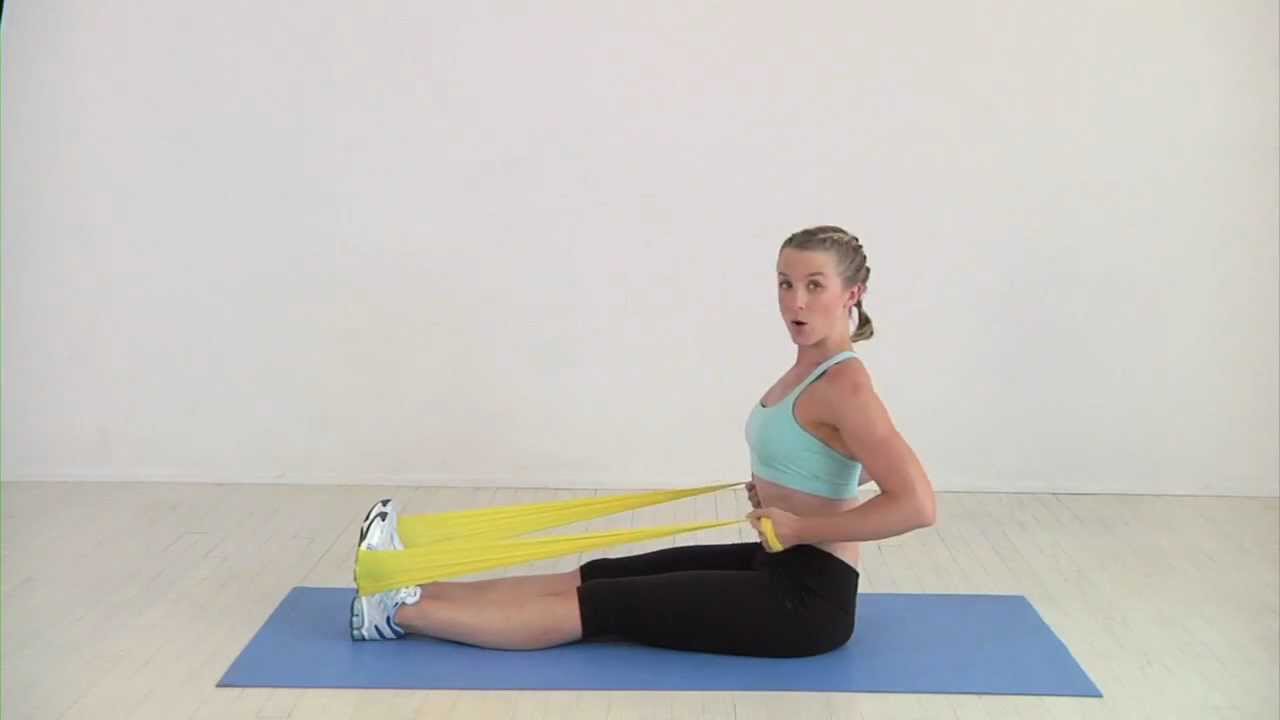
Sets: 3 Reps: 8-10
How to do it:
- Sit on the floor with your legs together, extended in front of you, with the resistance band wrapped around your feet, holding the other end with your hands wider than shoulder-width apart.
- Extend your spine, move your shoulders back and down to engage your lats, and engage your core.
- Pull the band toward your upper ribs while squeezing your shoulder blades together, making sure you’re not shrugging your shoulders.
- Slowly extend your arms back to the starting position.
4. Banded lat pull-down
Benefit: Strengthens the lats, the largest muscle in your back, which also play a role in shoulder extension to promote efficient arm swing.
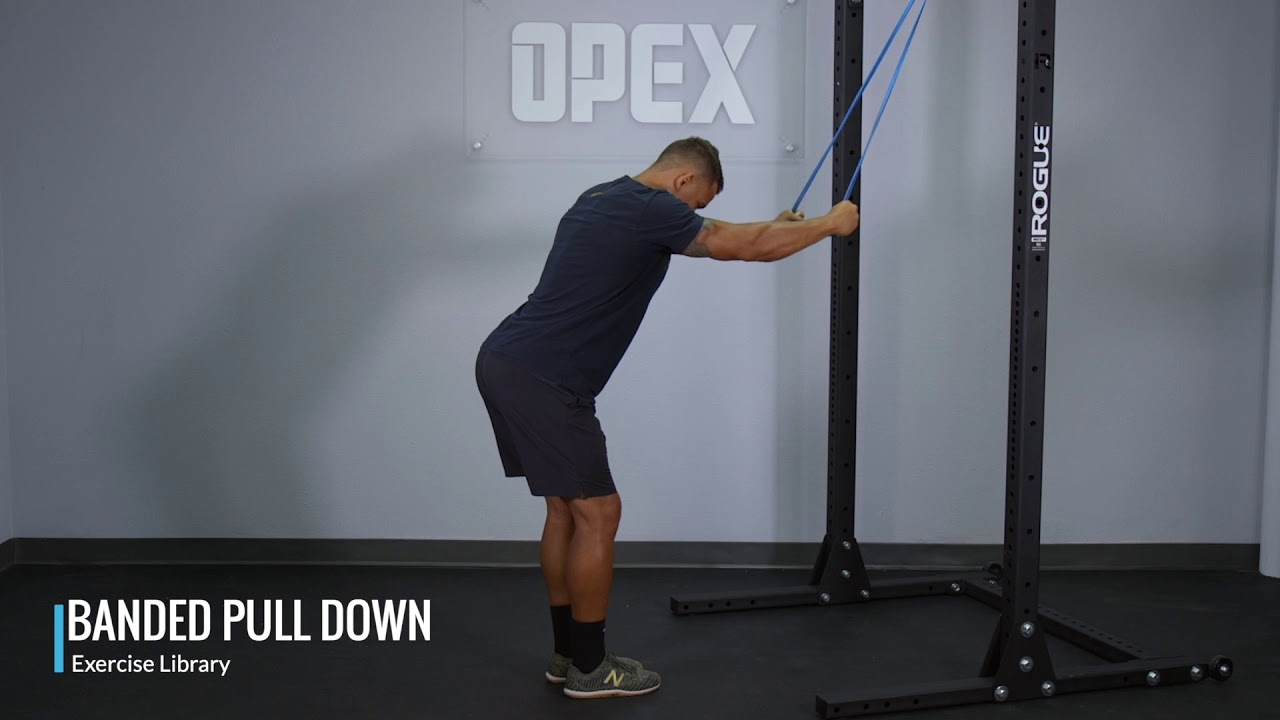
Sets: 3 Reps: 8-10
How to do it:
- Attach a resistance band to an overhead anchor, like a pull-up bar.
- Stand underneath the anchor, holding the band with your arms extended overhead and a slight bend in your elbows.
- Keeping your arms relatively straight, pull the band down and toward your thighs, moving from your shoulders.
- Squeeze your lats at the bottom, then slowly return to the starting position while maintaining control.
5. Banded rear delt fly
Benefit: Strengthens the rear delts, which, like the lats, perform shoulder extension.
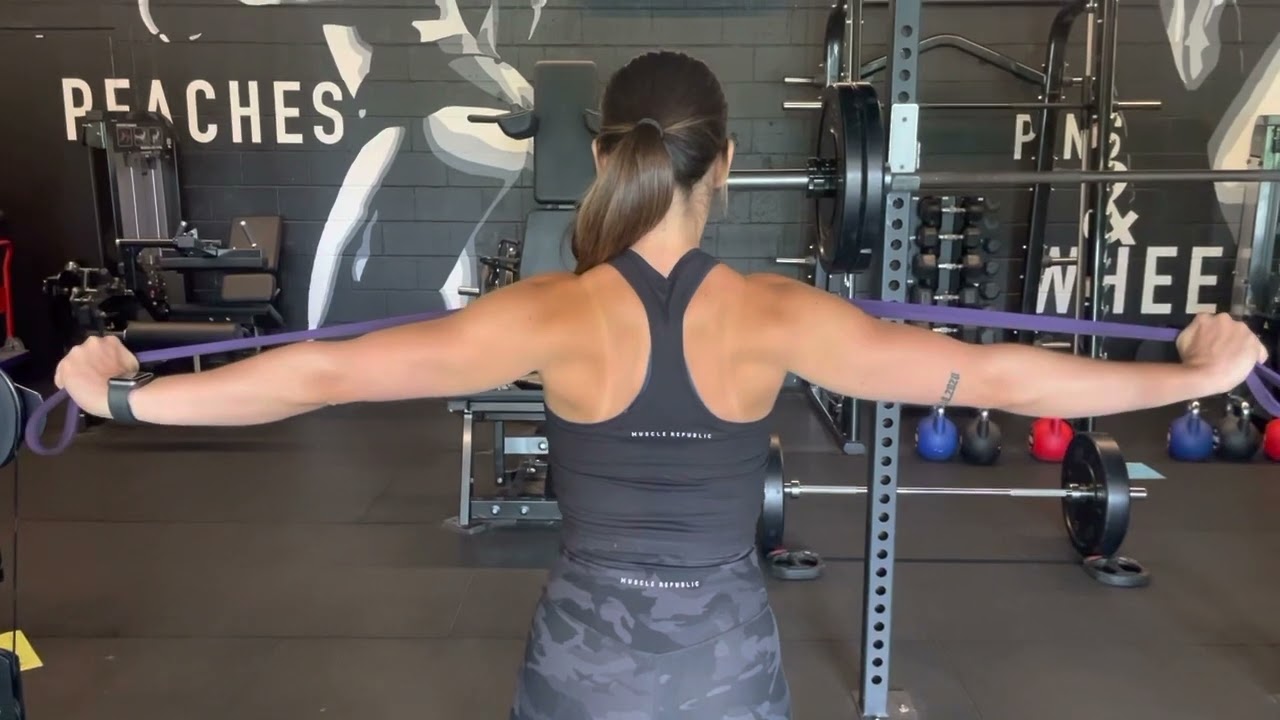
Sets: 3 Reps: 8-10
How to do it:
- Stand or sit with your arms extended in front of you at shoulder height, holding the resistance band with your hands wider than shoulder-width apart and a slight bend in your elbows.
- Extend your spine, move your shoulders back and down to engage your lats, and engage your core.
- Move your arms out to the sides, working against the resistance of the band, and bringing the band towards your chest.
- Squeeze your shoulder blades and rear delts, then slowly return to the starting position.
- Avoid using momentum or shrugging your shoulders.
6. Banded crunch
Benefit: Strengthens the core which stabilizes the trunk while running.
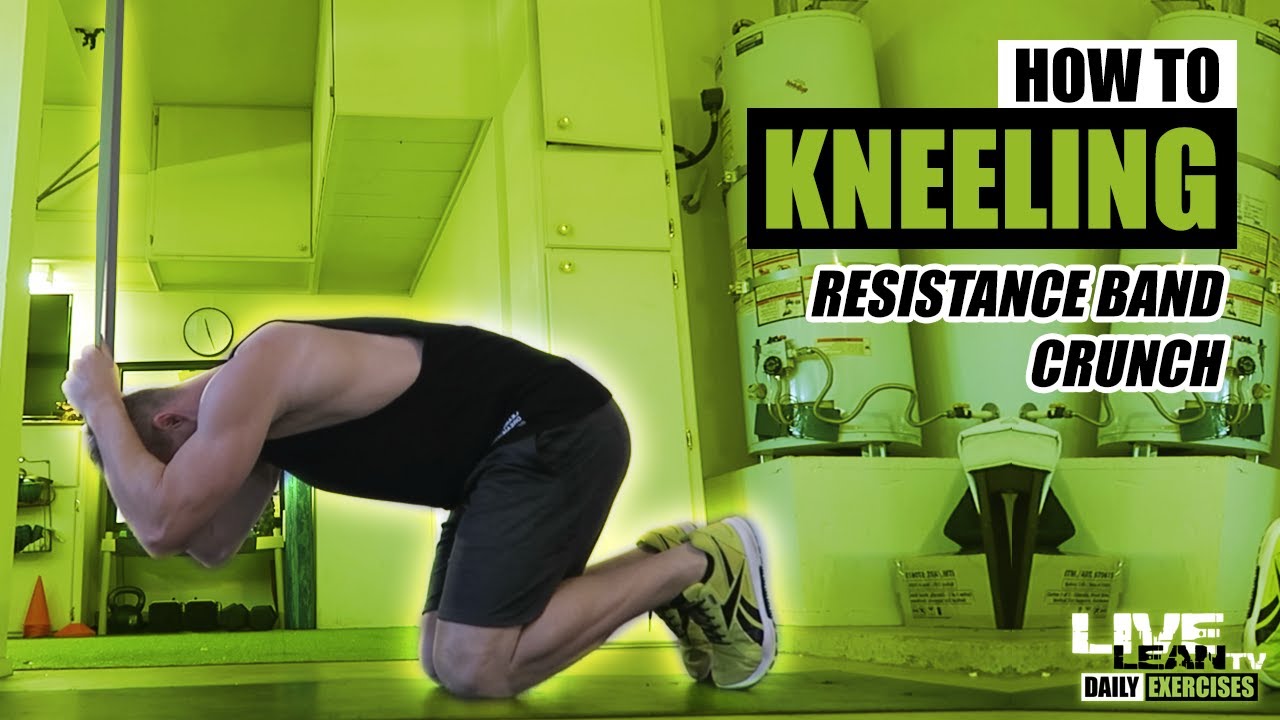
Sets: 3 Reps: 8-12
How to do it:
- Attach a resistance band to an overhead anchor, like a pull-up bar.
- Kneel underneath the anchor and hold the band in both hands by the top of your head.
- Engage your core.
- Pull the band down by bringing your ribs toward your hips, flexing your spine forward rather than pulling with your arms.
- Slowly return to the starting position.
Victor is a NASM-certified personal trainer, group fitness instructor at RISE Fitness, and a doctoral candidate in Physical Therapy with a background in Exercise Science, bringing a disciplined, routine-driven approach shaped by his experience as a U.S. Marine Corps veteran to human movement, injury prevention, and performance.
