I tried Tai Chi walking for 30 days to fix my posture—and surprisingly, it also eliminated my daily stress and back pain
This five-minute routine had a big impact on my wellbeing


I’ve always incorporated walking into my morning routine but have never given much thought to how I actually do it.
That all changed after an IT band syndrome diagnosis, which revealed a host of imbalances in my chain of movement.
Wanting to address the issues, I turned to Tai Chi walking.
This style of movement involves walking with purpose and intention, replacing fast forward momentum with slow, controlled weight shifting.
The aim is to improve balance, stability, body awareness and breath control.
At first, I was sceptical. I’ve never practiced any form of martial arts, and as I tend to walk fast, I knew slowing down would be a challenge.
But after spending 30 days practicing the method, I'm convinced of its benefits.
How to do Tai Chi walking
There are different variations of Tai Chi walking depending on the style of Tai Chi you practice, but the basic principles are to move slowly and intentionally, with more awareness of how your body shifts and connects with the ground.
Here's how to do it:
- Stand with feet hip-width apart and a soft bend in the knees.
- Relax your shoulders and lightly engage your core, keeping your head and chest upright.
- Take a slow step forward, landing on your heel and rolling through your foot, feeling the connection with the ground as your weight shifts forward.
- Gradually transfer your weight to your other side as you take another step forward and repeat.
- Align your knees and toes as you move. The aim is to feel your body glide, rather than falling into each step.
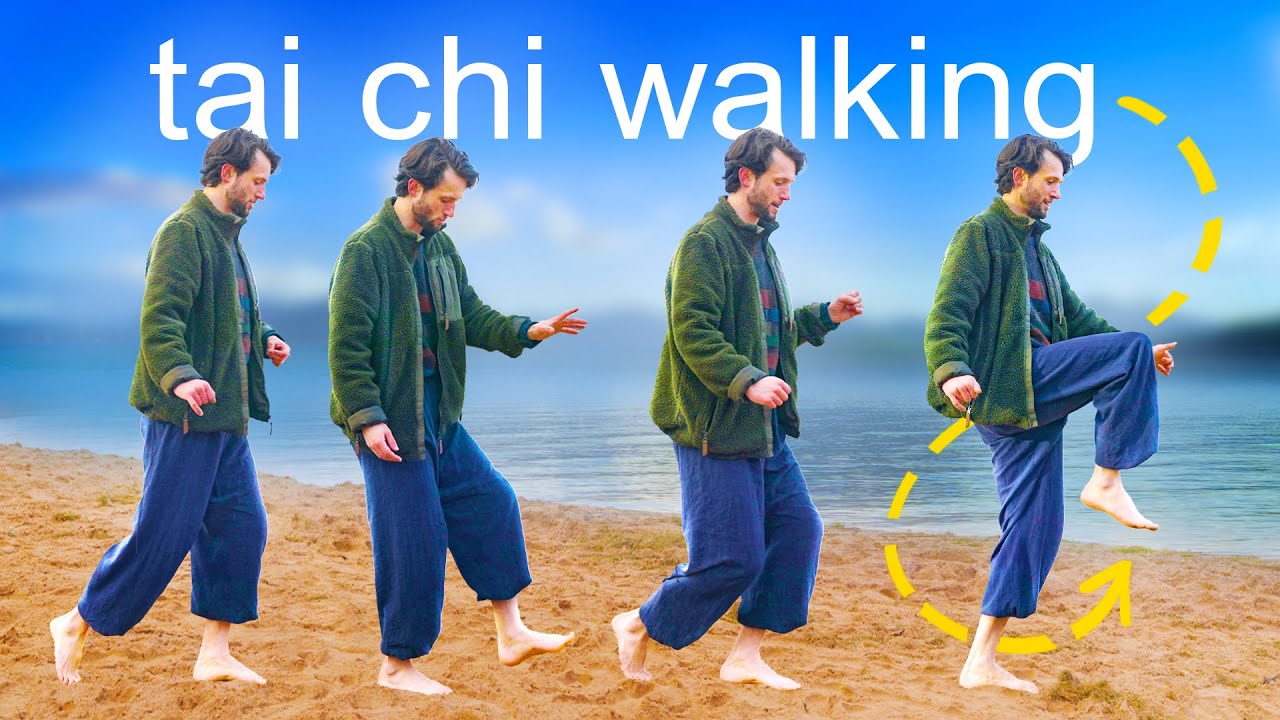
To help master the basics, I copied the methods from the above video and attended a local Tai Chi class.
I practiced five minutes of Tai Chi walking every day, either during my morning walk or at home while the kettle was boiling.
I found it easier to do it at home without shoes, so this became my standard routine.
These are the effects I noticed after 30 days.
1. My walking alignment and posture improved
I often lean forward when I walk due to an anterior pelvic tilt, which tips my pelvis downward and arches my lower back
Because of this, I initially struggled to maintain a perfectly upright stance in Tai Chi walking, but after a few weeks, I was walking with a more vertical alignment.
Slowing down my steps made me more aware of imbalances and improved my movement patterns, too.
In the mirror, I noticed that my head, shoulders and hips were stacked properly during movement.
2. I sat better at my desk
My desk job is probably the primary cause of my poor posture.
Despite trying plenty of posture exercises, I would still sit with the classic shrimp-like posture: shoulders slumped, neck strained and spine rounded.
After some time of practicing Tai Chi walking, I noticed that my sitting posture started to improve too.
Engaging my core during my morning routine created a muscle memory that seemed to kick in during the rest of my day.
While I certainly still slouch from time to time, the positive effect on my posture has led to less tension in my neck, shoulders and lower back, even making other everyday movements easier.
3. I felt less stressed
I knew Tai Chi walking was a mindful movement, but I was still surprised to notice my stress levels had improved.
“Tai Chi walking brings the full mind and breath to the walking experience,” says Brian Thompson, Tai Chi and mobility expert at BNew4Life.
“At its core, it's simply walking. But if we dig a bit deeper, we see that Tai Chi's mindfulness principles lead to increased relaxation, less stress and a better overall experience of life.”
By practicing in the mornings, my body and mind felt more relaxed throughout the day.
