


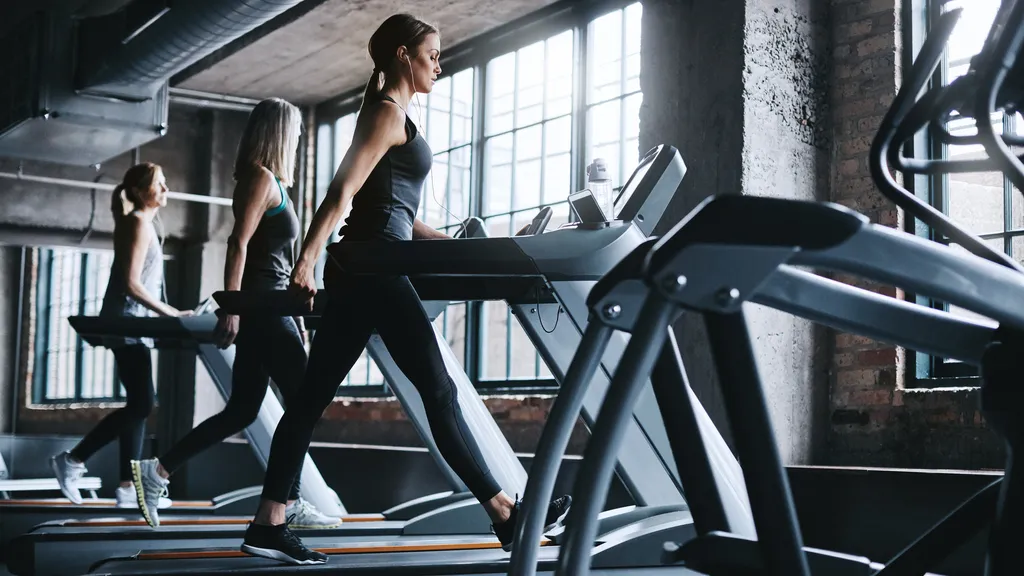


In your 40s or 50s? Try this 10-minute routine to help prevent injuries and keep you moving well in later life
Build a body that's strong enough to handle the demands of everyday life and your favorite types of exercise


Muscle mass, bone density and balance decline gradually as we get older, but aging alone doesn’t determine whether you’ll get injured.
Injuries usually happen when you suddenly ask your body to do something it isn’t ready to.
For instance, if you haven’t run for years and suddenly start pounding the sidewalk every day, you’re asking your muscles, tendons, joints and bones to absorb a workload they've not gradually adapted to.
You may also need more time to recover from intense exercise than you did when you were younger.
But if you train smart—gradually progressing your workouts so your muscles and connective tissues get stronger—your body gets better at producing and tolerating force.
Your nervous system also improves its coordination, which further reduces your chance of falling or getting injured.
“An injury can be a major interrupter in someone’s fitness journey, often forcing them to reduce or completely pause activity,” says trainer Bianca Grande from Retro Fitness.
Start your week with achievable workout ideas, health tips and wellbeing advice in your inbox.
“That makes injury prevention an important part of maintaining a consistent, active lifestyle, particularly as we age.”
Here's the 10-minute routine Grande recommends to build a body that's better equipped for exercise and everyday movement.
“The goal isn’t simply to become stronger, but to build a body that can move efficiently, maintain control and better respond to unexpected stresses.” she says.
How to do the moves
- Single-leg balance
- Heel raise
- Glute bridge
- Dead bug
- Resistance band pull-apart
- Deep squat hold
- Walking lunge
1. Single-leg balance
Sets: 1 Time: 30sec each side Rest: 30sec
How to do it:
- Stand with your feet hip-width apart with a wall or sturdy chair for support if needed.
- Shift your weight onto your right foot and raise your left foot in front of you a few inches.
- Keep your hips level, torso upright, core engaged and shoulders relaxed.
- Hold your balance and avoid leaning to one side.
- Lower your foot and repeat on the other side.
2. Heel raise
Sets: 1 Time: 60sec Rest: 30sec
How to do it:
- Stand with feet hip-width apart with a wall or sturdy chair for support if needed.
- Shift your weight onto the balls of your feet and raise your heels.
- Contract your calves as you come up onto your toes.
- Pause briefly.
- Slowly lower your heels and repeat.
3. Glute bridge
Sets: 1 Time: 60sec Rest: 30sec
How to do it:
- Lie on your back with your knees bent, feet flat on the floor, hip-width apart and arms resting by your sides, palms down.
- Engage your core, squeeze your glutes and raise your hips until your body forms a straight line from your shoulders to your knees. Avoid overarching your lower back.
- Pause briefly.
- Slowly lower your hips and repeat.
4. Dead bug (same side variation)
Sets: 1 Time: 60sec Rest: 30sec
How to do it:
- Lie on your back with your lower back pressed into the floor
- Raise your knees and bend them so they’re at 90° angles over your hips.
- Extend your arms toward the ceiling.
- Engage your core and slowly lower your right arm back toward the floor behind you, and extend your right foot down toward the floor in front.
- Only go as far as you can before your lower back arches off the floor.
- Return to the starting position and repeat on the opposite side.
5. Resistance band pull-apart
Sets: 1 Time: 60sec Rest: 30sec
How to do it:
- Stand with feet hip-width apart, holding a long-loop resistance band at both ends.
- Extend your arms in front of you at shoulder height, keeping a slight bend in your elbow.
- Maintain tension in the band as you pull your hands apart, squeezing your shoulder blades together.
- Slowly return to the starting position.
6. Squat hold
How to do it:
Sets: 1 Time: Up to 60sec Rest: 30sec
- Stand with your feet shoulder-width apart or slightly wider and turned out slightly.
- Push your hips back and bend your knees to lower your hips until your thighs are parallel to the floor or lower.
- Engage your core and keep your chest up.
- Hold the squat position for as long as you can.
- Return to standing and repeat.
7. Walking lunge
How to do it:
Sets: 1 Time: 60sec Rest: 30sec
- Stand with your feet hip-width apart.
- Take a step forward with your right foot.
- Lower your hips and bend your knees until both knees are bent at 90° angles.
- Push through your right foot to stand and then repeat on the other side.
Why the moves work
When we exercise, we place controlled stress on muscles, bones and connective tissues.
“The body responds to that stress by adapting and becoming better equipped to handle similar demands in the future,” says Grande.
“Resistance and weight-bearing exercise can help maintain or improve muscular strength and bone density, while repeated movement can improve neuromuscular coordination—the communication between the brain, nerves and muscles.
“Balance and stability work are particularly valuable because they train the body to recognize changes in position and react quickly. Stronger muscles and improved coordination can help stabilize joints and distribute forces more effectively during movement.”
Grande says people should not avoid using a wall or sturdy surface for support if needed.
“For beginners or people returning to exercise, modifications—such as using a wall during single-leg balance or support during a deep squat—aren’t a sign that the movement is less effective,” says Grande.
“They can allow you to develop control and confidence before progressing.”

Maddy Biddulph is a journalist specializing in fitness, health and wellbeing content, with 26 years in consumer media working as a writer and editor for some of the bestselling newspapers, magazines and websites in the US and UK, including Marie Claire, The Sunday Times and Women’s Health UK.
She is a CIMPSA-certified PT and works one-on-one with clients, as well as running Circuits Club classes which mixes cardio and strength training, chair-based exercise classes for seniors and MenoFitness classes for perimenopausal women to help build strength and support bone density.
You must confirm your public display name before commenting
Please logout and then login again, you will then be prompted to enter your display name.